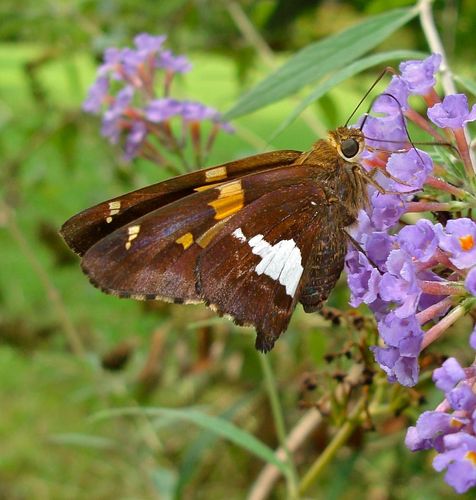
About Epargyreus clarus (Cramer, 1775)
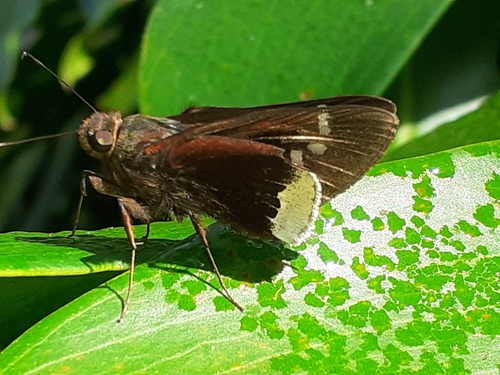
Epargyreus clarus, commonly known as the silver-spotted skipper, is a butterfly species belonging to the family Hesperiidae. It is regarded as the most widely recognized skipper in North America. This species occupies habitats including fields, gardens, and forest edges, and its geographic range extends from southern Canada across most of the United States to northern Mexico, but it is not present in the Great Basin or western Texas. Larvae of E. clarus build and live in unique silk-bound shelters. These shelters do not provide protection from the species' natural predators, which include foraging paper wasps, sphecid wasps, and Crematogaster opuntiae ants. Silver-spotted skippers are classified as perching species: adult males compete for territory to attract females. While this species is considered a pest of a small number of crop plants including beans, the damage it causes is not severe enough to justify large-scale pest control measures. The silver-spotted skipper favors open areas with available nectar plants, which also includes swamps, brushy areas, and lower-elevation riparian habitats. During the night, or on hot or cloudy days, Epargyreus clarus rests on the underside of leaves. It hangs upside down, holding its wings folded together over its back to expose its characteristic silver spot. The species is often constrained by its preferred habitat, and chooses to fly primarily in shaded areas.