About Epacris microphylla R.Br.
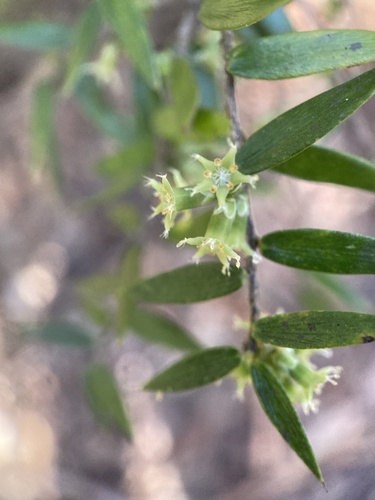
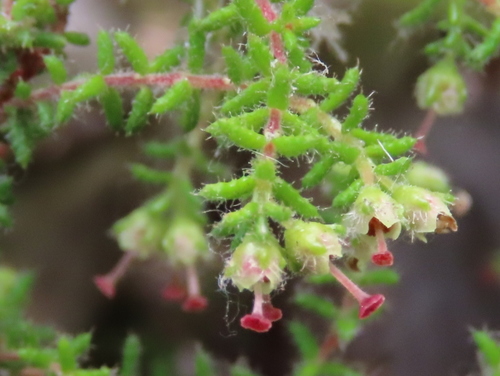
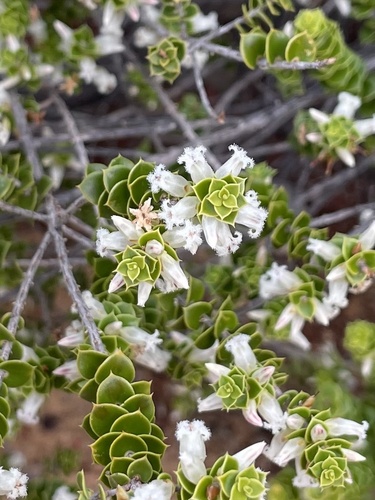
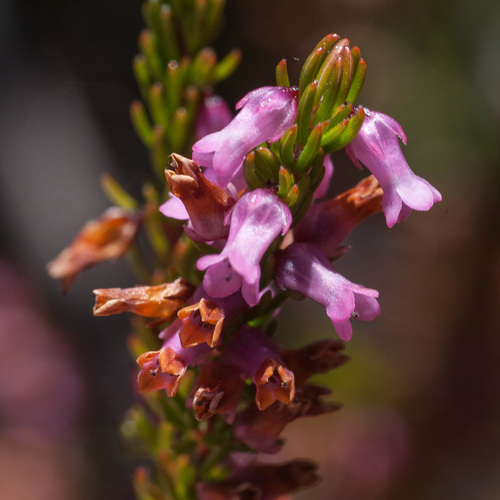
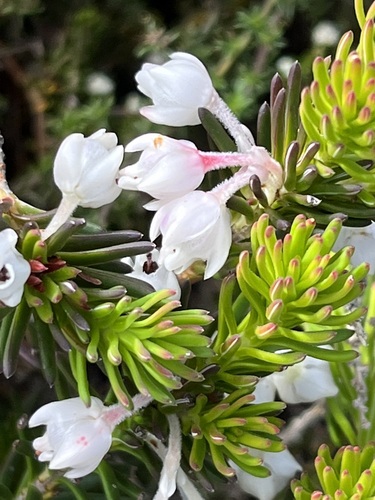
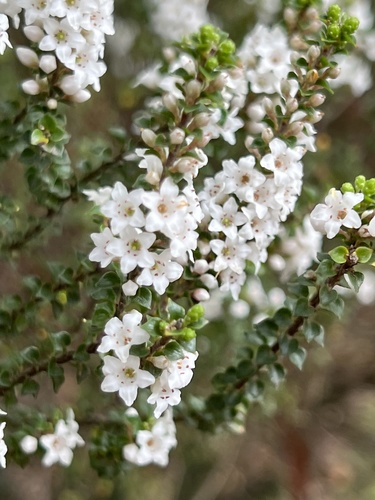
Epacris microphylla, commonly known as coral heath, is an erect, wiry shrub with rod-like stems and angled branches, that usually grows up to 1 metre (3 ft) tall. Its leaves are roughly 2.0–3.5 millimetres (0.08–0.1 in) long and wide, concave, egg-shaped to almost circular, and sharply pointed but not prickly. Flowers are arranged individually in the axils of up to 90 upper leaves, and often cover almost 40 centimetres (20 in) of the branch ends. The petals form a tube with spreading lobes 1.5–2.0 millimetres (0.06–0.08 in) long; the flowers are white, with five red anthers visible at their centre. Coral heath can flower for most of the year, with its main flowering period falling between July and November. This species grows in heathland in moist, rocky areas, and also in forested regions. It is found in coastal areas of Queensland, New South Wales and Victoria in Australia, where it often grows in poor, sandy soils. It is also only known from a single location in New Zealand, on the southern shore of the Manukau Harbour near Auckland. In horticulture, Epacris microphylla is an attractive and hardy garden plant when grown in well-drained soil. It is difficult to propagate from seed, but can be grown from semi-hard tip cuttings.