About Entephria caesiata (Denis & Schiffermüller), 1775
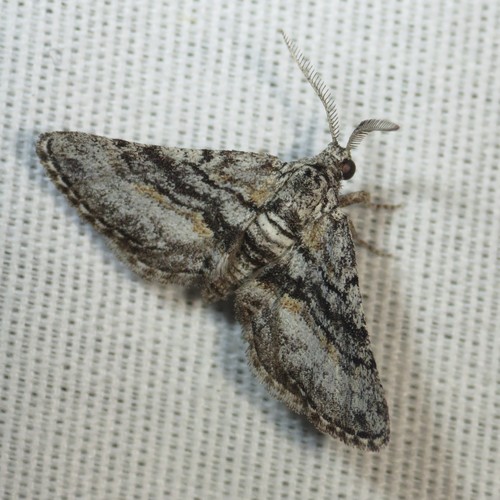
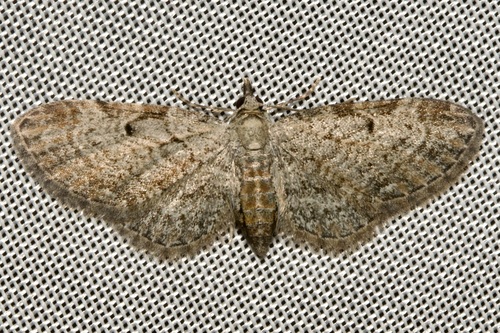
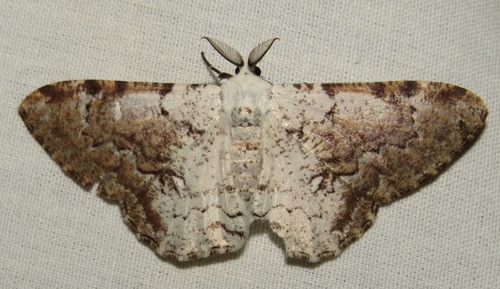
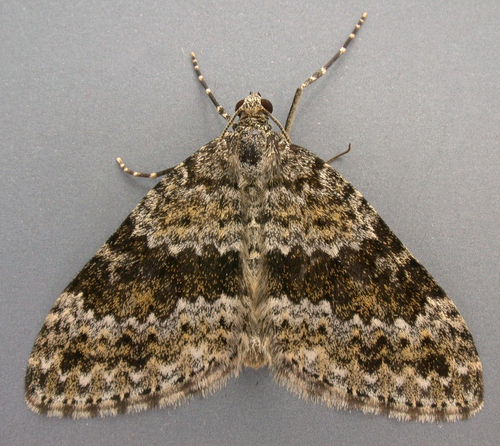
Entephria caesiata, commonly known as the grey mountain carpet, is a species of moth in the Geometridae family. It was first described by Michael Denis and Ignaz Schiffermüller in 1775. This moth is found in mountainous regions of Europe, including Great Britain, Fennoscandia, and the Alps; it also occurs in the Caucasus, Asia Minor, Armenia, Russia, the Russian Far East, Siberia, northern Mongolia, Sakhalin, and Honshū, Japan. Its wingspan measures 32 to 41 millimetres (1.3 to 1.6 inches). The ground colour of its forewings ranges from ash grey to blue grey, with multiple dark wavy bands. The basal area, and the area between the two fasciae, are darker than the forewing ground colour. A black discal spot is present, and the fringes are grey with a dark grey chequered pattern. The hindwings are pale grey, with pale transverse lines and a grey-black discal spot. A full treatment can be found in the work of Prout. The larva of Entephria caesiata is pinkish brown along its back, with yellowish-white triangular spots, and has greenish sides. Adult moths are active between July and September. The larvae feed on a variety of low heathland plants, including Calluna and Vaccinium myrtillus. Additional recorded food plants for the larvae include Betula species, such as Betula nana, as well as Vaccinium uliginosum, Ledum palustre, and Empetrum nigrum.