About Ennomos erosaria (Denis & Schiffermüller), 1775
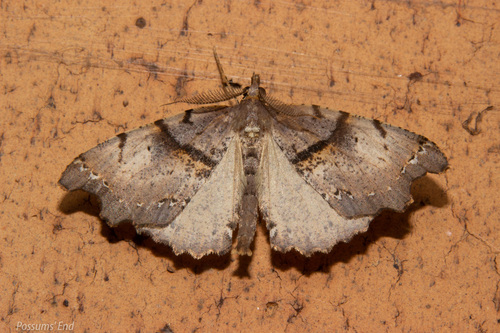
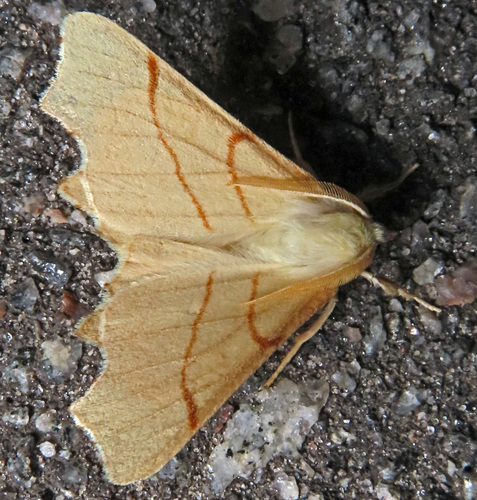
Ennomos erosaria, commonly known as the September thorn, is a moth species belonging to the family Geometridae. This species is distributed across the Palearctic realm. Its range covers western Europe, extends from central Scandinavia south to the northern Mediterranean, and east through Russia to the Caucasus, with southeastern populations reaching Turkey. It is widespread in mixed and deciduous forests across Europe, with its main habitat being dry deciduous forests and parks. In the Southern Alps, it can be found at altitudes up to around 1600 metres. The wingspan of Ennomos erosaria ranges from 30 to 35 mm, and forewing length measures 17 to 21 mm. The species' ground wing colour ranges from straw yellow to ochre-yellow. The termen of the hindwing is darker than the rest of the wing, and the hindwing also has a faint discal spot. The wing fasciae (bands) are brown. A prominent inwardly arcing projection is present below the distal edge of the forewing. The typical named form is yellowish. The aberration ab. tiliaria Hbn. is paler, with straw-coloured forewings. The aberration ab. tinicoloria Esp. lacks transverse wing lines. Ennomos erosaria is similar in appearance to other species within the Ennomos genus. This moth produces one generation per year, which flies from July to October. Adults are attracted to light. The larvae are fairly elongated, with strong knob-shaped protuberances, and overall closely resemble an oak twig. Larval colouration is brown, sometimes with a purple tint and sometimes greenish; the ventral surface is a paler greenish brown. Larvae feed on oak, birch, and lime.