About Enchylaena tomentosa R.Br.
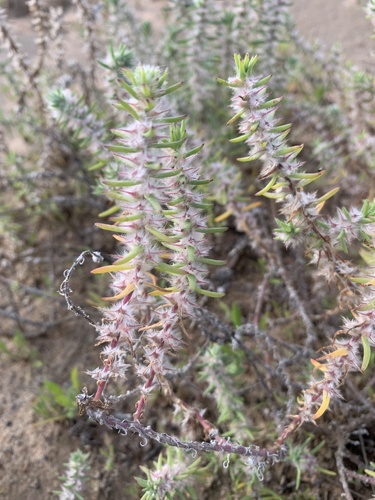
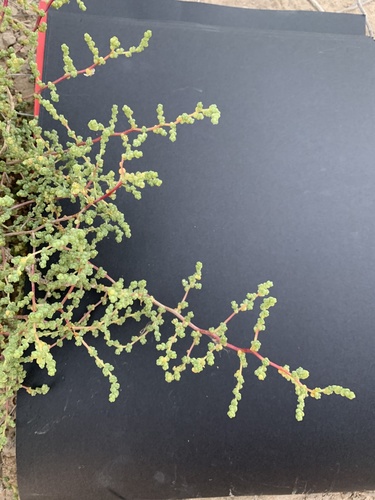
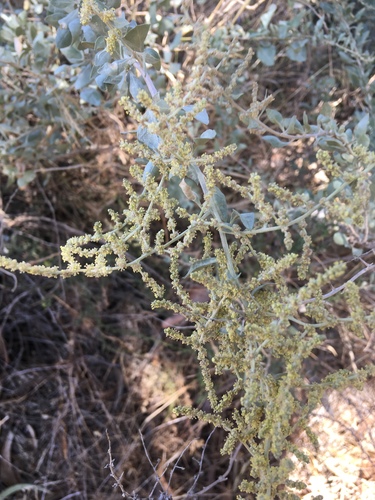
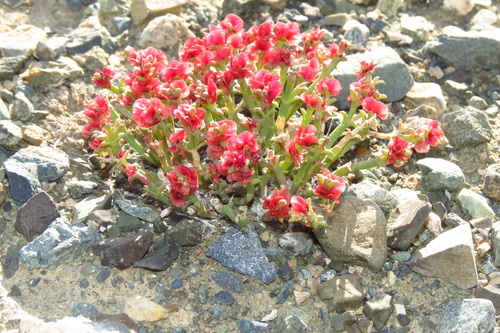
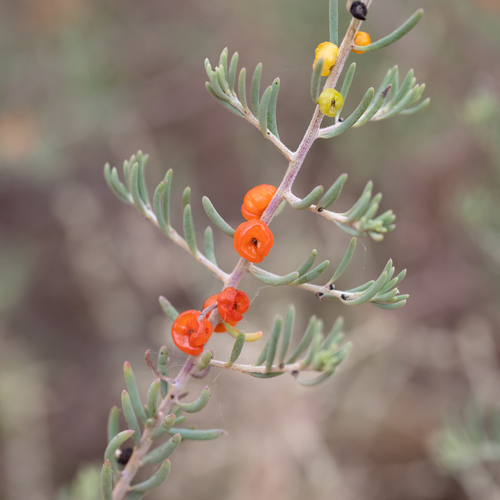
Enchylaena tomentosa R.Br. is a small perennial shrub that grows up to one meter in diameter. Its leaves are slender and cylindrical, reaching 6 to 15 millimeters long; both leaves and stems are densely covered in woolly hairs. It produces fleshy berry fruits that change color from bright green or yellow to bright red or orange. Its scientific name refers directly to the plant’s features: the genus name Enchylaena comes from Greek words egchlos (meaning fleshy or succulent) and chlaen (meaning cloak), referring to the plant’s ripe fruiting perianth. The specific epithet tomentosa is botanical Latin meaning the plant is covered in dense, short, soft, curled hairs. This species is highly drought tolerant, and has been historically valued by Indigenous Australians, early European settlers, and livestock. Nutritional analysis shows it has an overall digestibility rating of 65%, providing grazing animals with 14% digestible protein and 6% digestible salt. It occurs across the whole of Australia, and has also become naturalized in New Caledonia. It can grow in a wide range of soils, but prefers slightly saline soils. It is found across most of semi-arid Australia, growing on a variety of landforms and soil types including sand plains, hill slopes, creek lines, sand dunes, and salt lake shores. It prefers slightly shaded soil areas under trees such as Alectryon oleifolius and Acacia papyrocarpa. This species is very widespread across the Australian continent, which may be due to multiple factors: its drought resilience, ability to grow in a wide range of soil and climate zones, and its seed dispersal method. Enchylaena tomentosa seeds are dispersed via endozoochory, meaning seeds are dispersed after being ingested by another animal. This process may aid seed germination, because digestion removes the fleshy pulp and woody endocarp through scarification. These plant parts can inhibit germination, preventing it from occurring in unsuitable seasons and conditions. A study of emu scat and its seed content found that E. tomentosa seeds made up 8.5% of the nearly 20,000 seeds identified. This was the second highest proportion, after nitre bush (Nitraria billardierei) which made up 80% of the identified seeds. This finding is significant because emus are known to travel over 600 km in search of food and water, so they act as a potential vector for long-distance seed dispersal and germination. Long-distance seed dispersal can improve a species’ genetic variation, expand its dispersal range, and increase diversity and complexity in meta-population structure. These factors in turn can increase the species’ resilience to future risks from changing climate conditions and potential habitat loss. The ripened fruit of E. tomentosa can be picked and eaten raw, and has a described salty-sweet flavor. It has long been picked as a snack food by desert Indigenous Australians, and is still frequently collected today. Indigenous groups of the Macdonell Ranges in central Australia have been recorded soaking the fruits in water to make a sweetened tea. During his explorations of the semi-arid interior, Charles Sturt also recorded harvesting the leaves, which could be eaten as a vegetable after boiling. Major Thomas Mitchell noted during his explorations through the lower Murray that children would harvest the fruit to make pink facial decorations. For grazing, E. tomentosa is classified as a maintenance feed. It does not produce enough volume to serve as a sole foraging source, but its drought hardiness means it is available during dry periods of the year such as late summer, when other palatable, nutritious forage sources are not available.