About Encelia californica Nutt.
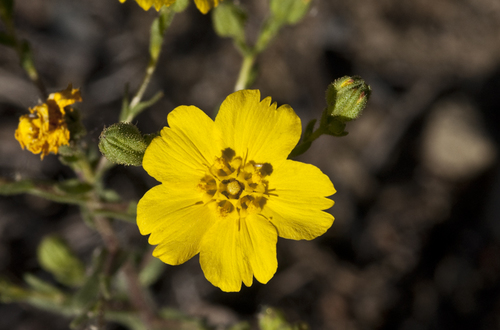
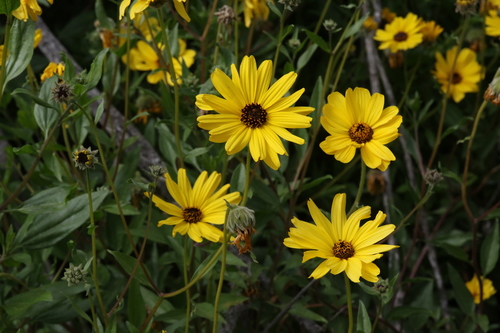
Encelia californica Nutt. is a bushy shrub that grows 50 to 150 cm (20 to 60 inches) tall. It produces many thin branches covered with widely spaced, green, rounded diamond-shaped leaves. Its solitary flower heads are daisy-like, with 15 to 25 bright yellow ray florets that measure 1 to 3 centimeters long. These ray florets surround a center of protruding yellowish to purplish brown disc florets. The fruit is a 5 to 7 millimeter long achene that lacks a pappus. This species blooms from February to June, and attracts butterflies, bees, and other insects. This shrub is native to southern California in the United States and northern Baja California in Mexico. It grows as part of the coastal sage plant community at the shoreline, and as part of the chaparral and woodlands plant community on inland foothills within the Transverse and Peninsular Ranges. It acts as a host plant for the larvae of the Bay checkerspot butterfly, a threatened species. Encelia californica is cultivated by specialty nurseries as an ornamental plant, used in native plant gardens, wildlife gardens, and natural landscaping projects. It is drought tolerant but not frost tolerant, and requires full sun to grow.