About Encelia actoni Elmer
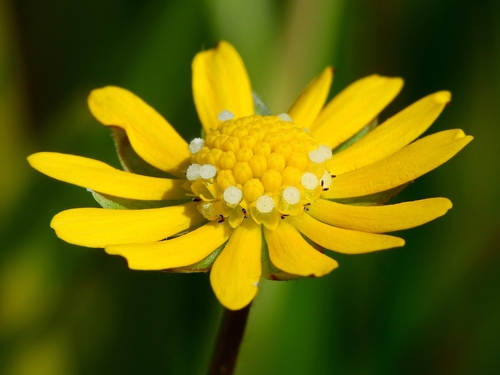
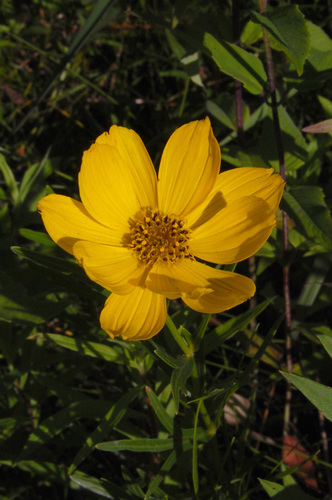
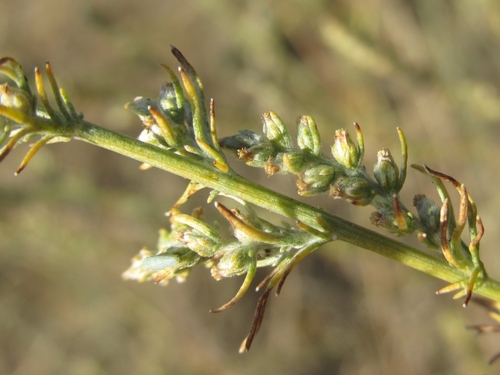
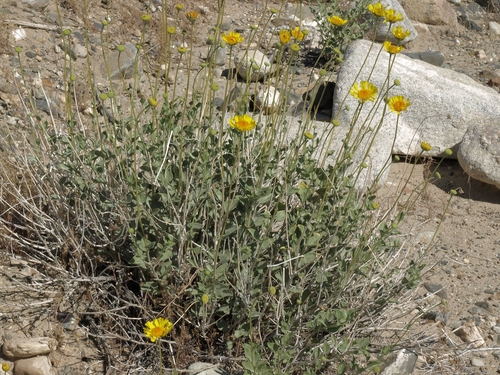
Encelia actoni is a multi-branched perennial shrub that grows between 0.30 to 1.22 meters (1 to 4 feet) tall. Its branches hold oval to roughly triangular leaves that measure a few centimeters long, with a gray-green, woolly texture. The inflorescence is a single daisy-shaped flower head, 2.5–5.1 cm (1–2 inches) across, borne on a tall, straight stalk (peduncle). The flower head has a center of many yellow disc florets, surrounded by up to 25 yellow ray florets. It flowers in spring. Its fruit is an achene around half a centimeter long, which most often does not have a pappus. This plant reseeds itself readily.
This species is native to southern California, adjacent areas of Nevada in the United States, and Baja California in Mexico. It grows in a range of open habitat types, including deserts, chaparral, and grasslands. It can be found in the Mojave Desert, Sonoran Deserts, Peninsular Ranges, Transverse Ranges, San Joaquin Valley, and southern Sierra Nevada. The species is named for the community of Acton in Southern California, which sits in an ecotone between the Mojave Desert ecoregion and the montane chaparral and woodlands of the San Gabriel Mountains.
Encelia actoni is cultivated as an ornamental plant. It is used in drought-tolerant gardens, wildlife gardens, natural landscaping, and habitat restoration projects. It requires full sun, and after its first summer growing season, it needs very little to no additional irrigation. It is a honey plant that supports a wide diversity of pollinators. It has a low fuel load, giving it fire-retardant properties that make it suitable for planting in wildfire-prone zones.