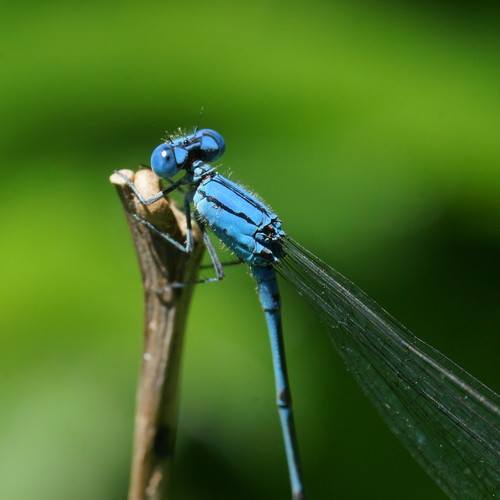
About Enallagma carunculatum Morse, 1895
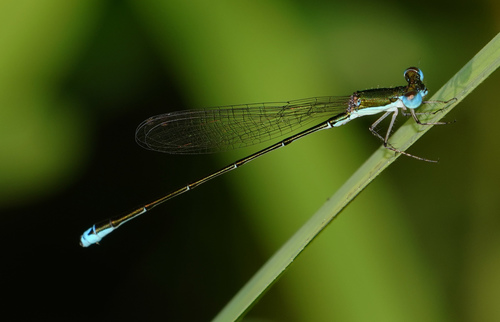
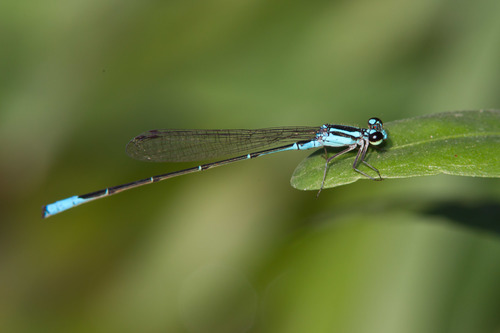
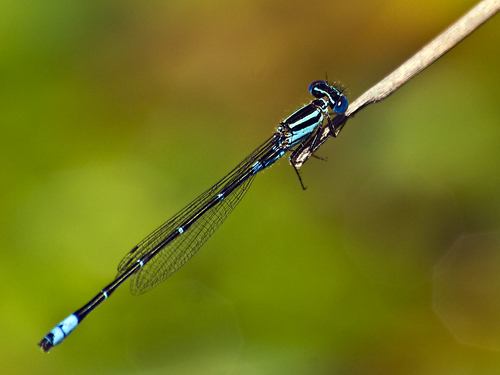
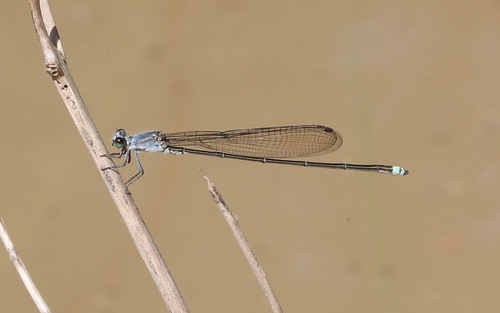
Enallagma carunculatum Morse, 1895, commonly known as the tule bluet, is a species of damselfly. For identification, this damselfly has a blue and black abdomen, which usually has more black than blue. Its black humeral stripes are approximately half the width of the blue antehumerals. The species has small, triangular postocular spots, which are separated by a thin occipital bar. The tule bluet is distributed across most of North America, ranging from southern Canada to northern Mexico. It is not found in the southeastern United States. Its habitats include rivers, lakes, ponds, marshes, and bogs, and it always occurs in areas with bulrushes growing nearby. It is almost always found near extensive stands of tules, which is how it got its common name. It can emerge from relatively deep water as long as bulrushes are nearby, and it can also live in alkaline or salty water. During reproduction, male tule bluets establish territories at preferred breeding sites. After mating, the male remains attached to the female while she lays eggs into the stems of bulrushes, with the pair staying in the tandem position throughout oviposition.