About Enallagma basidens Calvert, 1902
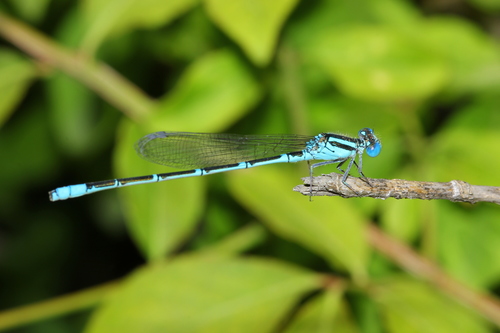
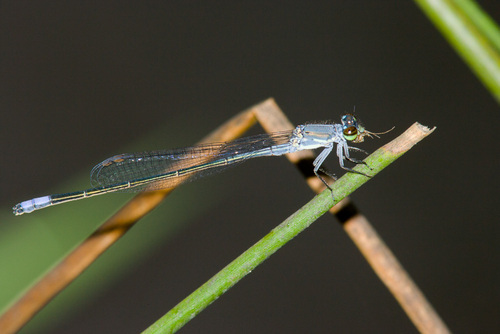
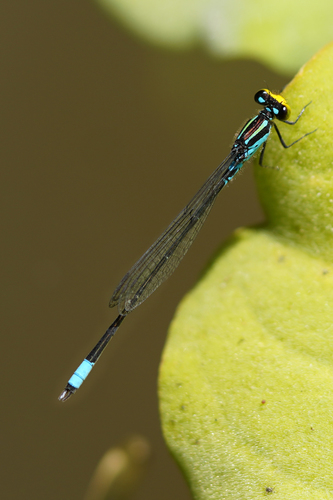
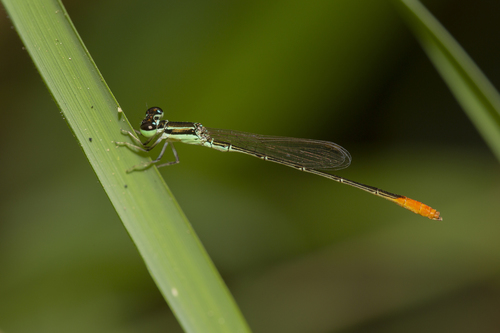
The double-striped bluet, Enallagma basidens, is a damselfly species belonging to the family Coenagrionidae. Adults of this species reach a total length of 21 to 28 mm. Its common name comes from its distinctive black shoulder stripe, which is split into two parts by a thin blue stripe. This pattern is the key identification feature for the species, as no other damselfly has a shoulder stripe with this appearance. The abdomen of mature males features alternating black and blue segments. The final abdominal segment is blue on the underside and black on the upper side, while segments 8 and 9 are entirely blue. Females and immature individuals range in color from tan to olive or brown, but they do share the characteristic divided shoulder stripe seen in mature males. Double-striped bluets are most commonly found along the edges of lakes and ponds, and they are occasionally also found beside slow-moving streams. This species is distributed in the following locations: Mexico: Tamaulipas, San Luis Potosí, Nuevo León, Coahuila, Chihuahua, Baja California; United States: Alabama, Arkansas, Arizona, California, Colorado, Delaware, Florida, Georgia, Iowa, Illinois, Indiana, Kansas, Kentucky, Louisiana, Maryland, Michigan, Missouri, Mississippi, Nebraska, North Carolina, New Jersey, New Mexico, Ohio, Pennsylvania, South Carolina, Tennessee, Texas, Vermont, Wisconsin, West Virginia; Canada: Ontario.