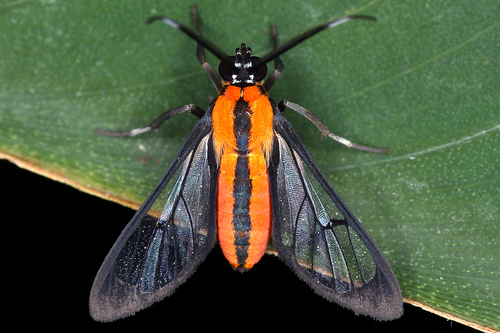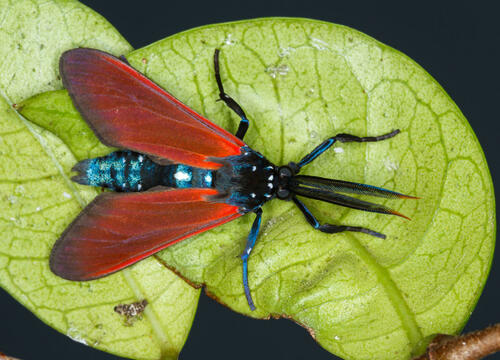
Empyreuma pugione Linnaeus, 1767 is a animal in the Erebidae family, order Lepidoptera, kingdom Animalia. Not known to be toxic.

Photo of Empyreuma pugione Linnaeus, 1767 (Empyreuma pugione Linnaeus, 1767)
🦋 Animalia

Empyreuma pugione Linnaeus, 1767

Empyreuma pugione Linnaeus, 1767

Empyreuma pugione, the spotted oleander caterpillar moth, is an Arctiinae moth found in the West Indies and introduced to Florida.

Family
Genus
Empyreuma
Order
Lepidoptera
Class
Insecta

About Empyreuma pugione Linnaeus, 1767

Empyreuma pugione, commonly known as the spotted oleander caterpillar moth, is a moth species belonging to the subfamily Arctiinae. This species is native to the West Indies, where specimens have been collected at elevations as high as 733 meters. It has also been intentionally or accidentally introduced to Florida, a U.S. state. The adult moth has a wingspan that ranges from 43 to 48 millimeters. Adult spotted oleander caterpillar moths are active and fly during the daytime. The larvae of this species feed on Nerium oleander. Researchers believe that before oleander was introduced to the region, the larvae most likely fed on native Caribbean plant species that belong to New World genera in the Apocynaceae family, including Thevetia, Plumeria, Mandevilla, and Tabernaemontana. The larvae of Empyreuma pugione are light orange in color and covered in hair.
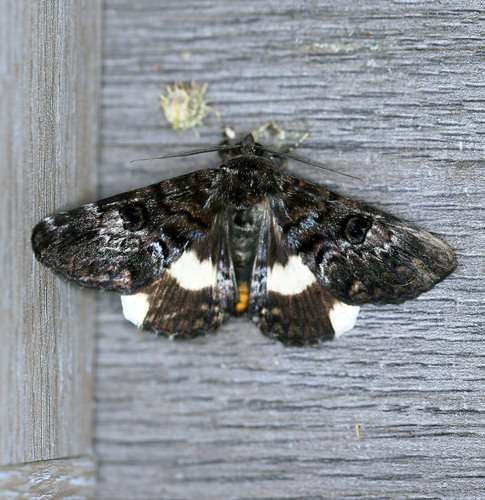
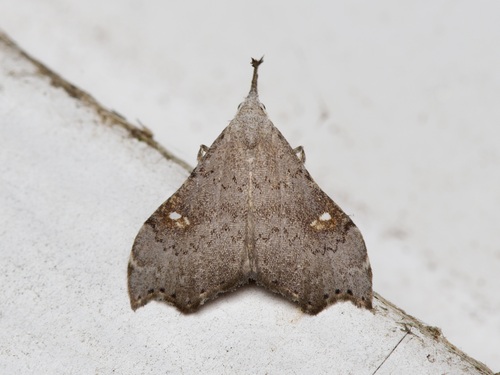
Photo: (c) Chris Rorabaugh, all rights reserved, uploaded by Chris Rorabaugh

Taxonomy

Animalia Arthropoda Insecta Lepidoptera Erebidae Empyreuma

More from Erebidae

Sources: GBIF, iNaturalist, Wikipedia, NCBI Taxonomy · Disclaimer

Identify Empyreuma pugione Linnaeus, 1767 instantly — even offline

iNature uses on-device AI to identify plants, animals, fungi and more. No internet needed.

Download iNature — Free

Start Exploring Nature Today

Download iNature for free. 10 identifications on us. No account needed. No credit card required.

Download Free on App Store