About Empodisma minus (Hook.f.) L.A.S.Johnson & D.F.Cutler
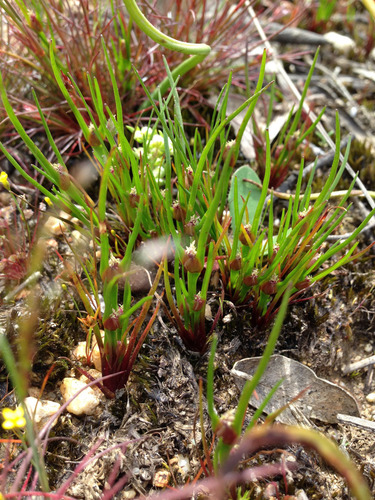
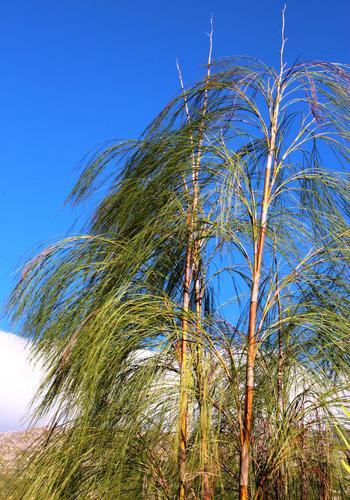
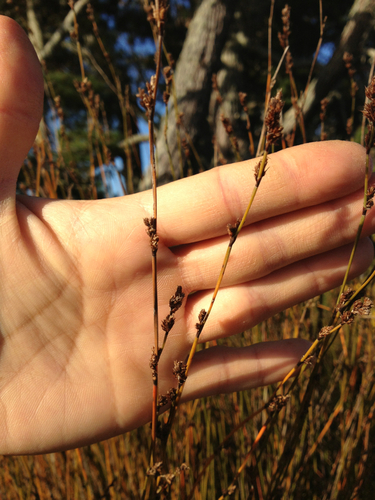
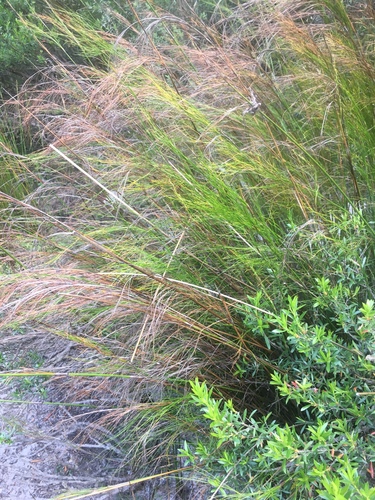
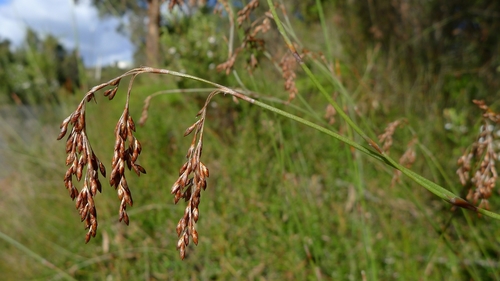
This species, Empodisma minus, has stems 15–200 cm long that are numerous branched, semi-terete, and colored dark green to dark brown. Short stems remain upright, while taller stems become procumbent. 5.5–12 mm long sheaths, which are reduced leaves that lie close to the stem and bear whitish axillary hairs, appear to divide stems into multiple segments. Its primary inflorescence are spikelets, which are typically solitary and sessile in both male and female plants; male spikelets are axillary, while female spikelets form in upper axils. The fruit is a hard oval sessile nut around 2 mm long. The plant has a robust rhizome about 8 mm in diameter, with numerous roots that grow ascending horizontally. It produces yellow flowers from August to December, and fruits develop from November to March. In Australia, Empodisma minus grows most densely in southeastern parts of the country and also occurs in Tasmania; it is absent only from Western Australia and the Northern Territory. It is also found in New Zealand. Across both regions, it grows from coastal to alpine areas, and prefers fens, bogs, heaths, swamps, and stream margins. Empodisma minus belongs to the family Restionaceae, whose members tolerate nutrient-poor soils and seasonal drought. While occasional fires can harm this species, it is able to resprout, though this growth occurs slowly. In New Zealand, the species commonly forms thick carpets growing alongside species including Leptospermum scoparium (a heath shrub), Baumea teretifolia (a sedge), Gleichenia dicarpa and Gleichenia microphylla (ferns), and Sphagnum cristatum (a moss). It is classified as the dominant species in New Zealand's ombrotrophic mires, largely due to its strong peat-forming ability, and has been described as an ecosystem engineer for fen-to-bog transitions. In Australia, it is associated with Richea continentis and Baeckea gunniana (shrubs), Gleichenia alpina (fern), Sphagnum cristatum (moss), and Astelia alpina (a monocotyledonous herb). Dry seasons promote decomposition and limit peat formation, while wet seasons stimulate root growth and peat accumulation. Empodisma minus acts as a host plant for the larvae of the endemic New Zealand moth species Aponotoreas synclinalis.