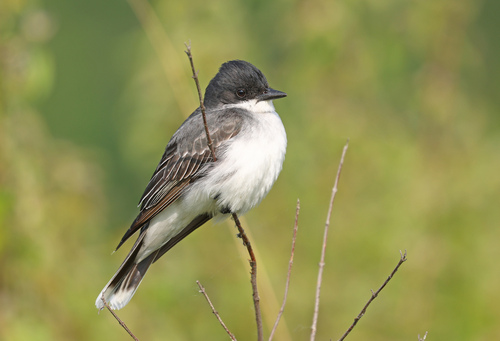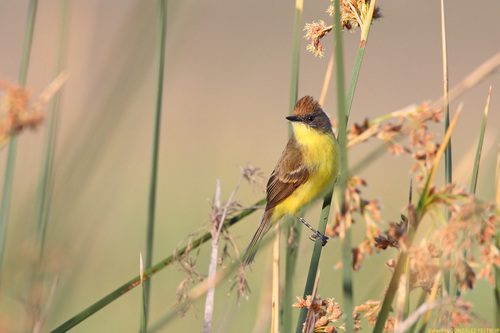
About Empidonax difficilis S.F.Baird, 1858
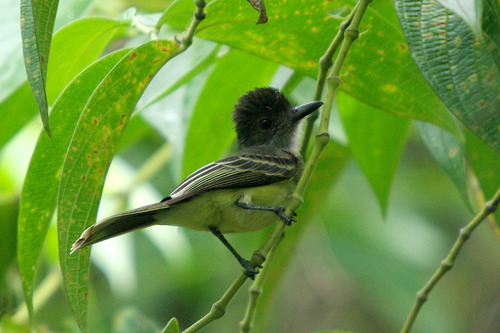
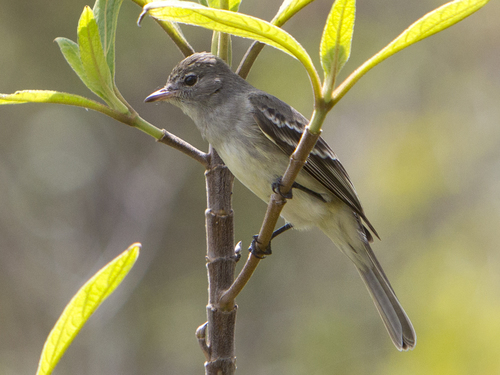
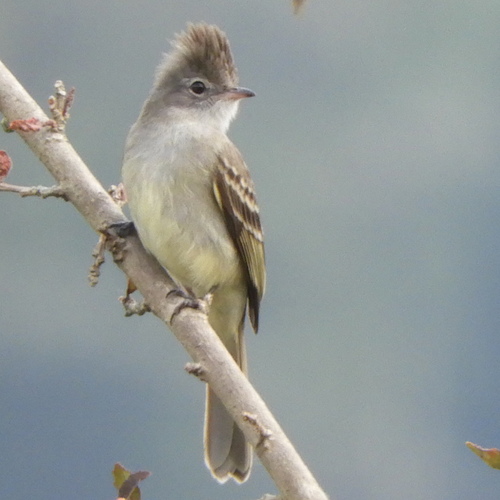
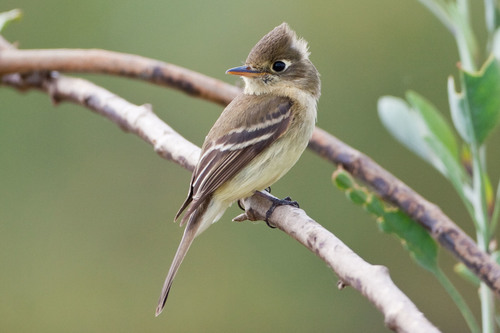
Description: Adult Pacific-slope flycatchers (Empidonax difficilis) have olive-gray upperparts that are darker on the wings and tail, with yellowish underparts. They have a prominent teardrop-shaped white eye ring, white wing bars, a small bill, and a short tail. This species is only subtly different in appearance from most other North American Empidonax flycatchers, but it differs in breeding habitat and call. Many species in this genus look very similar, and the most reliable ways to distinguish between them are by voice, breeding habitat, and geographic range. In 2014, DNA testing confirmed a new field mark: the extent of buffy edging on the secondary feathers. This feature can reliably distinguish Empidonax difficilis from yellow-bellied flycatchers. The species' song is made up of notes transcribed as pseet, ptsick, and seet, which are usually sung rapidly in sequence. For Pacific populations of this species, the first syllable of the ptsick (or ptik) note is higher-pitched than the second; before this species was reclassified, this was considered the only difference between its call and that of the "Cordilleran" flycatcher (Sibley 2000). The typical position call of a male is a loud, distinctive pit pete or tse-seet, though some males produce a "rising tsweep" or a "slurred tseeweep". Distribution: These birds migrate to Mexico for the winter. Central-southern Mexican populations of the species are non-migratory resident birds. Non-resident migratory wintering birds occupy the western coast from Jalisco northward, then extend inland into a narrow corridor strip on the western flank of the Sierra Madre Occidental. As of November 2019, there has been one recorded case of this West Coast species appearing on the East Coast of the United States, in Palmyra, New Jersey. Habitat: Empidonax difficilis, commonly known as the western flycatcher, lives in both coniferous and deciduous forests. Within its range, it can be found in mixed woods, Douglas fir forests, redwood forests, pine-oak forests, and many other wooded environments, including riparian woodlands. Its preferred breeding habitat is usually located near running water. The species builds a cup-shaped nest in the fork of a tree, typically placed low on a horizontal branch. Females usually lay between two and five eggs per clutch.