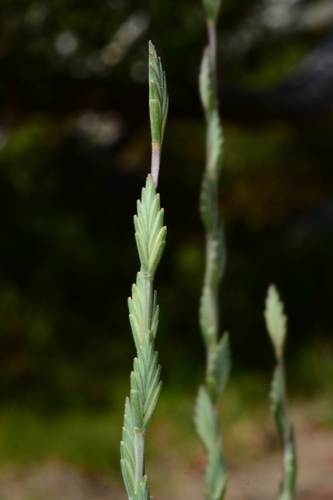
About Elymus hystrix L.
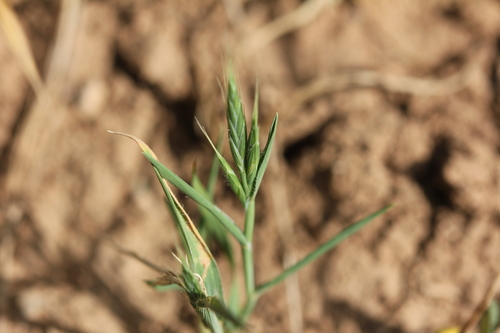
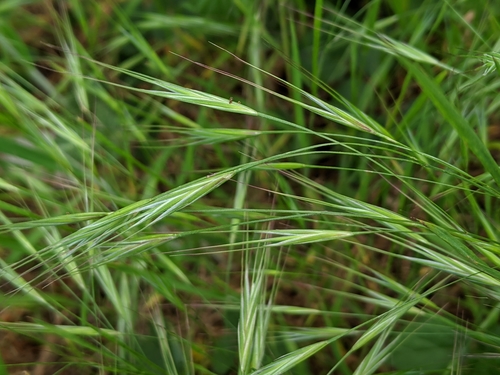
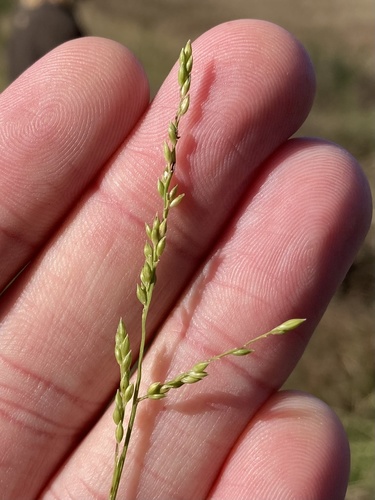
Elymus hystrix L. is a perennial herbaceous grass that regrows each year after seasonal dieback. It grows between 2.5 and 4.5 feet tall, with erect stems that bear alternate, simple leaves. It produces white flowers that bloom in spring. Typically, this species has two spikelets at each of its five to nine nodes, and unlike many similar native grasses, its spikelets are not surrounded by glumes. Elymus hystrix is self-compatible, meaning it can reproduce using its own pollen, and it is tetraploid, meaning it carries four copies of its genome. This species is distributed in eastern Canada and the United States east of the Great Plains. It most often grows in rocky, wet, partially shaded habitats, including areas near rivers, creeks, and within woods. It does not grow well in heavy shade, and it most commonly inhabits the edges of shaded forested areas. Excess shade inhibits its growth, but it is relatively resistant to soil compaction compared to other herbaceous plant species. Ecologically, Elymus hystrix acts as a larval host plant for the northern pearly eye. Wild house mice (Mus musculus) feed on the seeds of this species. It has been suggested that through domestication and selection for larger seed size and improved nutritional value, Elymus hystrix seeds could become useful for human consumption. Similar grass species in this genus are already consumed by livestock across the United States. Other Elymus species have higher crude protein content than many other native grasses, but further research is needed to confirm whether Elymus hystrix shares this trait. It is also unclear how nutritious the leafy grassy portion of the plant would be for humans, but this species is also considered a potentially interesting food source for livestock.