About Elymus caninus (L.) L.
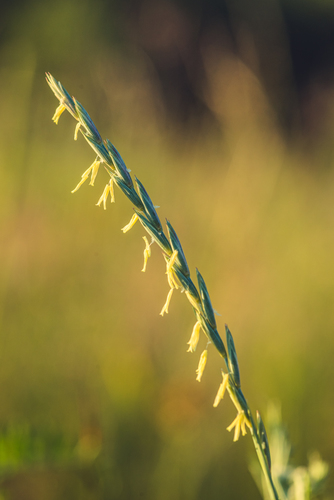
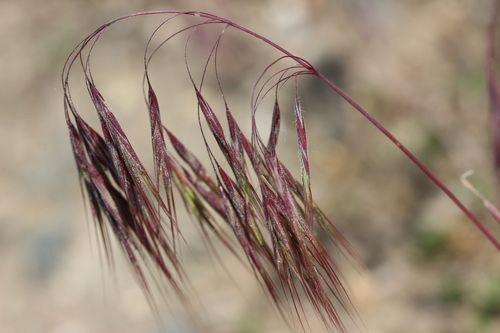
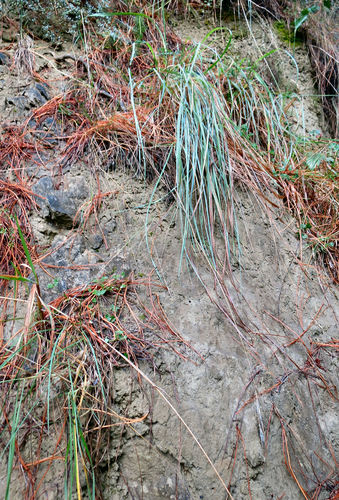
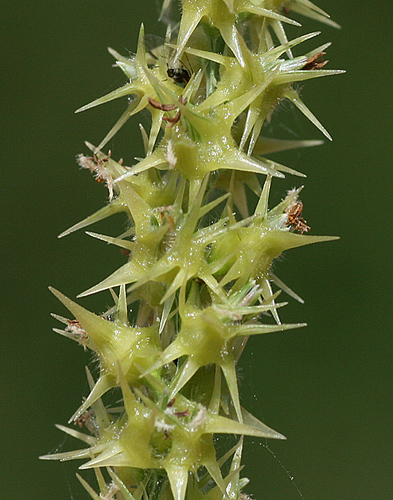
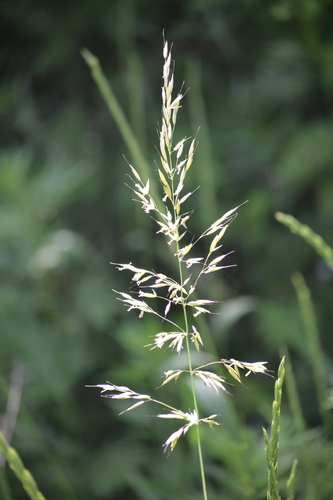
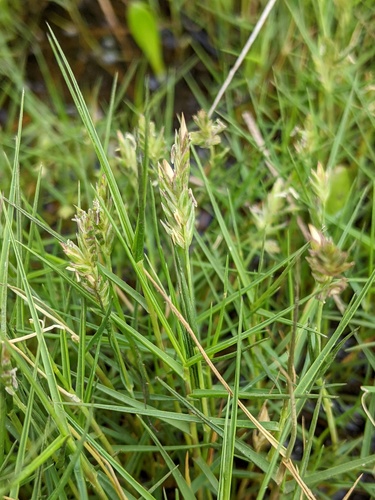
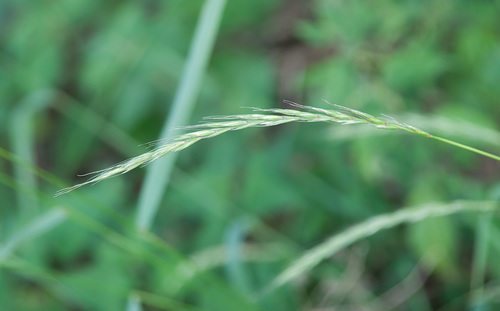
Elymus caninus, commonly known as bearded couch or bearded wheatgrass, is a flowering plant species belonging to the Poaceae family. It is native to Europe, including the United Kingdom, and has been introduced to the U.S. states of Oregon and Washington. This species has been documented with two distinct morphotypes: pauciflorum and caninus. It grows in forest regions across Europe, ranging as far east as West Asia, and is a self-pollinating caespitose wheatgrass with green lax leaves. Due to its widespread distribution, E. caninus exhibits substantial variation at morphological, isozyme, prolamine, and DNA levels. Key morphological differences across populations include variation in the number of florets per spikelet, the length of lemma awns, and the pubescence of leaves and leaf sheaths. Populations from China, Italy, Pakistan, and Russia have been found to have the lowest levels of intra-population morphological variation. This reduced variation may result from selection factors, population bottlenecks, genetic drift, or a combination of these processes. Although E. caninus is generally a self-pollinating perennial, outcrossing rates vary between populations. Outcrossing takes place when florets open during anthesis. Research has found that when E. caninus grows near other Elymus species, specifically the studied E. mutabilis and E. fibrosus, hybridization occurs, and most resulting hybrids are sterile. E. caninus populations growing alongside other Elymus species show higher levels of genetic and morphological variation than populations growing in isolation. This indicates that one-sided gene flow, from E. mutabilis to E. caninus, occurs between these Elymus species. To further investigate introgression into E. caninus, a study examined potential introgression from Triticum aestivum into E. caninus populations. No spontaneous hybridizations were observed, leading to the conclusion that introgression of T. aestivum traits into E. caninus populations is improbable, even though the two species often grow in the same areas. E. caninus is an allotetraploid, with the genome constitution StStHH. Its St genome derives from New and Old World Pseudoroegneria species, while its H genome comes from small-seeded Hordeum species. A 1999 study concluded that the presence of fixed heterozygosity with no segregation confirms that E. caninus is naturally allotetraploid. Fixed heterozygosity occurs when the diploid parental genomes are homozygous for different alleles, a trait that has also been reported in other Elymus species.