About Elousa mima Harvey, 1876
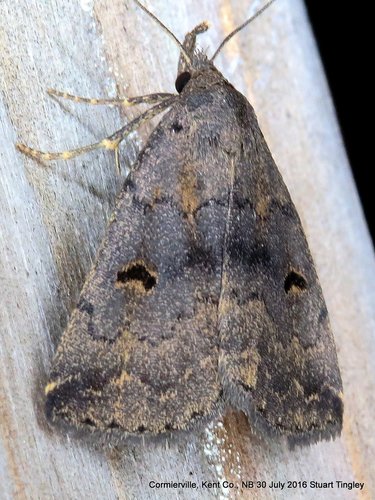
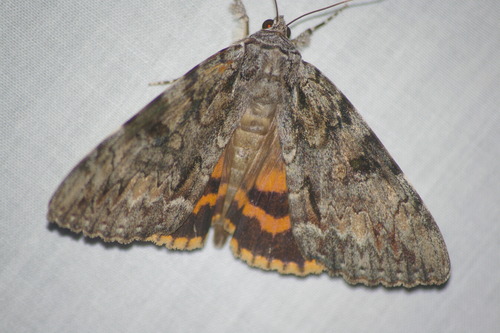
Heteranassa is a monotypic moth genus in the family Erebidae, described by J. B. Smith in 1899. The only species in this genus is Heteranassa mima, which was first described by Leon F. Harvey in 1876. This moth is found in warm, arid habitats across North America, ranging from California to Texas, north to Oklahoma, and extending south as far as Oaxaca, Mexico. For this species, forewing length measures 9.7–14.9 mm in males, and 11–16.7 mm in females. On the forewings, the antemedial line is pointed apically on the anal vein. The medial line is black, and is pointed mesially on the radial, cubital, and anal veins. The postmedial line is black, and outlines the apical half of the discal area. The subterminal line is brown and jagged, and borders the lighter-colored terminal area. The terminal line is scalloped outwardly at the vein termini, and the apical margin is traced with lighter coloration. Markings of the reniform spot may appear as a white spot, a thin white vertical dash, a barely visible dash, or a black marking. The hindwing has a gray-white ground color, with darker shading toward the distal end. The hindwing terminal line is black, and scalloped apically at the vein termini. This species has multiple generations per year, with adults active on wing year-round. Its larvae feed on species of Prosopis and Acacia.