About Eleusine indica (L.) Gaertn.
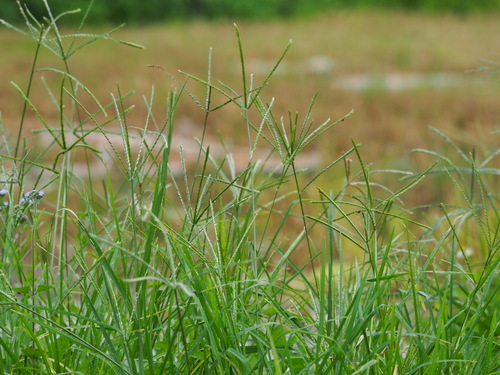
Eleusine indica, commonly called Indian goosegrass, yard-grass, goosegrass, wiregrass, or crowfootgrass, is a species of grass in the family Poaceae. It is a small annual grass distributed throughout the warmer areas of the world, reaching as far as 50 degrees latitude. It is an invasive species in some regions. Eleusine indica is closely related to Eleusine coracana (finger millet or African finger millet), and the diploid E. indica is likely an ancestor of the allotetraploid E. coracana. E. indica seeds are edible and sometimes used as famine food, but yields are low. It is an important weed of cultivated crops, lawns, and golf courses, and thrives in disturbed areas with compacted soils in full sun. Both tillage and herbicides are used for its control. This low-growing grass can set seed even when closely mown, and some populations have evolved resistance to certain herbicides including glyphosate. Eleusine indica uses C4 photosynthesis, so it can grow in hot climates and during the hotter months of the temperate zone. Its seeds germinate later in spring than most other temperate zone weeds, such as crabgrasses. Though usually considered an annual, it may survive for more than a year in frost-free climates.