About Eleocharis dulcis (Burm.f.) Trin. ex Hensch.
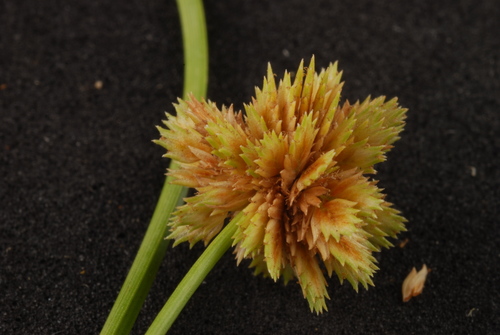
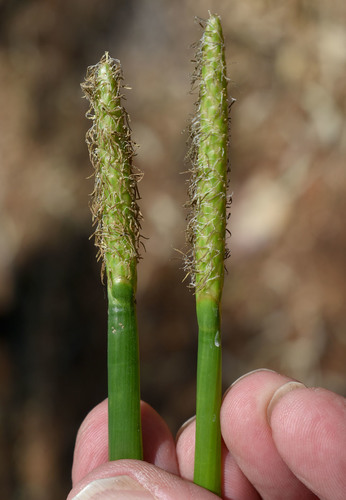
This species, scientifically named Eleocharis dulcis (Burm.f.) Trin. ex Hensch., is commonly known as water chestnut. Despite its common name, it is not a nut, but an aquatic vegetable that grows in marshes, submerged under water, or in mud. It produces stem-like, tubular green leaves that reach approximately 1.5 meters (5 feet) in height. The plant is native to Asia, tropical Africa, and Oceania. In the dry season of Australia's Northern Territory, magpie geese feed on the plant's bulbs, building up fat stores for the upcoming wet season and preparing for breeding. During the wet season, magpie geese use the plant's leaves to construct their floating nests. Water chestnut can be cultivated in paddies sized 2–7.5 meters (7–25 feet) wide and up to 100 meters (330 feet) long to accommodate mechanization, or it can be grown in hydroponic culture. As an aquatic plant, it should always be kept submerged in roughly 10 centimeters (4 inches) of water. It requires consistently high soil temperatures, ideally between 14–15.5 °C (57–60 °F). Corms begin sprouting at 13.6 °C (56.5 °F). The ideal growing medium is sandy loam soil with a pH between 6.5 and 7.2. The plant produces two distinct types of subterranean rhizomes. Under long daylength conditions, rhizomes grow horizontally before turning upward to form daughter plants. Under short daylength conditions, rhizomes grow downward and produce a corm at their tip. Photoperiod also has a significant effect on corm growth rate; corms develop much more slowly when the photoperiod is longer than 12 hours. Corms themselves serve as the propagating material for cultivation, though transplants may also be used. Machinery such as tractor-mounted vegetable planters can be used for planting. In addition to its edible corms, the plant's leaves can be used as cattle feed, mulch, or for compost.