About Eleocharis acuta R.Br.
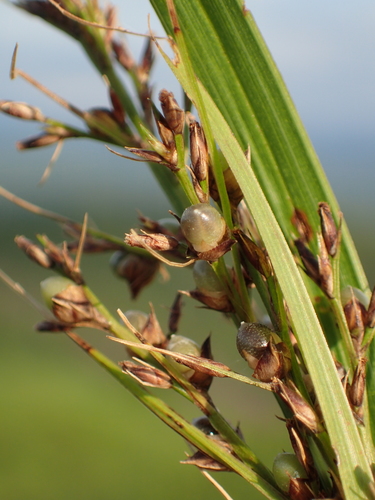
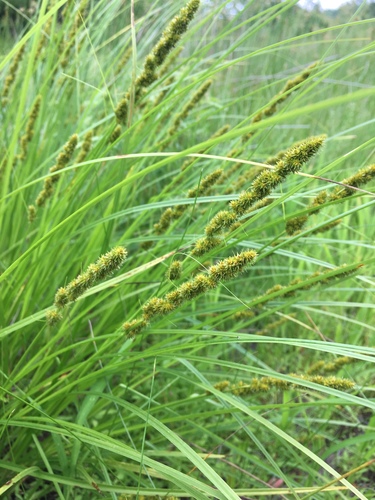
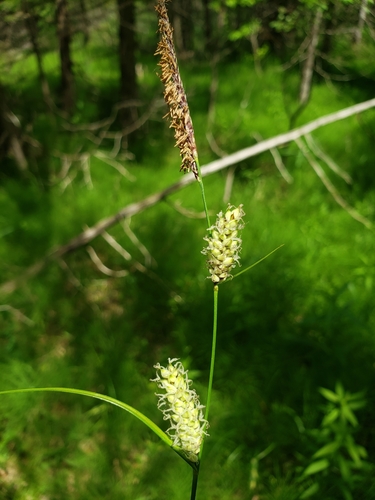
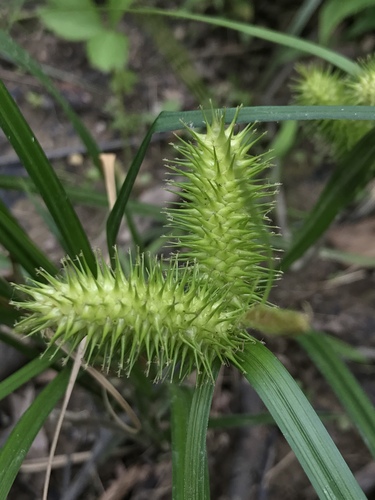
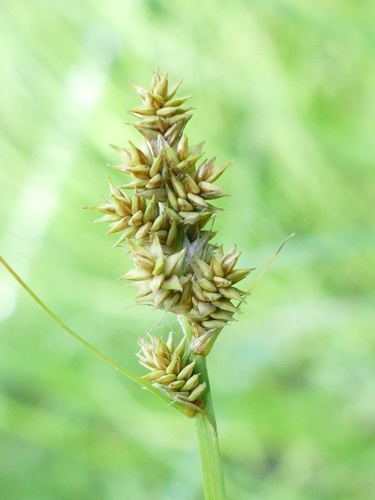
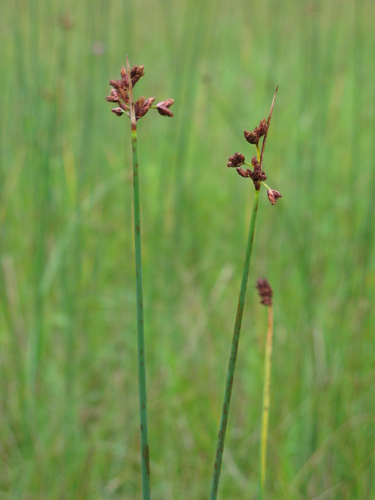
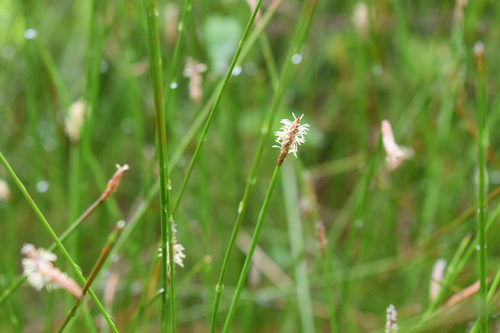
Eleocharis acuta R.Br. is a rhizomatous perennial herb that grows as a grass-like sedge. It typically reaches a height of 0.7 metres, or 2.3 feet. It blooms between September and December, producing brown flowers. Its foliage is fine, upright, cylinder-shaped, deep green, and tapers to a fine point. It has tufted, terete culms that measure 10 to 60 centimetres, or 3.9 to 23.6 inches, in length, with a diameter of 1 to 3 millimetres, or 0.039 to 0.118 inches. The inflorescence grows at the tip of the spike, and is made up of narrow-ovoid to narrow-cylindrical spikelets that are 10 to 30 mm, or 0.39 to 1.18 inches, long. After flowering, it forms a shiny yellow to brown nut. The nut has a plano-convex to biconvex, broad-obovoid shape, and is around 1.5 to 1.7 mm, or 0.059 to 0.067 inches, long, with a diameter of 1.1 to 1.2 mm, or 0.043 to 0.047 inches. This species is widely distributed across all Australian states, but does not occur in the Northern Territory. It is also found in New Zealand, New Guinea, and Norfolk Island. In Western Australia, it grows in and around swamps and clay pans in the Mid West, Wheatbelt, Great Southern, and Goldfields-Esperance regions, in sandy-peaty-clay soils. It typically grows in water or wet soil, in seepage areas, freshwater lakes, and creek beds. It can grow in stationary to slowly moving water, and its range extends from the coast to many inland areas. It grows in wetland areas, provides nesting material for waterbirds, and its seeds serve as a food source for waterbirds. This plant is sold commercially, because it can form dense swards that easily colonize shallow fresh water areas, including the edges of lagoons, dams, drainage lines, and waterlogged low-lying areas.