About Elaeagnus multiflora Thunb.
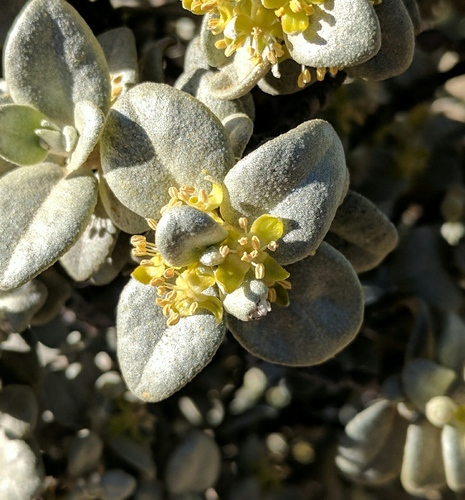
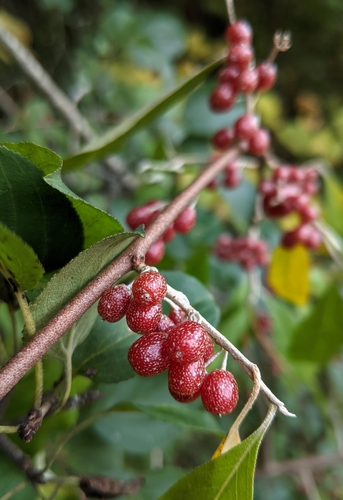
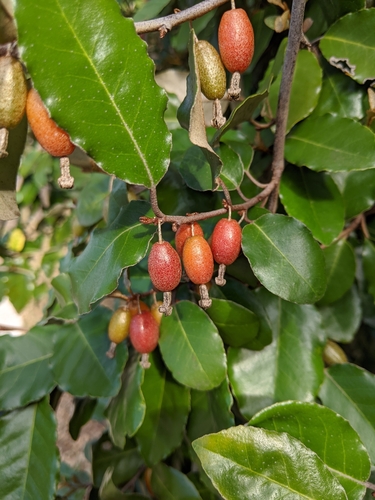
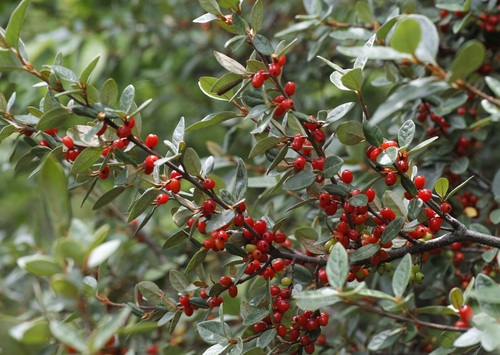
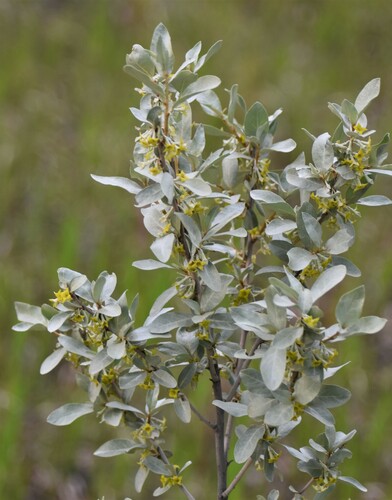
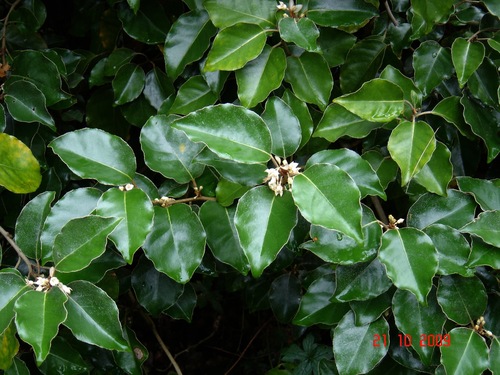
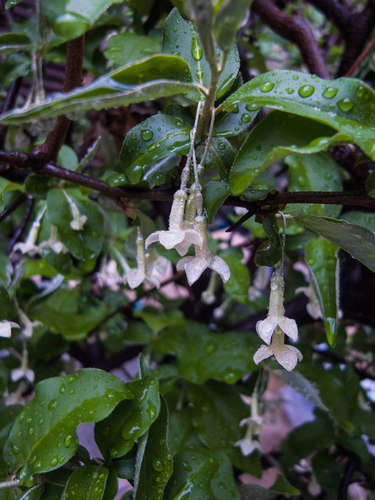
Elaeagnus multiflora Thunb. is a deciduous or semi-evergreen shrub or small tree growing to 2–8 m (6 ft 7 in – 26 ft 3 in) tall, with a trunk up to 30 cm (12 in) in diameter covered in dark brown bark. Shoots are densely covered in minute red-brown scales. Leaves are ovate to elliptic, 3–10 cm (1.2–3.9 in) long and 2–5 cm (0.79–1.97 in) broad; they are green on the upper side, and silvery to orange-brown below with dense small scales. Flowers grow solitary or in pairs in leaf axils, are fragrant, and have a four-lobed pale yellowish-white corolla 1.5 cm (0.59 in) long. Flowering occurs in mid-spring. The fruit is a round to oval drupe 1 cm (0.39 in) long, starting as silvery-scaled orange, ripening to red dotted with silver or brown, and hanging pendulous on a 2–3 cm (0.79–1.18 in) peduncle. When ripe in mid- to late summer, the fruit is juicy and edible, with a sweet but astringent taste somewhat similar to rhubarb. The fruit skin is thin and fragile, making it difficult to transport, which reduces its viability as a food crop. Like other species in the genus Elaeagnus, E. multiflora is actinorhizal, growing in symbiosis with the soil bacterium Frankia. These bacteria fix atmospheric nitrogen, turning it into a usable form for the host plant, and indirectly for other nearby plants. This trait allows the plant to grow in poorer soils than it could otherwise. There are several cultivars: Gigantea or Daiougoumi, Tillamook or Carmine, Red Gem, Sweet Scarlet, Hortensis, ranked here by fruit size, which tends to be inversely related to taste quality. Hybridization efforts have produced the JR1 hybrid, which has improved fruit size and taste. This species is occasionally grown in Europe (Lorraine, France) and North America as an ornamental plant and for its fruit. It is an established exotic species in parts of the eastern United States. In China, the leaves are used as a medicinal plant and natural remedy for cough, diarrhea, itch, foul sores, and cancer. The USDA classifies this shrub as a medium nitrogen fixer that improves soil quality.