About Ehretia tinifolia L.
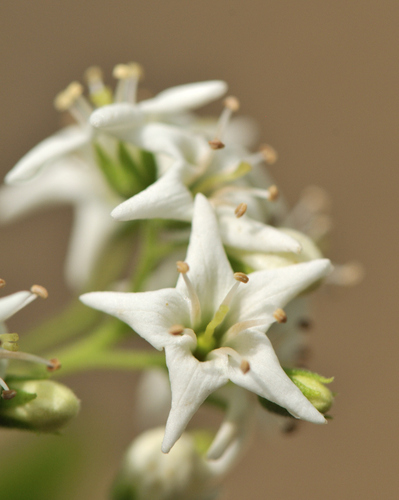
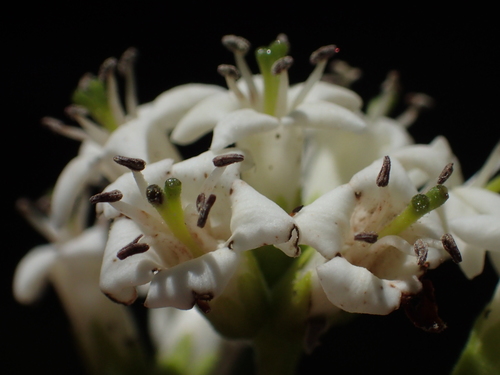
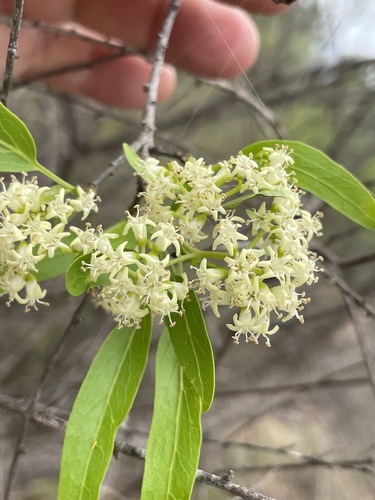
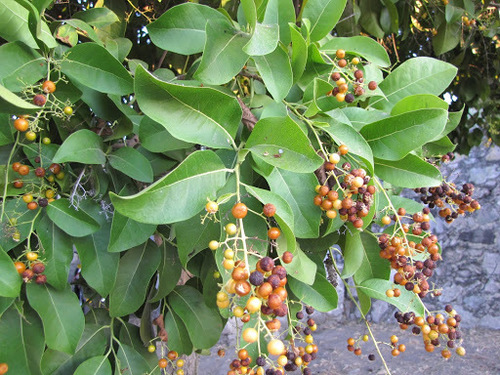
Ehretia tinifolia L. is a woody perennial tree that usually grows 0.5 to 3 meters tall, branching from its base. Its bark ranges from reddish-brown to red-purple, and is exfoliating: the outer bark splits and peels off in paper-like sheets. Its leaves are coriaceous (leathery) and elliptic, measuring 1 to 3.3 centimeters long. Flowers are urceolate (urn-shaped), colored white to Mexican pink, and grouped in clusters of 5 to 8 individual flowers. This species can reproduce vegetatively from buried branches, though this method of reproduction is rare. It is typically found in Mexico, the southeastern United States, and some countries in Central America and the Caribbean. Its distribution extends from the southern United States to the Mexican states of Veracruz and Oaxaca, where it grows in many vegetation types across a wide altitudinal range from 1375 to 3230 meters above sea level. It can be found in all mountainous, cold regions of Mexico; in the Mexican state of Tlaxcala, it was once very common in Calpulalpan and Tlaxco, but overcollection has reduced its wild populations there. For medicinal use, people employ this plant's fruits and leaves. These plant parts contain tannin, gallic acid resin, and the glucoside arbutin, which has diuretic properties that increase urine output. Arbutin breaks down into hydroquinone (quinol), which suppresses urine fermentation in the bladder. This plant also reduces inflammation from bladder and bronchial inflammation associated with the common cold. Fruits are more commonly used than leaves. For acute bronchitis, using this plant can reduce excess expectoration; to improve results, it is combined with penicillium, eucalyptus leaves, and borage. Chewed leaves of this plant are applied externally to sores and to treat headaches. For stomach pain and cramps, chewed leaves are also used. As an infusion, the plant is used to treat severe colds and diarrhea. It is most commonly used for its diuretic action to treat kidney stones, inflammation or infection of the urinary tract, prostatitis, and edema. Its therapeutic uses are similar to those of the European plant uva ursi (Grape-ursi). The plant's sweet and sour fruits are also used to make alcoholic beverages, liqueurs, syrups, and jams, and to add flavor to soups. A brownish-yellow dye can be obtained from the leaves; this dye does not require a mordant to adhere to fabric. A precaution is noted: this species should not be confused with the ornamental piracanto (also called manzanita), which is planted in public and private gardens. Both green and mature fruits of this ornamental plant are toxic.