About Ehretia saligna R.Br.
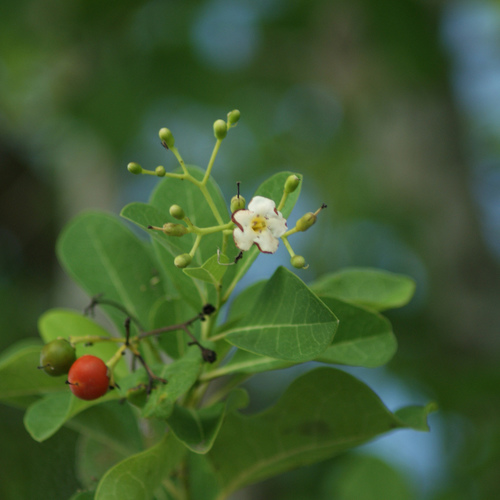
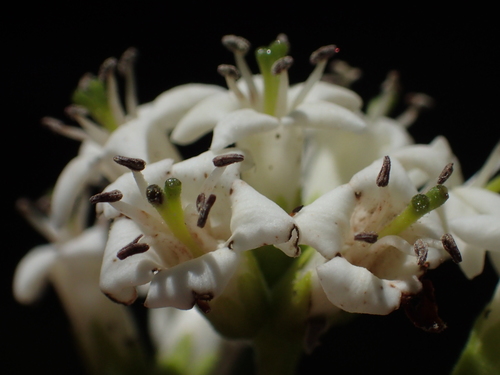
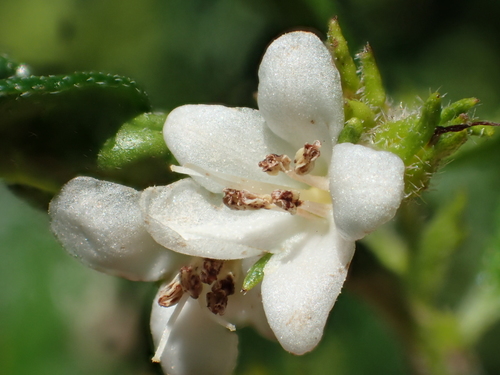
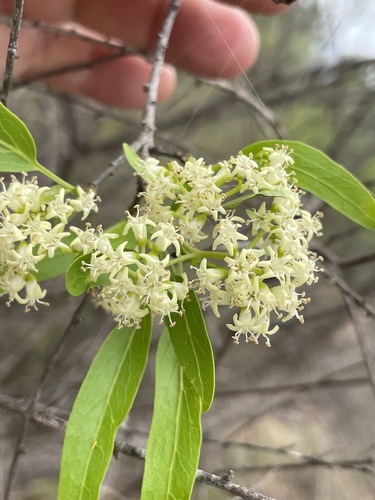
Ehretia saligna, commonly known as peach bush, native willow and peachwood, is a species of shrubs or small trees endemic to Northern Australia. Its natural range extends from the Gascoyne region, across the Northern Territory, through northern Queensland, and into the coastal regions of Southern Queensland and New South Wales. This species grows as a shrub or small tree with a weeping growth habit and simple, narrow leaves. Green-white flowers 1–2mm long are produced in panicles during autumn or spring. After flowering, the plant develops yellow or red fruit 1 to 4 mm in diameter, which contains two to four large seeds. The fruit is edible to humans, and was an important food source for Aboriginal Australians, especially in more arid regions. The fruit also acts as a food source for many bird species. Ehretia saligna grows in an extremely wide range of environments, from tropical rainforest and marshland to hot desert regions. It also shows substantial variation in leaf type, flower structure and growth habit. This variability led to the species being historically split into at least two distinct species: E. membranifolia and E. saligna. These former species are now considered varieties, despite intergrading completely. Ehretia saligna var. membranifolia is restricted to the Northern Territory, North Queensland and coastal regions of Central Queensland extending southwards to coastal regions of northern New South Wales. It occurs almost exclusively in moister, more heavily wooded environments, including monsoon forest, littoral rainforest and the margins of lowland rainforest. In line with its more mesic habitat, it has a larger growth form, commonly growing as a small tree up to 6 metres tall, with relatively broad leaves that are approximately 4 times as long as broad. Ehretia saligna var. saligna is largely found in more arid regions and open forests and woodlands, although it is occasionally found in monsoon forest. This variety has a much wider range than E. saligna var. membranifolia, and occurs in coastal Western Australia, across both arid and coastal arid regions of the Northern Territory and Queensland. While it can grow to 6 metres in height, it is more commonly found as a shrub 2–4 metres tall. Its leaves are comparatively narrow, commonly 8–10 times as long as broad. The plant is a moderately important browse species for cattle and sheep, especially during droughts. In addition to eating the fruit, Aboriginal Australians used a decoction of the plant’s wood for pain relief. Although it grows slowly, it is also occasionally planted as a foliage tree.