About Ehretia anacua (Terán & Berl.) I.M.Johnst.
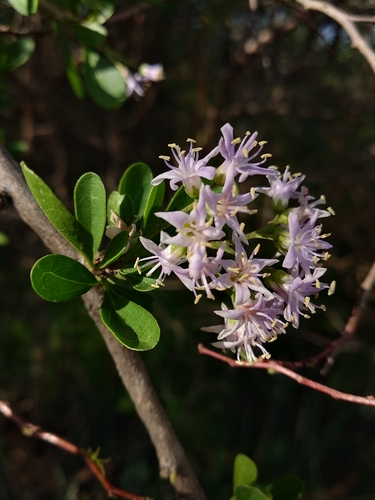
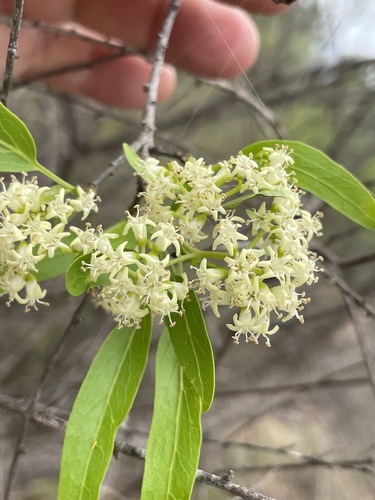
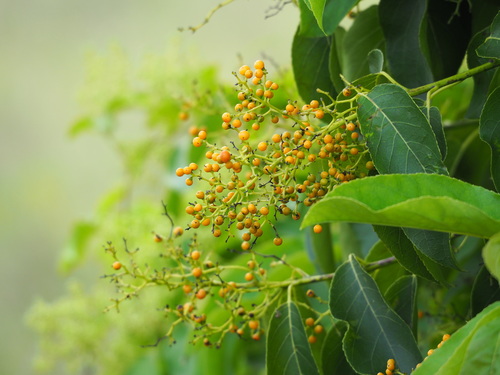
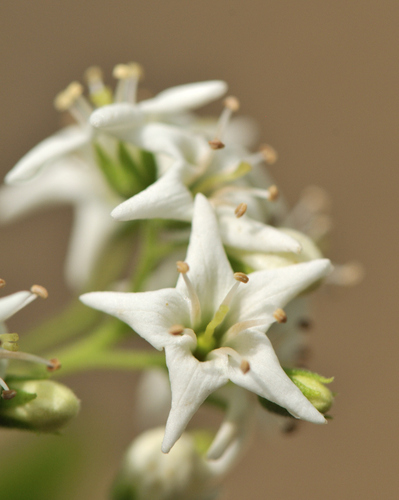
Ehretia anacua (Terán & Berl.) I.M.Johnst., commonly called anacua, grows to a height of 20–45 ft (6.1–13.7 m) and a trunk diameter of 0.3 m (0.98 ft). It often produces suckers and may grow multiple trunks. Its bark ranges from reddish-brown to gray, marked with narrow furrows and peeling scales. The dark green leaves are 3–8 cm (1.2–3.1 in) long and 2–4 cm (0.79–1.57 in) wide, shaped elliptical or ovate. The upper leaf surface is noticeably rough, with a texture similar to low-grade sandpaper. Anacua is a partial evergreen, shedding and replacing some of its leaves in early spring. Abundant white flowers grow in panicles or cymes that are 5–7.5 cm (2.0–3.0 in) long, forming at the ends of twigs. When blooming from spring to summer, the flowers cover the tree so completely it resembles a tree covered in snow. Individual flowers are 8 mm (0.31 in) wide and have 5 corolla lobes. The plant produces spherical drupes (stone fruits) that are 8 mm in diameter and yellowish-orange. Each drupe contains two stony seeds, each holding two seeds inside. The drupes are edible for humans, and are also eaten by mammals and bird species including the clay-colored thrush. Anacua has a lifespan of at least 50 years. As a shrub, anacua grows on dry hillsides; it grows into a full-sized tree in the moist soils of riparian zones and floodplains. It occurs at elevations ranging from sea level to 1,000 ft (300 m). Ecologically, the leaves of Ehretia anacua are the only food source for the Texas tortoise beetle (Coptocycla texana).