About Ecliptopera silaceata (Denis & Schiffermüller), 1775
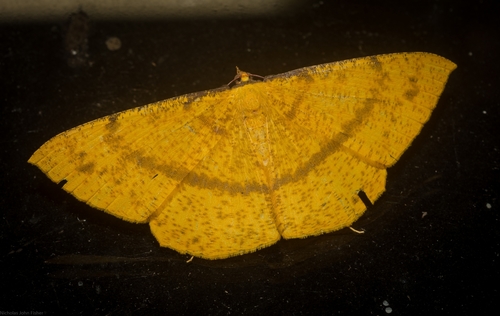
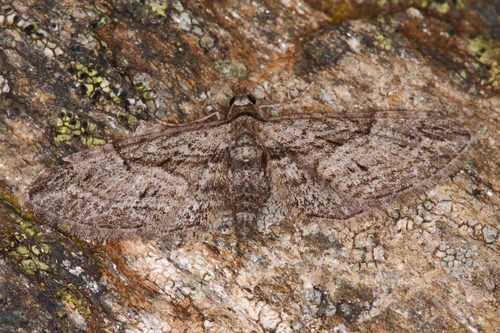
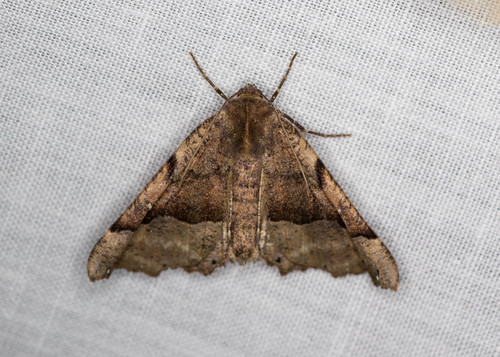
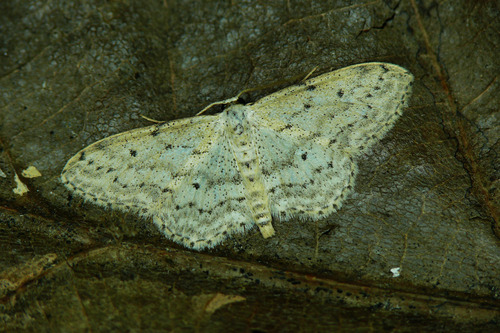
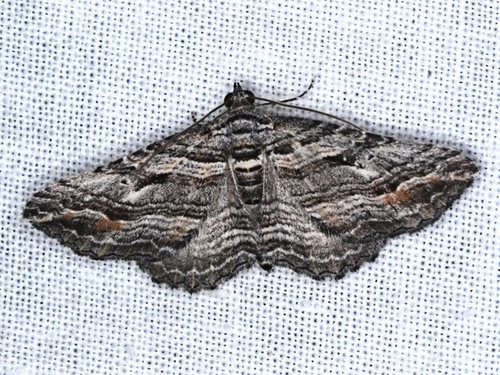
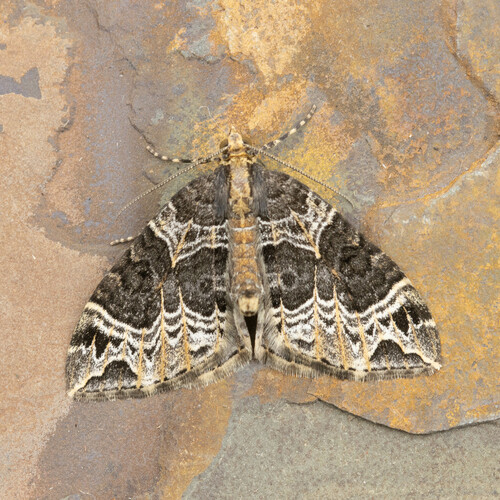
Ecliptopera silaceata, commonly called the small phoenix, is a moth species belonging to the family Geometridae. It was first formally described by Michael Denis and Ignaz Schiffermüller in 1775. This species can be found across most of Europe, including the British Isles. Its range extends east through Russia, covering the Altai region and Vyatskoye, reaches north into the Arctic Circle, and extends south to the Caucasus. It is also present in North America. The wingspan of this moth measures 23 to 27 mm, and forewing length ranges from 13 to 17 mm. The basal region of the forewing is dark grey, bordered by a light-coloured band that usually contains dark stains. The wide discal region is black-brown, and often holds a near-elliptical white marking in its centre. The marginal area is brown, with several distinct arrow-shaped patches. Two or three distally-pointing peaks extend as orange strokes, sometimes reaching all the way to the outer edge. Below the apex, there are dark arch-shaped stains, and a white wavy line runs along the outer edge. The hindwings are white-grey, with prominent crosslines and a small black heart-shaped marking. The head, thorax, and abdomen are brown in colour. Prout has described multiple variants of this species. The larva is long and slender, with variable colouration ranging from green to flesh-colour. The thoracic segments and the final four abdominal segments have a red or blackish mediodorsal line, while the middle abdominal segments have blackish dots. The venter bears a white line, which is sometimes edged with pink. The preferred habitats of Ecliptopera silaceata are semi-shaded locations in deciduous and mixed forests, along with young forest plantations and heaths. Adult moths produce two generations annually, active from May to July, and again from August to September. Larvae feed primarily on willowherbs. The compact, brownish-green pupa is the overwintering stage of this species.