About Echeveria nodulosa (Baker) Ed.Otto
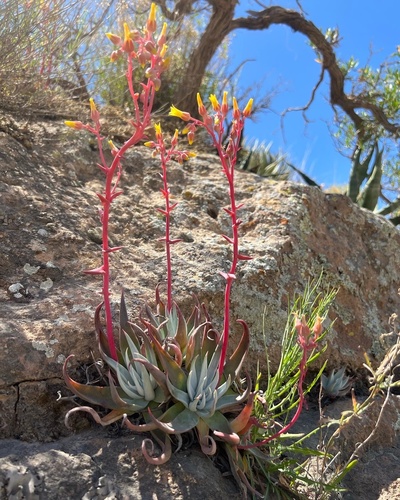
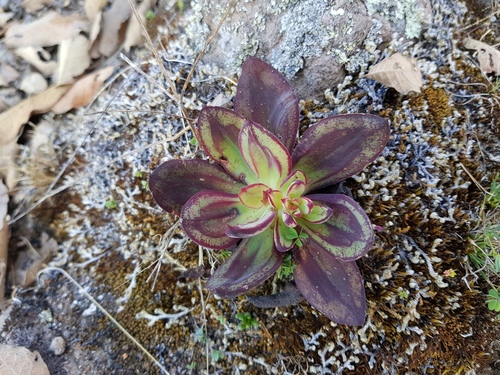
Echeveria nodulosa, commonly called 'painted echeveria', is a species of succulent flowering plant belonging to the Crassulaceae, also known as the stonecrop family. It is fairly popular in cultivation. This plant is native to Mexico, where it is widely distributed and quite common in northern Oaxaca and southern Puebla. It is recognized for its striped, purplish leaves, its knobby stems—the trait that gives the species the name nodulosa—and its seasonal flower displays. This species is relatively resistant to disease. However, like all succulents, it may be affected by scale insects or mealybugs, which are attracted to the tight crevices and folds between its leaves. If infestations are addressed early, these insects do not threaten the plant’s lifespan. Larger, long-term infestations can drain the plant’s vigor and eventually lead to death. When the plant is in bloom, flower buds can sometimes attract aphids, which are often hard to spot because they resemble water droplets on the blossoms. Introducing ladybugs can help manage aphid infestations, as ladybugs readily eat aphids, particularly during the ladybug larval stage. Pests can easily be washed off with a gentle spray of water, removed by hand, or treated with a spray of diluted rubbing or isopropyl alcohol. This treatment is best applied in the early evening, because wet leaves exposed to sunlight can cause leaf burn, especially when rubbing alcohol or other chemicals are used. Store-bought products including horticultural oil, insecticidal soap, and neem oil are also effective for pest control.