About Ebenopsis confinis (Standl.) Britton & Rose
Growth Form
Ebenopsis confinis is a stiffly branched, drought-deciduous, multi-stemmed large shrub that grows into a small tree, with a spreading crown.
Bark Characteristics
Its bark ranges in color from gray-brown to reddish brown; it is smooth when young and becomes scaly as it ages.
Twig and Spine Features
Twigs are moderately stout, and each leaf node bears a pair of 2 to 8 mm long stipular spines.
Leaf Structure
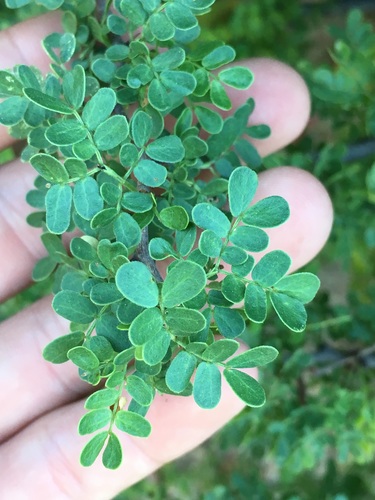
The leaves are small, alternate, and bipinnately compound.
Inflorescence Peduncles
Inflorescences develop from 1 to 3 peduncles per shoot, each peduncle measuring 3 to 8 mm long.
Flower Cluster Size
Flower clusters hold approximately 17 to 35 individual flowers.
Bract Characteristics
Bracts are obovate to cuneate or spatulate, 0.6 to 1 mm in size, and persist through anthesis.
Calyx Shape
The calyx is campanulate in shape.
Flower Appearance
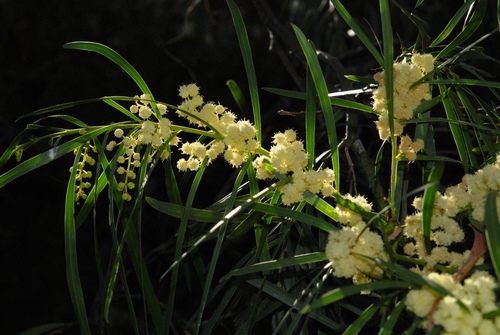
Flowers are small, yellowish white, fragrant, and arranged in fluffy, pom-pom-like clusters.
Fruit Structure
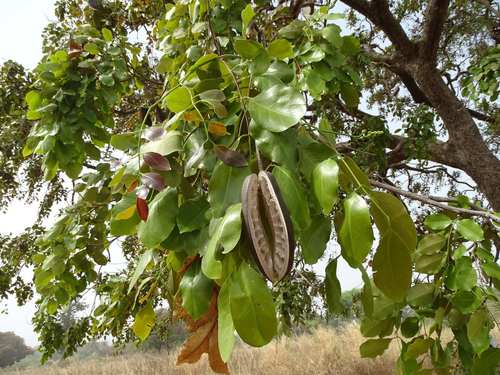
The species' distinctive fruit is an oblong, woody-textured, blackish pod that contains 8 to 10 seeds.
Seed Dimensions
The seeds are large, measuring 11 to 16 mm long and 10 to 13 mm wide.
Endemic Range Core
Ebenopsis confinis is near-endemic to the Baja California Peninsula.
Baja California Distribution
It ranges from southeastern Baja California, in the area around Bahia de los Angeles, south to Baja California Sur, where it is locally abundant particularly on the Gulf of California slope and adjacent offshore islands.
Sonora Distribution
It also occurs along a stretch of coast in Sonora.
Habitat and Elevation
This plant grows on desert hillsides and in thin chaparral below 250 m elevation, most often along washes.