About Dysstroma citrata (Linnaeus, 1761)
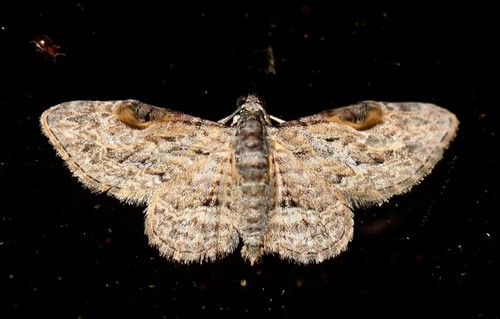
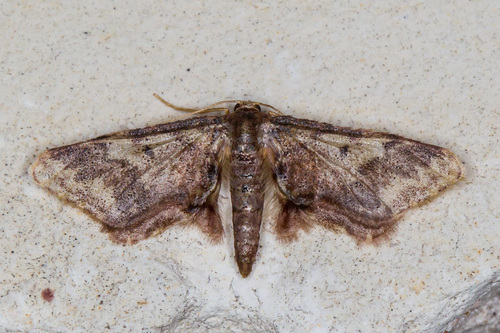
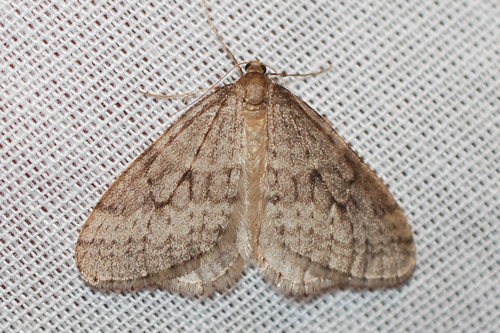
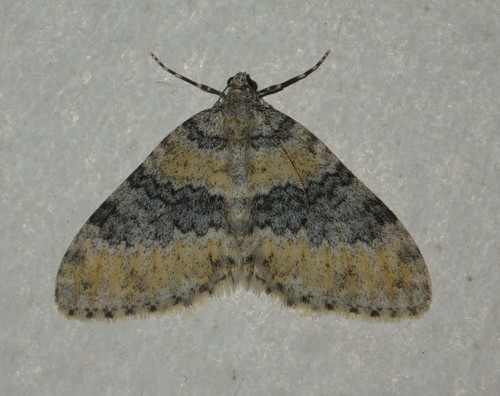
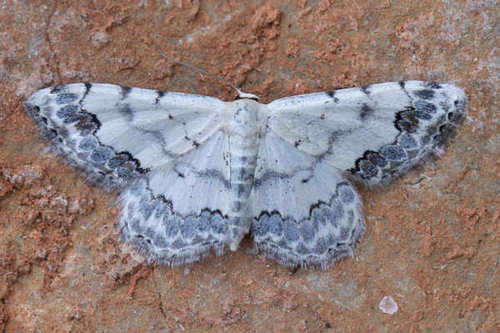
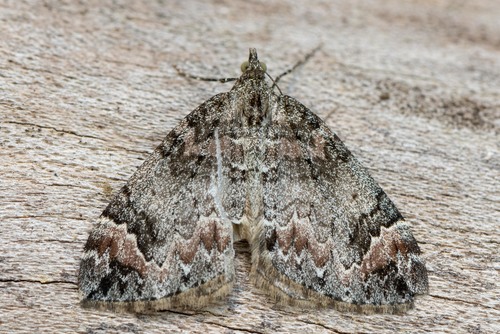
Dysstroma citrata, commonly called the dark marbled carpet or northern marbled carpet, is a moth species belonging to the family Geometridae. Carl Linnaeus first described this species in 1761. It has a wingspan of 25 to 32 mm. The forewings' ground colour can have whitish, grey, black, or brown tints, and the species shows extreme colour variation, including distinctly dark-coloured forms. Prout has documented several aberrations of this species. A key characteristic is the protruding post medial line on the forewings, which typically reaches or interrupts the post discal wavy line. It looks very similar to the related species Dysstroma truncata. Mature larvae are light green with two white dorsal lines, have a roughly cylindrical body shape, and feature a blunt anus flap. The pupa is green with whitish wing sheaths, and has a brown, blunt, rounded cremaster. Adult moths are active in flight from July to August. This species occurs across the Holarctic ecozone, and has also been recorded from India. Its distribution range extends from Europe, across the temperate zone of Asia, through northwest China and Mongolia, to the Russian Far East and Japan. It is not present in Portugal, Mediterranean islands, and Greece. In northern regions, it occurs in Scandinavia as far north as Lapland, and is also found on Iceland and the Faroe Islands. In North America, it ranges from Alaska and Newfoundland to New England and California. It has been found at elevations up to approximately 2,400 metres in the Alps. It favours habitats including mountainous areas, wetlands, mountain forests, and bushy slopes. The larvae feed on a variety of shrubs and herbaceous plants, including Vaccinium species such as V. myrtillus and V. uliginosum, as well as Aster tripolium, Alnus, and Salix.