About Dysgonia algira Linnaeus, 1767
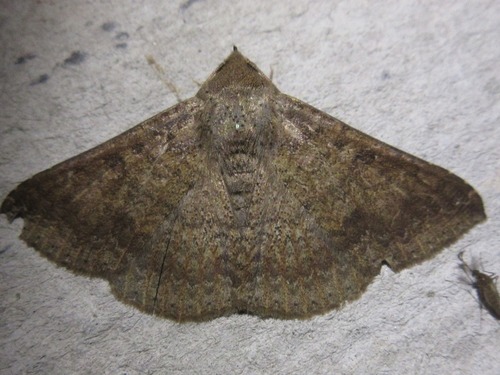
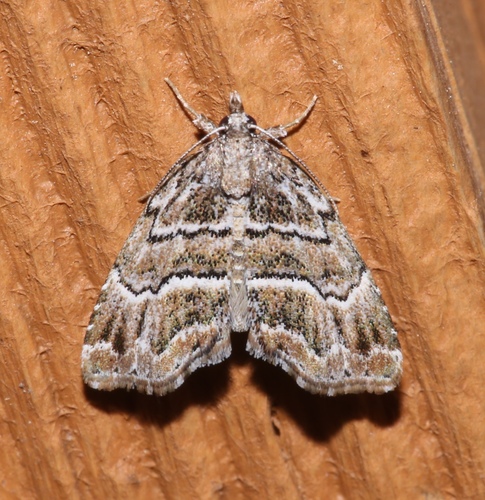
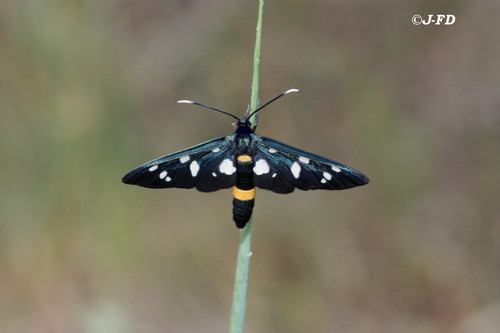
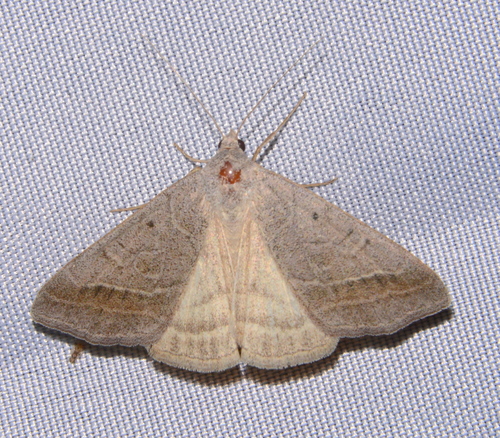
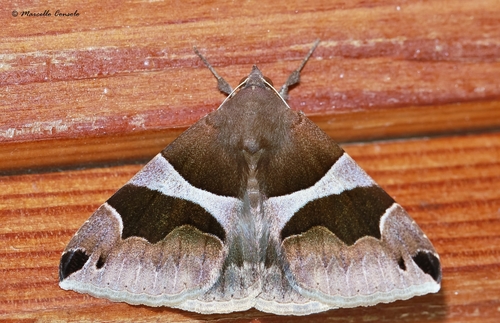
This species, formally named Dysgonia algira Linnaeus, 1767, was previously referenced as Ophiusa algira L. with synonyms achatina Sulz. and triangularis Hbn. For the typical form: the forewing is brownish fuscous, developing a purplish tinge when the specimen is fresh. A whitish median band, narrowed at its middle, is bordered inwardly by an erect, slightly outcurved inner line, and outwardly by a similarly incurved median line. The outer line is acutely angled outwards on vein 6, bluntly bent between veins 3 and 4, then sinuous to the inner margin near the median line. A black apical streak made of two spots is present, and the terminal area is violet grey. The hindwing is fuscous, with a diffuse whitish median band; the terminal area is grey at its middle. The fringe is grey, and whitish below the apex. The previously described aberration mandschuriana Stgr. is now recognized as the full species Dysgonia mandschuriana (Staudinger, 1892); this taxon is more uniformly purplish or slaty grey, with a median band that is only slightly paler, not white. The larva is yellowish grey, darker on the dorsum, with fine black longitudinal lines; the venter and feet are pale grey, the spiracles are black, and the head is yellowish grey. The wingspan of Dysgonia algira ranges from 40 to 46 mm.