About Dymondia margaretae Compton
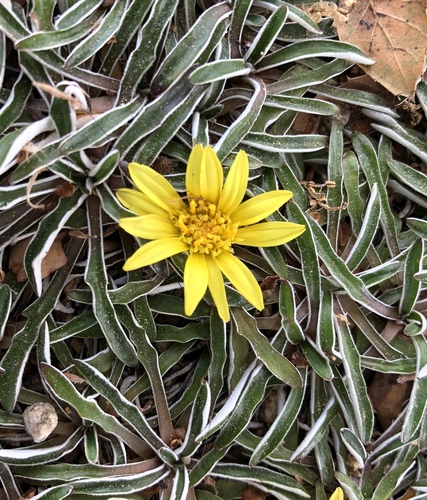
Dymondia is a genus of flowering plants in the family Asteraceae. Only one species in this genus is known: Dymondia margaretae Compton, which is endemic to the Cape Province region of South Africa. The genus was first discovered and named in honor of Margaret Elizabeth Dryden-Dymond (1909–1952), a South African horticulturalist, botanical collector, and teacher who worked at Kirstenbosch National Botanical Garden. For cultivation, Dymondia margaretae grows well in full sun or part shade. It is a slow-growing, non-invasive plant that reaches 2 inches (51 mm) in height, and spreads to form a carpet-like ground cover. It is very drought tolerant, but requires regular watering at high temperatures, and needs consistent watering for six months after initial planting until the plant becomes established. Its deep roots function as water stores that supply the plant with water when needed. The Dymondia ground cover is typically green and silver in color. When the roots' stored water is depleted and the plant needs water, its leaves curl to expose their silver undersides. Watering the silver-colored areas as needed will allow the leaves to uncurl and return to their normal green and silver appearance. This plant is cold hardy to 20 °F (−7 °C), and grows best at temperatures below 100°F (37°C) when given adequate watering. It originates from Cape Province and the coastal plains of South Africa. It prefers very sandy soil; a recommended soil mix is 40% vegetative matter, 30% red lava sand, and 30% river sand. Perlite can be added to this mix as needed, and it supports faster growth when plants are grown in flats and pots. Dymondia margaretae forms a flat, highly drought-tolerant ground cover, and works well as a lawn replacement in dry zones. It withstands medium foot traffic, and is often nicknamed 'living cement'. It is safe and non-toxic for dogs and other pets. It is an excellent filler between flagstone, pavers, stepping stones, and other confined areas. Thanks to its large spread and deep root system, it is excellent for erosion control to retain soil on slopes and hills.