About Dudleya parva Rose & Davidson
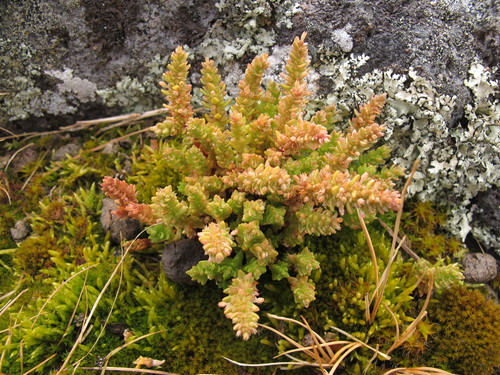
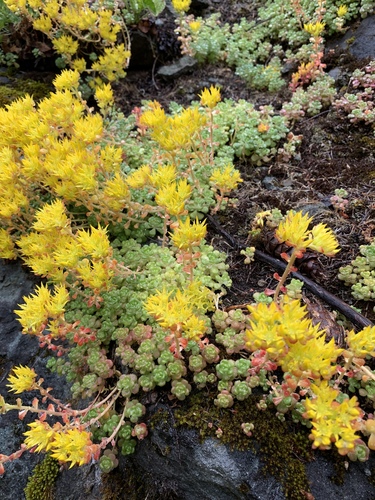
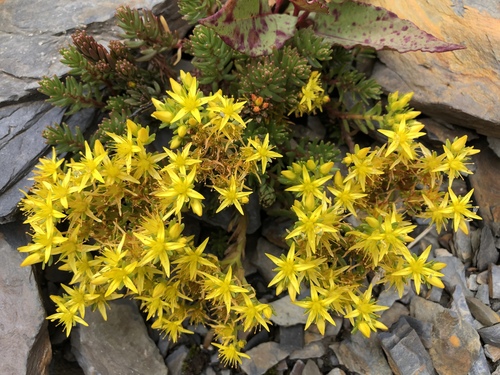
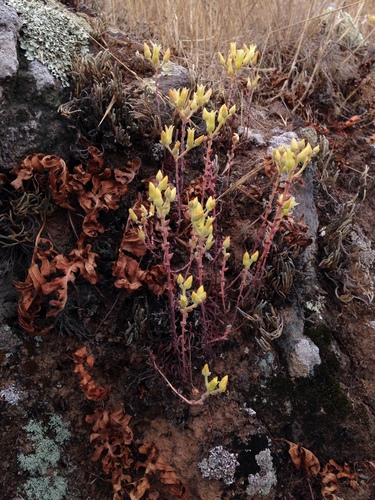
Dudleya parva Rose & Davidson is a distinctive species of Dudleya that has a number of characteristics intermediate between groups within the genus. Previously, the genus Dudleya was considered to be organized into three subgenera: Dudleya, Stylophyllum, and Hasseanthus. Under this classification, Dudleya and Hasseanthus were thought to be the most distantly related, with Stylophyllum occupying an intermediate position. Members of subgenus Dudleya were described as having evergreen leaves and an evergreen habit, while members of Hasseanthus were classified as having a deciduous, geophytic growth habit. Although D. parva was originally classified in subgenus Dudleya, it displays multiple traits associated with Hasseanthus, including summer deciduous leaves and a rhizomatous growth habit. It is also unusual among Dudleya for being able to root from leaf cuttings, a ability only recorded in other Hasseanthus-type Dudleya. This species grows multiple rosettes (at most several rosettes per plant) from its stems, with each rosette measuring 1 to 6 cm wide. Its roots are narrowed and swollen at irregular intervals, with rhizome-like branches extending from the plant's roots. For most of the year, these rhizomes often resemble shriveled roots, and they are very fragile. Rhizome characteristics are not a reliable feature for field identification of this species. Because D. parva is rhizomatous, its above-ground plant parts can die back for multiple years, with the plant surviving underground as a rootstock. It is a long-lived species; some cultivated individuals have survived for over 24 years. The stems of D. parva are 2 to 7 mm wide. Its leaves are deciduous in summer, measuring 1.5 to 4 cm long and 3 to 6 mm wide, shaped oblanceolate. Leaves are glaucous when young, becoming papery when dry, with the leaf base colored a dull purple to red. The peduncle of the inflorescence is 4 to 23 cm tall and 1 to 5 mm wide. Lower bracts are 5 to 15 mm long, and the inflorescence branches once or twice. The petals are yellow, with the petal keel often flecked with red. The diploid chromosome number for this species is 2n = 34. The entire known distribution of D. parva occurs along a 16 km stretch of an east-west ridgeline of Conejo volcanics, at the western end of the Simi Hills along Mountclef Ridge, terminating near Conejo Grade. The entire species occupies an area of only around several hundred acres. Population boundaries fluctuate somewhat annually, but the species has stayed within this area of suitable habitat for a long period of time. Its rugged terrain and summer deciduous habit make tracking D. parva populations difficult. It most commonly grows on north-facing cliffs of the Conejo volcanics, and in adjacent grassland.