About Dryopteris erythrosora (D.C.Eaton) Kuntze
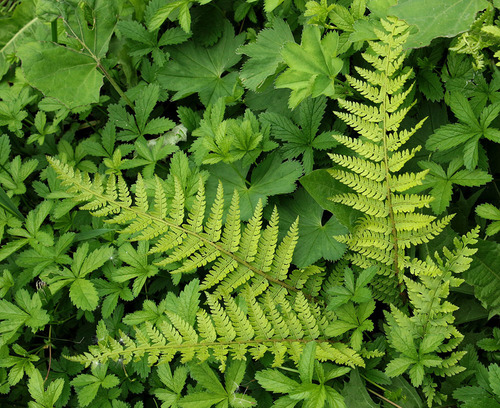
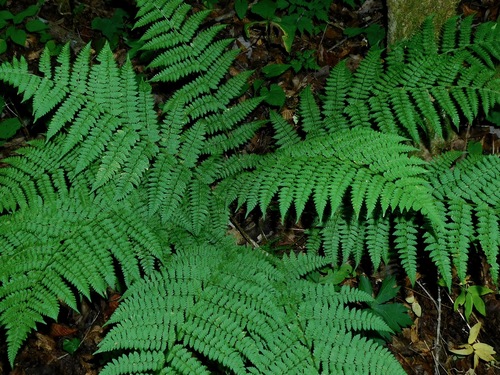
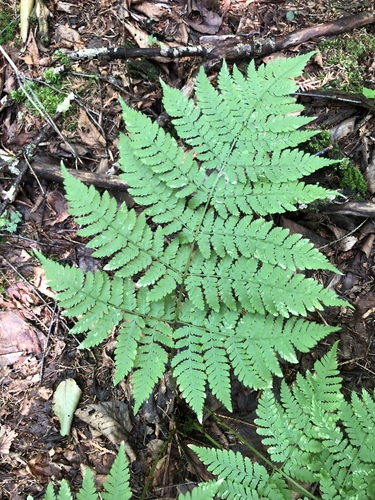
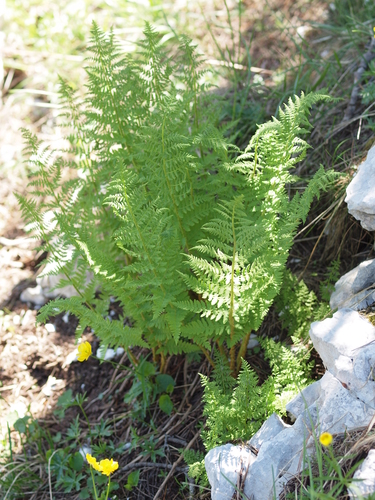
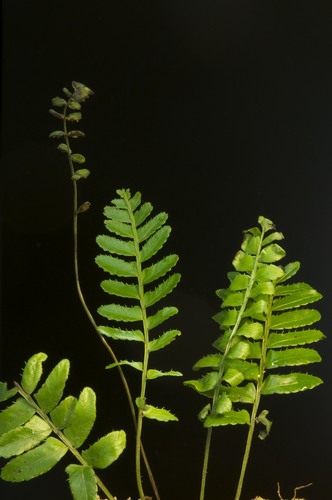
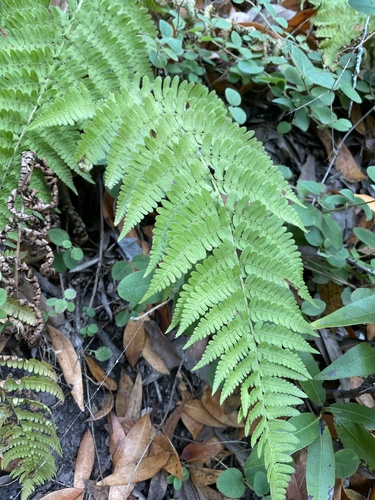
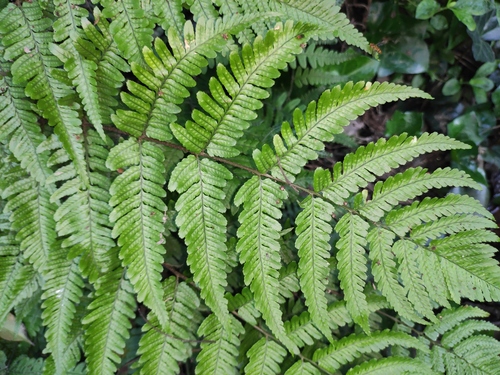
Dryopteris erythrosora (D.C.Eaton) Kuntze is semi-evergreen in cooler climates. It produces bipinnate fronds that measure 30–70 cm (12–28 in) tall and 15–35 cm (6–14 in) broad, with 8–20 pairs of pinnae. Young fronds have a coppery, coppery red tint when budding, and mature to a dark green color. It has a thick, branched rhizome that grows from upright to down-lying, forming multiple separate crowns. The overall leaf arrangement is funnel-shaped. Mature upper leaves are leathery and shiny, twice divided, triangular in shape with pointed tips. Individual leaflets are narrow lanceolate, with margins that are nearly fully entire. Leaf stalks are roughly one-third the length of the full leaf, striated, and range in color from yellow to red. They are covered with linear to lance-shaped brown scales, and a cross-section shows two large vascular bundles alongside several smaller ones. Multiple flushes of new fronds can grow each year. Its kidney-shaped spores ripen between summer and autumn. In cultivation, Dryopteris erythrosora tolerates drier soil than many other fern species, but grows best in moist, humus-rich soil with a pH between 6.1 and 7.5. It prefers morning or late afternoon sun, and cannot tolerate direct midday sun. It is hardy in USDA zones 5 through 11. Propagation is done by dividing small crowns from larger crowns in spring, or by growing from spores. It is grown as an ornamental garden plant for its foliage that changes color from coppery red when young to dark green when mature, though it is not very commonly cultivated. The species itself and its cultivar 'Brilliance' have both received the Royal Horticultural Society's Award of Garden Merit.