About Dryas iulia (Fabricius, 1775)
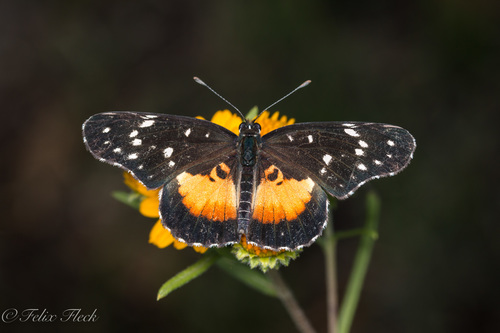
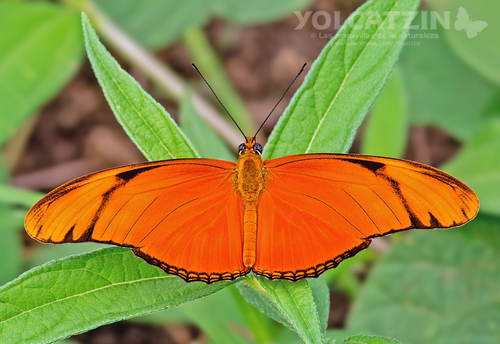
Identification: Dryas iulia is identified by elongated orange wings with black markings that vary between subspecies. Most of these black markings are found near the wing tips. Males of this species, commonly called Julia butterflies, have brighter orange coloration, while females have duller orange coloration. Images of many Dryas iulia subspecies are available at the bottom of the page. Distribution: Dryas iulia is common in tropical and subtropical regions of North, Central, and South America. It is commonly found across South American countries including Brazil, Ecuador, and Bolivia. The species is also widespread across multiple Caribbean islands, with endemic subspecies occurring in places including Cuba, Dominica, the Bahamas, and Puerto Rico. Further north, Dryas iulia ranges commonly through Central America up into Texas and Florida, and can occasionally be seen as far north as Nebraska during summer. The geographic range of Dryas iulia overlaps with the ranges of other butterfly species, which sometimes causes conflict. For example, the ranges of Dryas iulia and the gulf fritillary overlap. When breeding populations of the two species occur in the same geographic area, the subspecies Dryas iulia moderata will compete and fight with gulf fritillaries. Habitat: Dryas iulia prefers open, sunny clearings within the tropical and subtropical forests it inhabits. It is also common in human-altered open areas including gardens, cattle grazing lands, and forest clearings. This butterfly uses a small number of main host plants, which are shrubs in Latin America, including passion vines in the family Passifloraceae. Food resources: Dryas iulia larvae feed almost exclusively on Passiflora plants, specifically those from the subgenuses Astrophea (also referred to as Passiflora), Polyanthea, Tryphostemmatoides, and Plectostemma. As adults, males and females have different feeding patterns aligned with their reproductive needs. Males perform mud-puddling behavior to collect minerals needed to create spermatophores. They have also been observed disturbing the eyes of caimans and turtles to drink the tears these animals produce. Coordinated observations of this behavior, recorded from sites 1500 kilometers apart, were likely the first scientific observations coordinated via films broadcast on terrestrial television. Like males, females visit flower species including Lantana and Eupatorium to feed on nectar. In addition to nectar, females collect flower pollen to gain the nutrients they need for egg production.