About Drosera uniflora Willd.
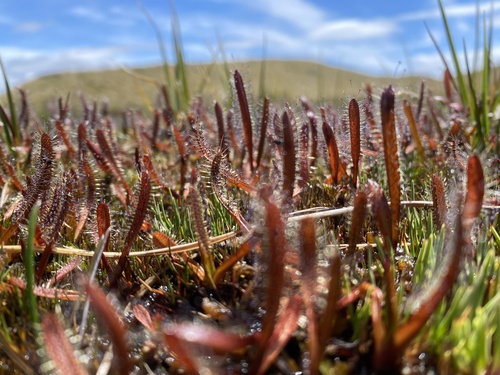
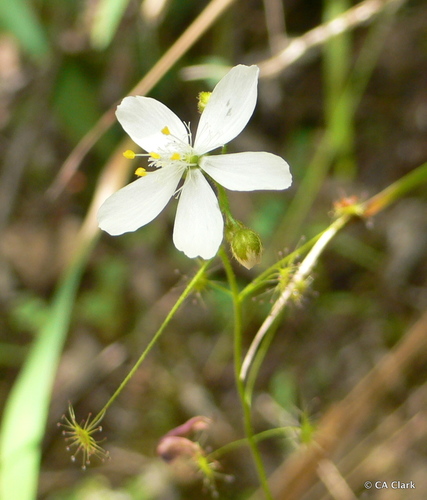
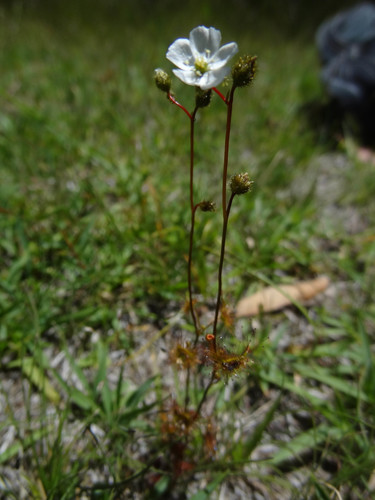
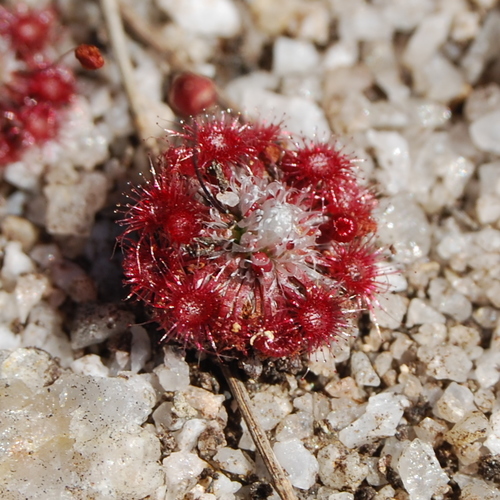
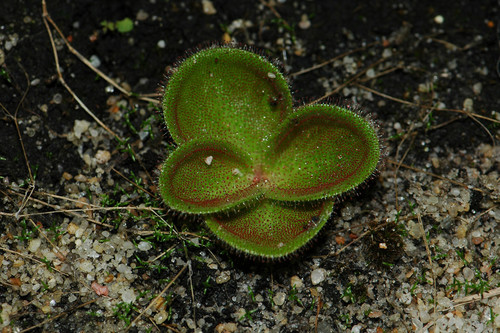
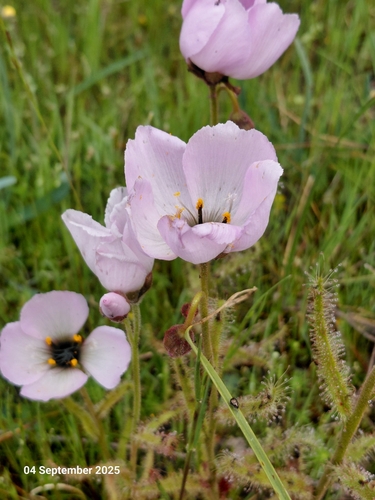
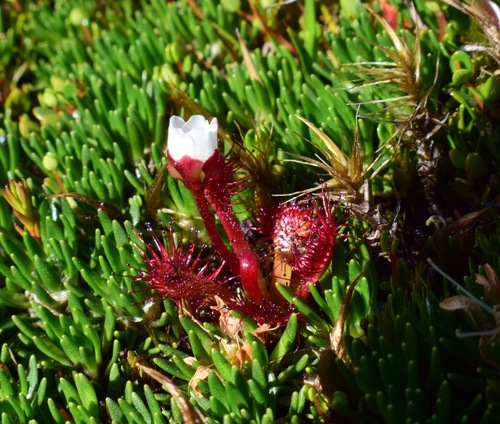
Drosera uniflora Willd. is a carnivorous plant species in the sundew genus Drosera, native to Patagonia and the Falkland Islands. As its name suggests, it is a very small sundew that produces a single white flower. Like other carnivorous sundews, its leaves bear stalked glands that secrete sticky mucilage at their tips to capture and hold insect prey; the plant then absorbs nutrients from these insects that it cannot get in enough quantity from the soil. This species was first formally described in 1809 by botanist Carl Ludwig Willdenow. Like most sundews, Drosera uniflora grows in nutrient-poor soil (using "soil" in the broadest sense to mean any growing medium) and depends on captured insects to meet its nutritional needs. Unlike most members of the Drosera genus, it prefers to keep its roots in water, and can be found in bogs, moorlands, and other waterlogged habitats that are deficient in organic nitrogen and phosphorus—two key nutrients it obtains from the insects it captures and digests. In Chile, D. uniflora grows in coastal mountains between 500 and 2,000 meters in elevation, most often on north-facing slopes or flat ground, since it requires abundant sunlight. Beyond the Falkland Islands, it has also been found in Tierra del Fuego and on the northern edge of the Patagonia Forest. While Barthlott et al. have reported that the species was found growing on Clarence Island off the coast of Antarctica, this record is more likely a misidentification of location, referring instead to Clarence Island, Chile. Antarctica is only known to host two native flowering plant species, and neither of them is Drosera uniflora.