About Drosera intermedia Hayne
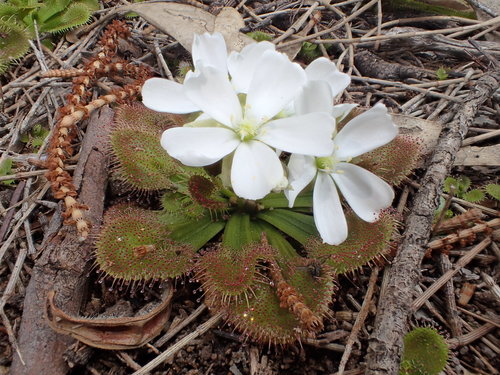
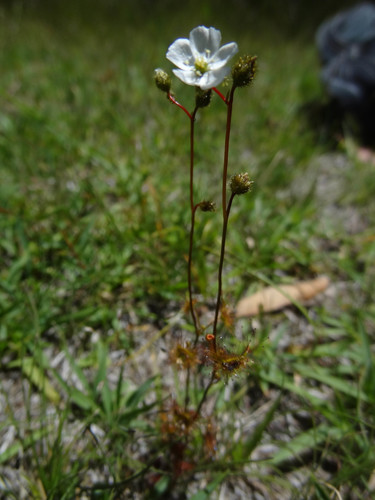
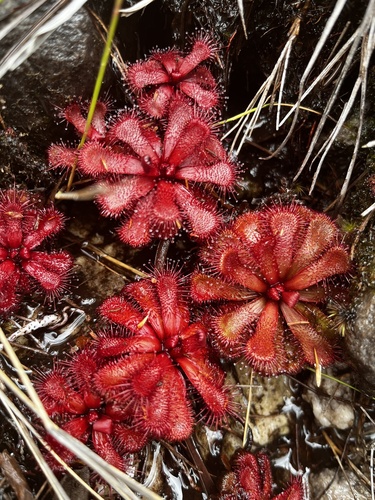
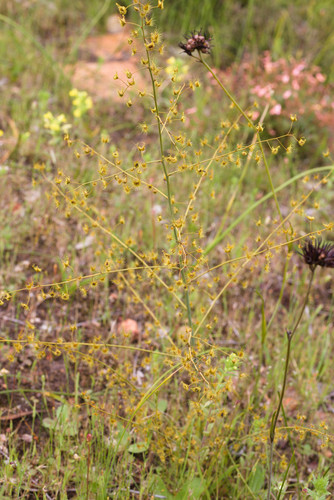
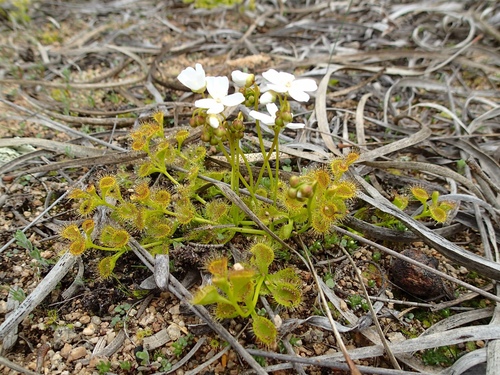
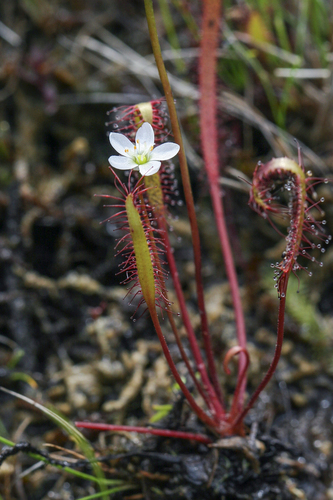
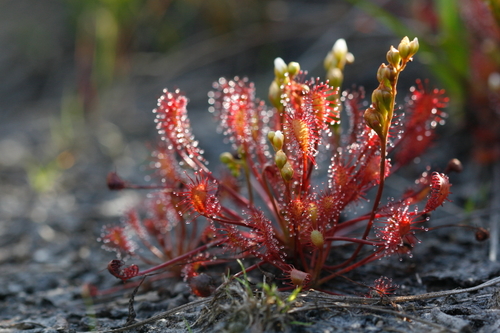
Drosera intermedia Hayne is a perennial carnivorous herb that grows into a semi-erect, stemless rosette of spatulate leaves that reaches up to 10 centimeters in total height. Plants growing in temperate regions enter dormancy in winter, where they form a resting bud known as a hibernaculum. Tropical forms found in Cuba and northern South America do not produce winter hibernacula. Like all sundews, the leaf blades of Drosera intermedia are densely covered with stalked mucilaginous glands. These glands secrete a sugary nectar to attract insects. Insects that land on the leaves become trapped in the sticky mucilage; unless the insect is strong enough to escape, it will suffocate or die from exhaustion. The plant then secretes digestive enzymes from sessile glands, and later absorbs the dissolved nutrient solution to supplement the poor mineral nutrition of its natural environment. Drosera intermedia blooms from June through August, producing inflorescences up to 15 centimeters tall that hold 3 to 8 white flowers. After fertilization, the ovaries swell to form egg-shaped dehiscent seed capsules that contain numerous tiny seeds. Drosera intermedia is one of the most widely distributed species in the Drosera genus. It is one of only three Drosera species native to Europe, alongside D. rotundifolia and D. anglica. It is also found in eastern North America, Cuba, and northern South America. This species grows in sunny, permanently moist habitats, including bogs, fens, wet sandy shorelines, and wet meadows. Its carnivorous adaptation allows it to thrive in relatively infertile habitats such as wet sand and peat. It is a weak competitor, so it is excluded from more fertile sites by competition from taller canopy-forming perennials. It can survive periods of high water as buried seeds, and re-establishes itself when water levels drop.