About Downingia concolor Greene
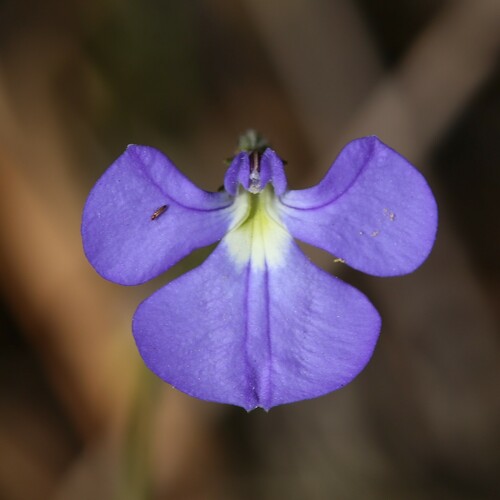
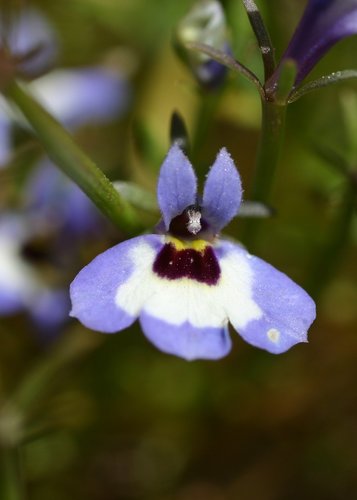
Downingia concolor Greene, commonly called maroonspot calicoflower, is an annual plant that grows a branching erect stem, with small leaves spaced at intervals along the stem. Each stem branch produces one or more flowers at its tip, each approximately one centimeter wide. The flower is tubular, with two long, narrow, pointed upper lobes that may be blue or purple. Its three lower lobes are fused into a single three-lobed surface, which is blue or purple with a large white blotch at its center and maroon blotches near the tube's mouth; yellow speckles may also be present. This wildflower is most common in the northern coastal regions of California, though forms of the plant have also been found in southern California regions. It has been recorded in the following California counties: Del Norte, Humboldt, Mendocino, Trinity, Lake, Tehama, Glenn, Colusa, Yolo, Sonoma, Napa, Solano, Contra Costa, Alameda, Santa Clara, Santa Cruz, San Mateo, San Benito, Monterey, San Luis Obispo, Sacramento, Santa Barbara, Ventura, Los Angeles, Orange, and San Diego. The preferred ecosystem of Downingia concolor is seasonal wetlands, and it thrives particularly well in vernal pools and along pond edges. These environments follow a strict wet-dry cycle, which requires the flower to complete its life cycle quickly before pools evaporate. Surviving in vernal pools is challenging for the species. Today, vernal pools are among the most threatened wetland ecosystems in California. The main challenge Downingia concolor faces is tied to the seasonality of vernal pools: these pools fill with rain in California's winter and dry out as spring arrives. Because this wet-to-dry cycle depends heavily on winter rain, changing rainfall patterns can disrupt this sensitive environment. During unusually dry winters, many established sites do not produce flowers. This risk is amplified at the local level because populations of Downingia concolor are often patchy, leaving the species particularly vulnerable to local extinction.