About Doryphora sassafras Endl.
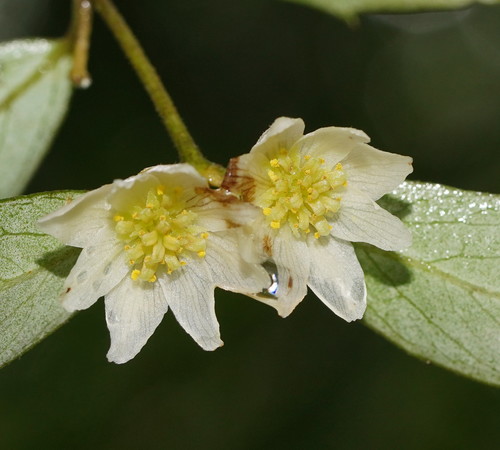
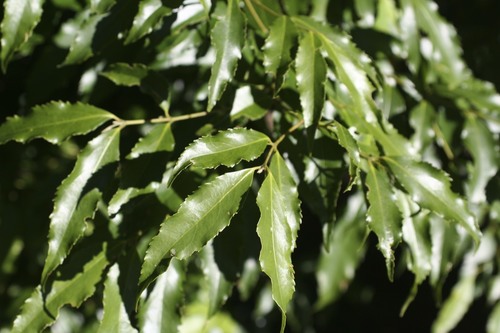
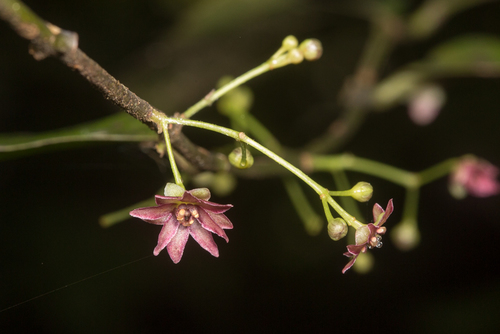
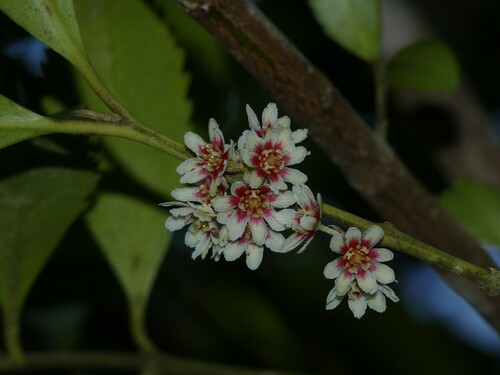
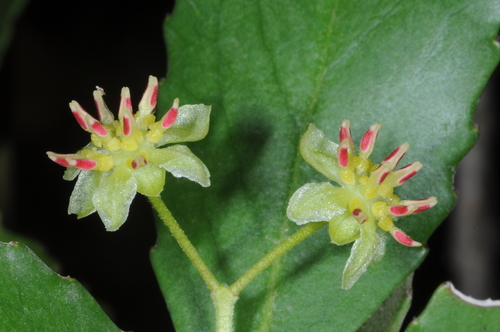
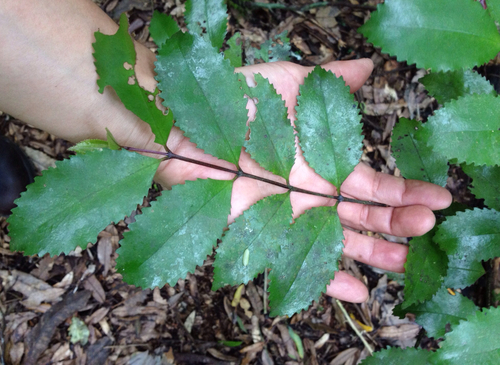
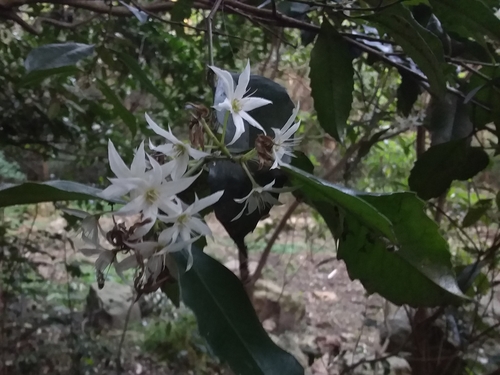
Doryphora sassafras Endl. is a plant that grows as a shrub or tree, typically reaching a height of 2.5–36 m (10–120 ft). Its leaves are arranged in opposite pairs, with shapes ranging from elliptic to lanceolate or ovate. They measure 30–110 mm (1.2–4.3 in) long and 15–40 mm (0.6–1.6 in) wide, and grow on a petiole 3–6 mm (0.1–0.2 in) long. Leaf edges are shallowly to deeply toothed, and the leaves are glabrous, glossy, with a prominent midvein on both surfaces. All parts of the tree have a spicy scent, but it should be treated with some caution because it contains the poisonous alkaloid doryphorine. Individual leaves of this plant can live up to 12 years, and exceptionally up to 19 years. Its flowers are white, with 6 tepals arranged in 2 whorls; tepals are mostly 7–13 mm (0.3–0.5 in) long and 2.5–4 mm (0.1–0.2 in) wide. The androecium usually has 4 whorls, containing 6 stamens and 14 to 18 staminodes, and flowers have 8 to 12 carpels. Flowering occurs between May and October. The achenes produced are 3.5–5 mm (0.1–0.2 in) long and 2–3 mm (0.08–0.12 in) in diameter.
This species is distributed from Nambour in southern Queensland, through eastern New South Wales, to Wolumla Peak in Yurammie State Forest. It grows in temperate rainforest, occurring on basalt soils at higher elevations and sedimentary soils at lower elevations. It is commonly associated with Coachwood (Ceratopetalum apetalum) and native crabapple (Schizomeria ovata).
In ecological interactions, male mosquitoes and crane flies are attracted to the plant's flowers. Though these insects are nectarivores, they pollinate the flowers during their struggle to feed.
In horticulture, Doryphora sassafras is used for reforestation. It generally grows too large to be suitable for home gardens, but has been identified as having potential as a potted specimen plant. It has been planted in the Dublin area of Ireland.