About Dolomedes minor L.Koch, 1876
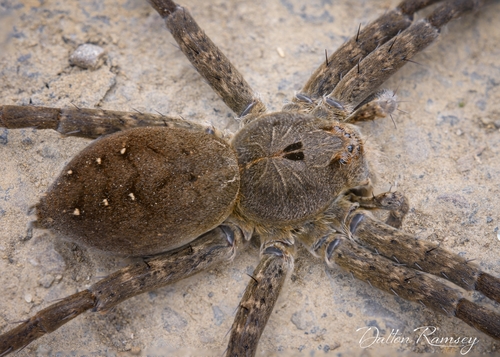
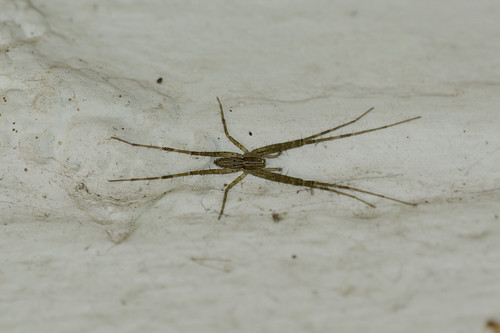
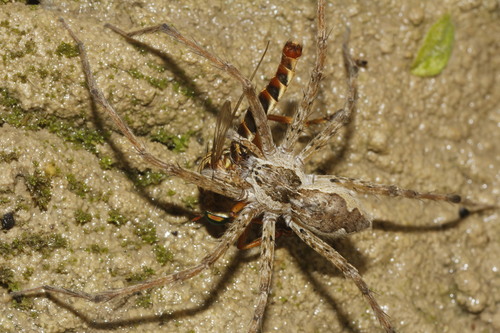
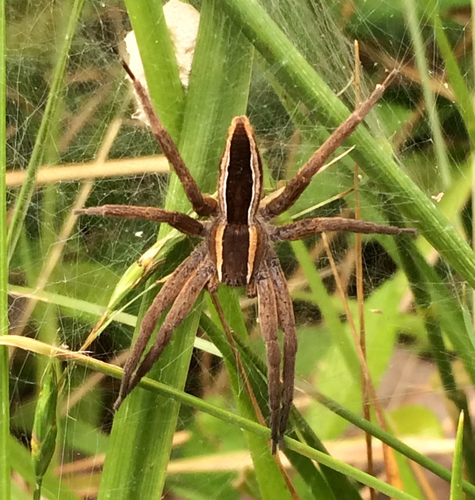
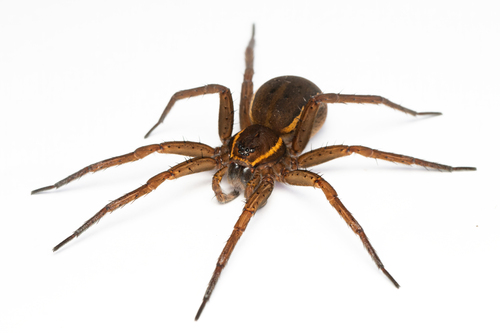
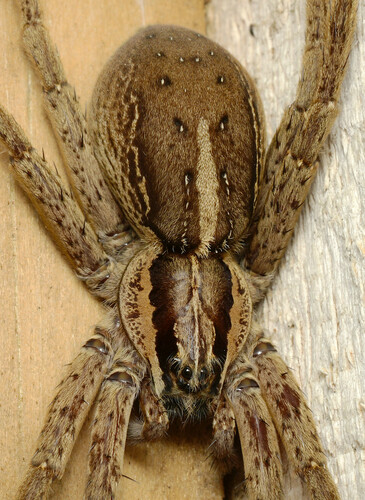
Dolomedes minor L.Koch, 1876 ranges in color from pale brown to grey, which matches the rocks it lives around and helps it camouflage from predators. This spider has large pedipalps, which typically function for sensing. Females of this species can be easily identified by the position of the epigyne on the underside of their abdomen. They also have large chelicerae positioned just below the eyes. Adult D. minor have a body length of approximately 18 mm, and females are nearly twice as large as males. They are very fast moving, and fully grown females have a long leg span that exceeds 60 millimeters. D. minor occurs across a wide range of habitats throughout New Zealand, and can survive in many types of terrain from sea level up to subalpine areas. Habitats it occupies include shrubland containing Gorse (Ulex europaeus) and Manuka (Leptospermum scoparium), swamps, and grasslands. When hunting, these nocturnal spiders wait near the water's edge and are active among stones. They are easy to spot in these habitats because of their large thick white webs built as nests at the tips of local plants; after constructing these nursery webs, females usually stay with their young in the area. D. minor is most commonly encountered during the summer months, which run from November to May in its range. During these months, females carry egg sacs attached beneath their bodies in their chelicerae for at least 5 weeks. After this period, the female builds a nursery web, which is not used to catch prey but instead to raise young. This web is built at night among the tips of foliage, and can reach 150 mm (around 6 inches) or more in length. Females guard the web at night, and have been observed moving toward the base of the vegetation during the day. Spiderlings emerge within a week after the web is finished, or after they molt, and most young leave the nest within two weeks. It is thought that they leave the nest via ballooning, a form of air dispersal. Adult males have been observed together with young adult females, but no courtship or mating behavior has ever been recorded for this species. Since other Dolomedes species have high rates of sexual cannibalism, it is hypothesized that D. minor males mate with virgin females to avoid being cannibalized. Hurried copulation is also common in other Dolomedes species.