About Dolomedes aquaticus Goyen, 1888
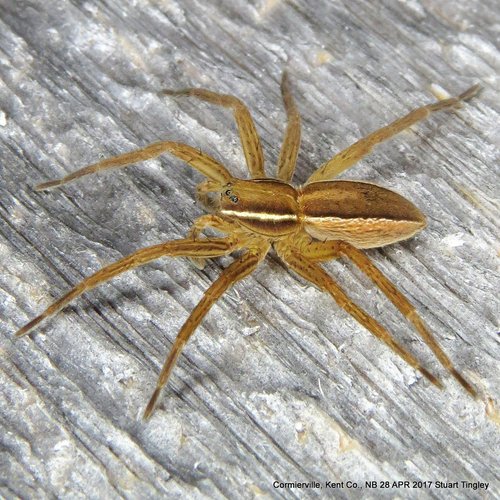
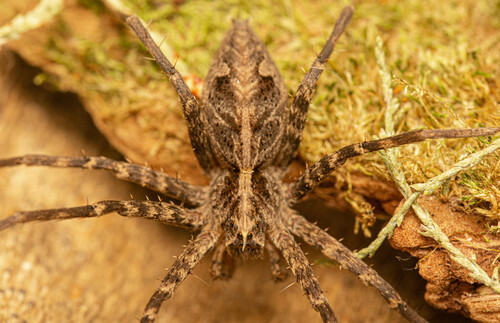
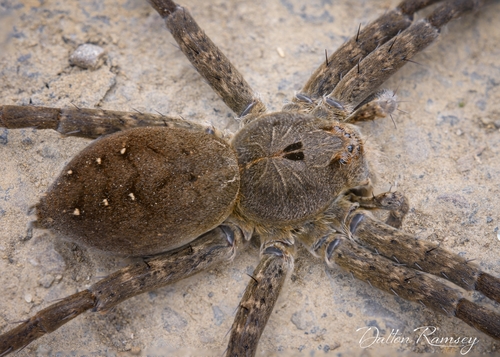
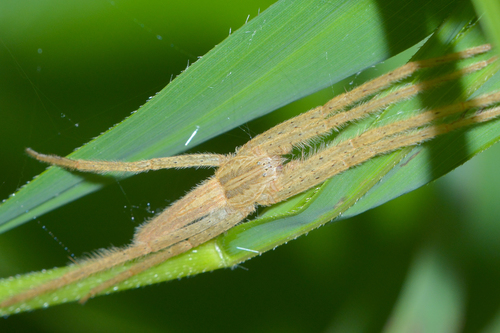
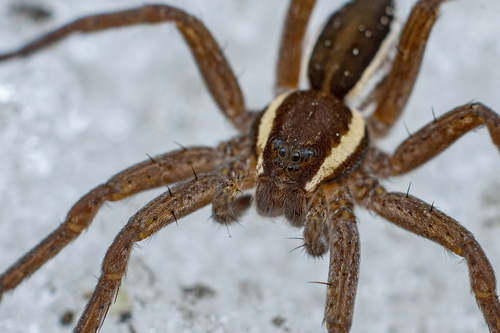
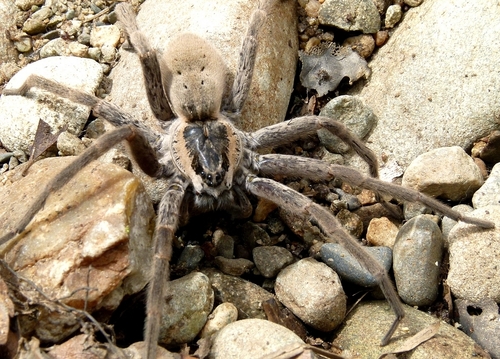
Females of Dolomedes aquaticus have a total body length of 13 to 26 millimeters, while males are typically smaller, with a total body length of 11 to 18 millimeters. The fourth leg is the longest, reaching approximately 36 millimeters in females and 33 millimeters in males. The cephalothorax is chocolate brown, with a yellow supra-marginal band that extends from the posterior slope to the anterior angle of the pars cephalica. The falces, maxillae, labium, and sternum are all chocolate brown; the legs and palpi are brown. The dorsal surface of the abdomen is greenish-brown, marked with two longitudinal rows of yellow spots bordered by brown. The sides of the abdomen are greyish, and the ventral surface is dusky-brown, with four more or less continuous longitudinal whitish stripes that converge toward the anus. At the base of the dorsal abdominal surface, there is a short median spatulate band that is paler than the surrounding surface, with a short grey fleck on each side of this band. Both the cephalothorax and abdomen are densely covered with a mixture of grey, yellow, and brown pubescence. Dolomedes aquaticus typically inhabits open, stony riverbeds and rocky lake shorelines. It reaches its highest abundance where there is intermediate disturbance along river banks. This species occurs throughout the South Island of New Zealand, and throughout the lower half of the North Island of New Zealand. It has been suggested that the species is absent from the upper half of the North Island because this region lacks braided rivers.