About Dolichovespula media (Retz., 1783)
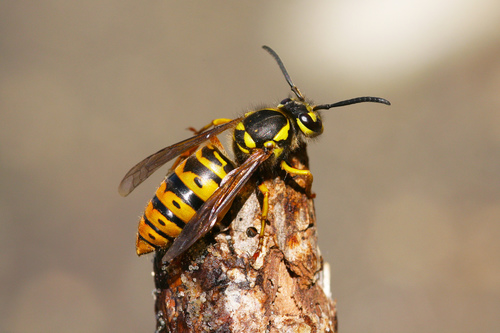
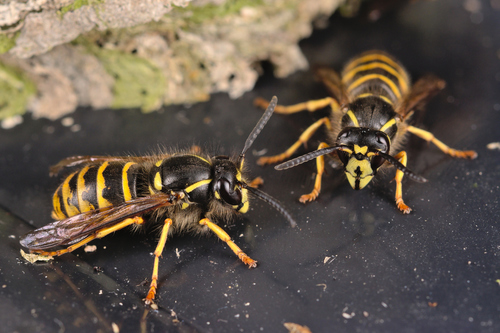
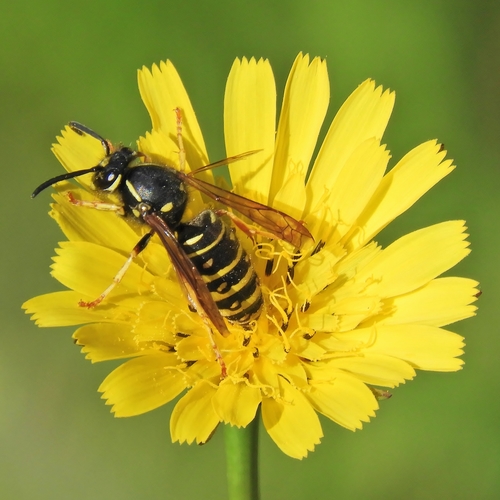
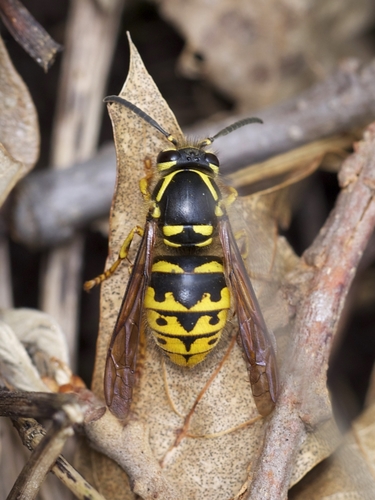
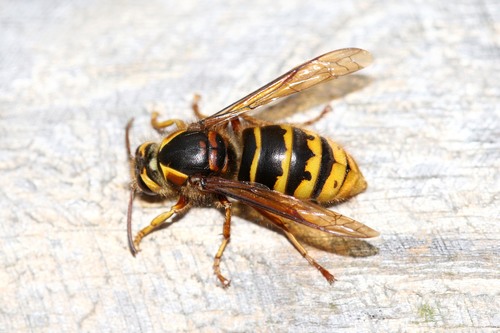
Dolichovespula media, commonly called the median wasp, is a medium to large wasp species with a body length between 16 and 22 millimetres (0.63–0.87 in). Its abdomen has yellow and black stripes. Key identifying features include a yellow clypeus marked with a thin black central line, large yellow patches behind the eyes and on the ocular sinus, and a shiny black thorax that bears four yellow spots tinted orange or red. Queens are frequently mistaken for hornets due to their reddish colouration, but can be told apart by their thoracic spots and deep black body colour. The median wasp has a natural Palearctic distribution, occurring across Europe and through temperate regions of Asia as far east as Japan. It favours temperate climates and high humidity. The species first spread to the United Kingdom from continental Europe, and was first recorded there in 1980. It has also been sighted in New Zealand, though it is unclear whether this was an isolated occurrence or if the species is established and widespread in the region. D. media constructs aerial paper nests positioned 1 to 5 metres (3.3 to 16.4 ft) above ground. Nests are most commonly located in shrubs or trees, and sometimes occur under the eaves of buildings. The paper used to build nests is produced from digested wood. Mature nests are typically 12–23 centimetres (4.7–9.1 in) wide and 10–30 centimetres (3.9–11.8 in) tall. Colonies can be found in both urban and rural areas. Median wasps prefer to build nests close to the ground where humidity is higher, and in open areas that receive large amounts of sunlight.