About Dolichoderus pustulatus Mayr, 1886
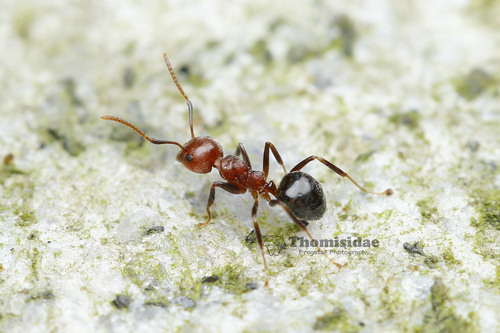
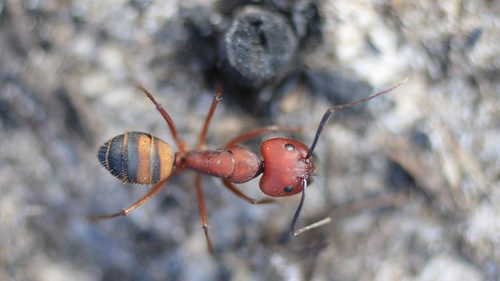
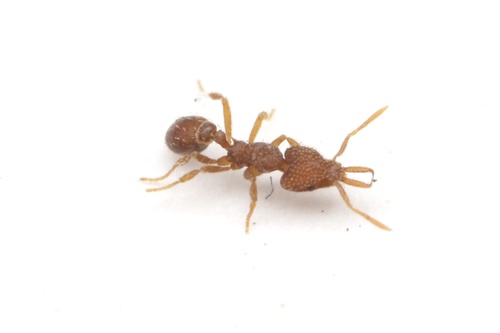
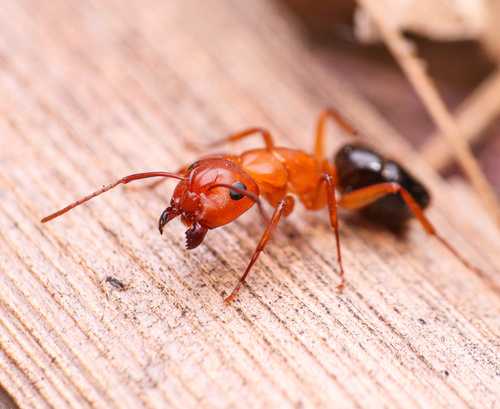
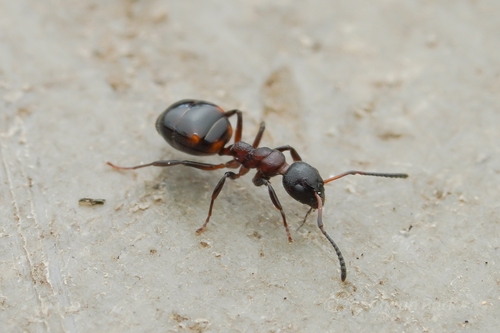
Dolichoderus pustulatus Mayr, 1886 worker ants have distinct color variation across their range. In the southern part of the species’ range, worker heads, antennae, metasomas, and legs are orangish-brown, while the gaster is a darker shade. Light-colored spots sometimes appear on the first and second segments of the gaster, and antennae and legs darken as individual ants age. In the northern part of the range, workers are most often uniformly reddish-brown or dark brown. Other identifying features of the species include shallow puncture marks covering the top of the head, metasoma, and propodeum. Only a few short hairs grow near the apex of the gaster and on the legs; the species is mostly hairless overall. The dorsal surface of the propodeum is nearly one and a half times longer than it is wide. When viewed in bright light, the integument of the petiole and gaster is smooth and reflective. This species is distributed across northern United States and southern Canada east of the Rocky Mountains. Verified recorded locations span from Nova Scotia west to Illinois and Oklahoma, including New Jersey, and extend south to Florida and Mississippi. Ecologically, the species occurs in fens, prairies, glades, and wood edges. Nests are hidden in soil among plant roots. Colonies of this species are somewhat smaller than colonies of Dolichoderus mariae and Dolichoderus taschenbergi. Nests may be constructed under leaf litter, or built as thin-walled carton structures made from chewed vegetable matter wrapped around grass blades. Nest entrances are short tubes made from the same carton material, and resemble the spouts of small teapots.