About Doellingeria infirma (Michx.) Greene
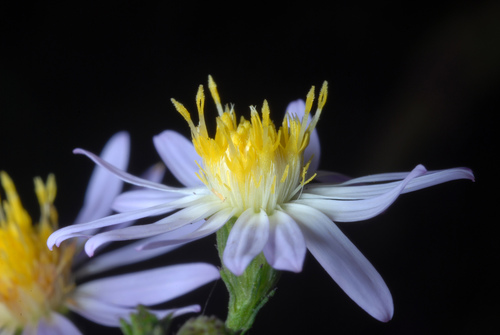
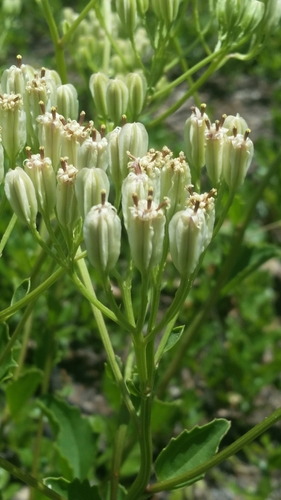
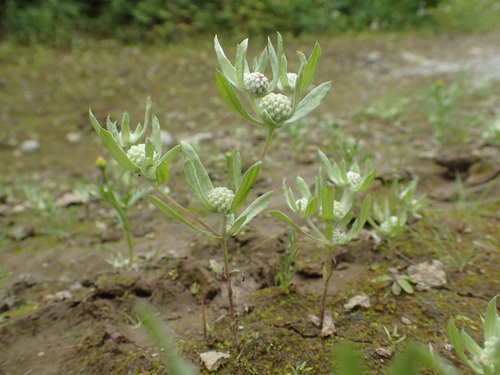
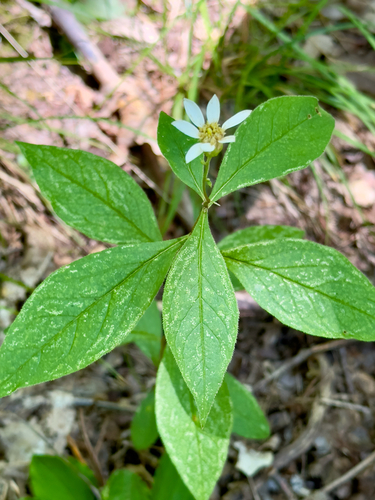
Doellingeria infirma produces a smooth, slender stem that grows 45 to 90 centimeters (18–36 inches) tall. The upper stem is rough and only sparsely branched. This species does not produce basal leaves. Lower stem leaves are small and obovate in shape. Leaves grow larger as they are positioned higher along the stem; upper leaves are 5 to 12 centimeters (2–5 inches) long and 2.5 to 4 centimeters (1–3 inches) wide. Upper leaves are oblong-lanceolate, with smooth, un-toothed edges. The upper surface of these leaves is smooth, while the veins on the lower surface are covered in sparse stiff bristles (hispid). This plant typically produces between 3 and 33 flower heads, arranged in a flat-topped cluster at the top of the stem. Each flower head holds 4 to 20 disc florets and 3 to 11 ray florets. Its fruits are cypselae, each topped with a pappus of tawny-colored bristles. Doellingeria infirma is widely distributed across the eastern United States, though it may occur in scattered local populations. Its range extends from Alabama and the Florida Panhandle north to Massachusetts, Ohio, and New York State. In Virginia, it grows in habitats ranging from mesic to dry woodlands and clearings. This species relies on suitable habitat to persist, and can be removed from an area by development, changes in land use, or competition from invasive plant species.