About Dociostaurus maroccanus (Thunberg, 1815)
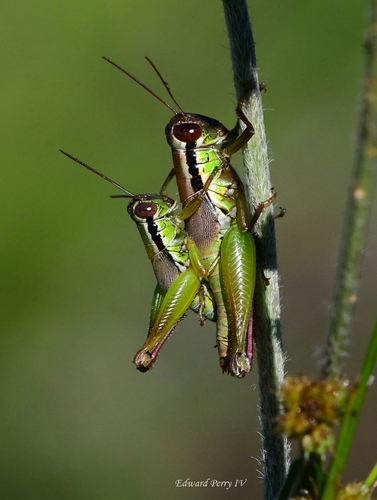
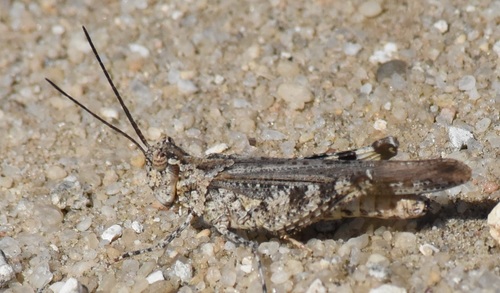
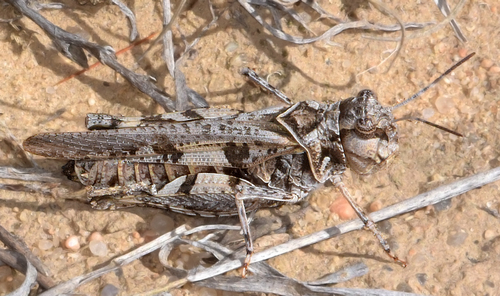
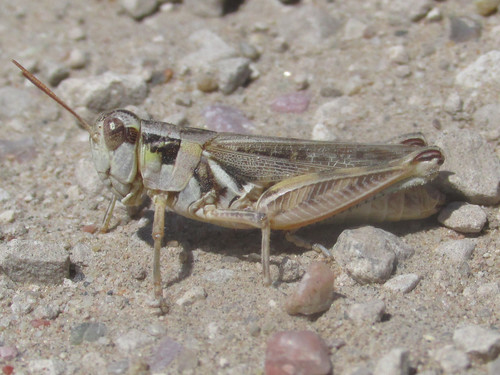
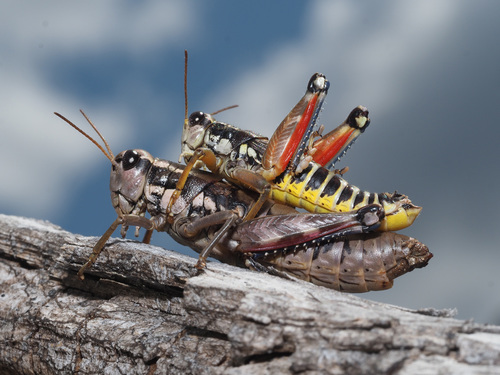
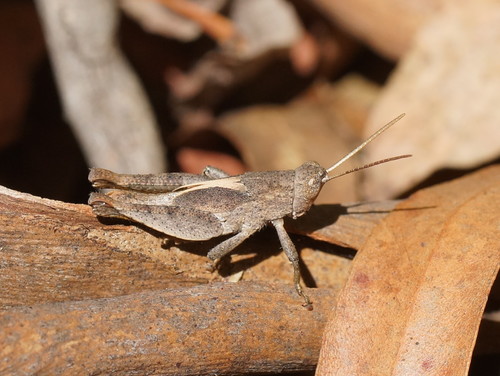
Dociostaurus maroccanus, commonly known as the Moroccan locust, lays its eggs in pods that each contain approximately 30 eggs. Nymphs, also called hoppers, resemble wingless adult locusts. They molt five times, with each successive instar growing larger wing pads. Adult females measure 20 to 38 millimeters in length, while adult males measure 16 to 28 millimeters. The body is yellowish gray with dark patches, and a creamy cross-shaped marking appears on the prothorax. The elytra are large and transparent, sometimes speckled with brown; the wings are colourless and have prominent strong veins. Hind legs are powerful: the femur is often marked with black bands, while the tibia is usually red. Development from hatching to sexual maturity takes approximately 30 days.
The Moroccan locust's range extends from the Canary Islands and Madeira in the west to Kazakhstan and Afghanistan in the east. In Africa, it occurs in Algeria, Egypt, Libya, Morocco and Tunisia. In Europe, it is found in France, Portugal, Spain, Italy, and the Balkan peninsula. It also inhabits the Middle East, including Gilan province of Iran, and Central Asia.
The species lives in arid areas located between 500 and 1000 metres above sea level. It breeds only in undisturbed soil, and does not reproduce in arable fields. The optimal rainfall for development between March and May is 100 millimetres. If spring brings unusually hot temperatures and low precipitation, especially when this is the second consecutive dry spring, young locust populations can increase dramatically. Mass nymph outbreaks occur, and the nymphs destroy the vegetation where they hatch. Starting from the second instar, hoppers aggregate, and population density can reach several thousand nymphs per square metre. Hoppers move downhill into fertile regions, damaging crops along their route. Multiple generations can occur in a given area, and adult numbers can build up rapidly, reaching 300 individuals per square metre in extreme cases. Winged adults fly en masse at low altitudes, moving at 8 to 10 metres per second, and may migrate up to 60 kilometres over a season. Population numbers begin to decline in June, alongside the decline of available vegetation.
The Moroccan locust has long been considered a serious threat to agriculture. Its large populations, voracious appetite, ability to consume nearly all types of vegetation, and capacity for swarming migration have made it a feared pest. However, swarming outbreaks have become less common in recent decades, and the species has become rare in some regions. This trend is especially noticeable in European countries: with the notable exception of Sardinia, Italy, the species no longer poses an economic threat, while it remains abundant and destructive in North Africa and parts of Central Asia.
These shifts in population dynamics may be partly caused by climate change, specifically a reduction in spring rainfall. A more important contributing factor is the expansion of cropland at the expense of grassland, since females require undisturbed soil to lay their eggs. At the opposite extreme, overgrazing and deforestation in some regions create a favourable environment for the species to thrive and remain destructive.
A 1956 study of locusts in Iran found that outbreaks originated from just eight distinct areas. All of these areas were located on mountain foothills that had previously been forested, or on other rolling foothills. In all cases, vegetation was made up of either annual grasses, or shrub steppe communities containing annual grasses and dwarf shrubs. These areas had an abundant supply of green food during winter, which increased the longevity and fertility of adult females. Outside these source areas, the Moroccan locust exists only as solitary populations; within source areas, the species becomes gregarious in some years. The locust requires firm, bare soil for egg laying; after hatching, nymphs move into progressively taller and denser vegetation. The source districts received most of their rainfall in winter and early spring, with an average annual rainfall of 250 to 350 millimetres. Average temperatures hovered around 17 °C in the months immediately before and after egg laying. The source sites were heavily grazed by sheep and goats, especially in winter. The study concluded that very specific climate, vegetation, and topographical conditions are required for successful breeding that leads to outbreaks.