About Ditula angustiorana (Haworth, 1811)
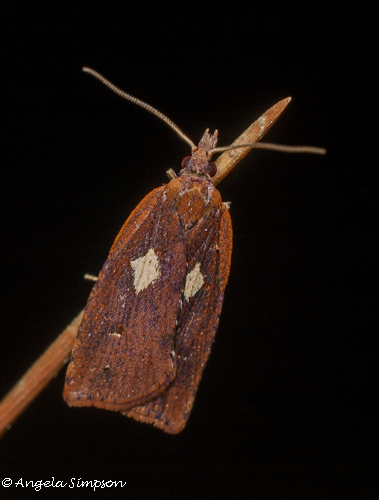
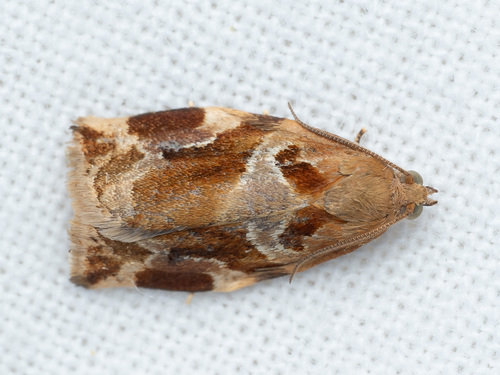
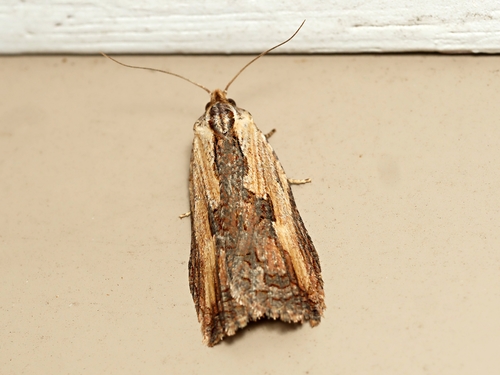
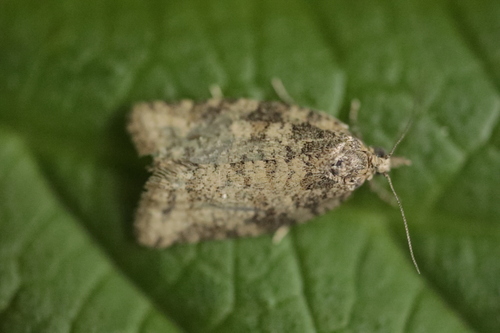
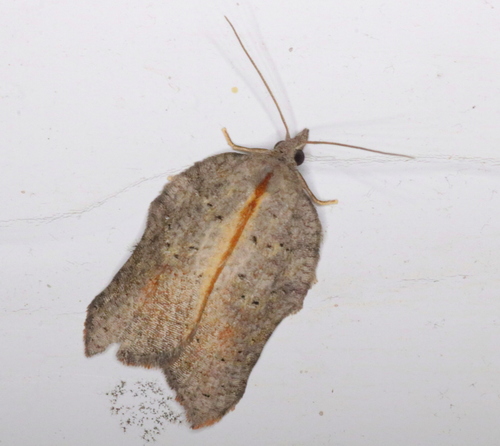
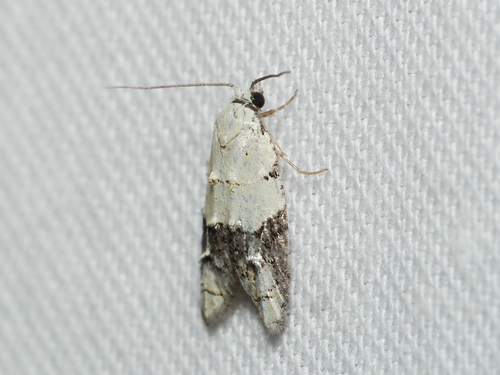
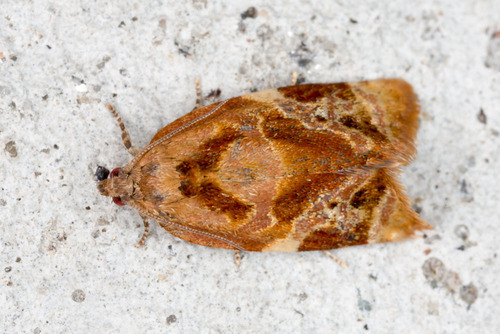
Ditula angustiorana (Haworth, 1811) has a wingspan of 12–18 mm. Its forewings are ferruginous ochreous, with blackish mixing in the posterior disc. The base and male costal fold are dark brown, with a ferruginous-brown oblique mark from the dorsum near the base. The central fascia and costal patch are deep ferruginous, often separated by whitish suffusion on the costa, and the costal patch extends as a fascia to the tornus. Hindwings are blackish-grey, and are lighter anteriorly in females. Larvae are greenish-yellow, with a green or light brown head and second thoracic plate. This species is usually single-brooded; moths are active on the wing from May to August depending on location, with an occasional second brood occurring in September and October. Moths have also been recorded in April. Pale yellow eggs are laid in groups on leaves, primarily in June and July. Larvae can be found from August to May; they are polyphagous, feeding on tree foliage, usually among spun leaves and developing fruit buds, and sometimes cause superficial damage to mature fruits. In late autumn, larvae spin a hibernaculum attached to a bud or spur, and resume feeding on buds, flowers and developing fruit in spring. Larvae feed on a wide variety of trees and shrubs, including rowan (Sorbus aucuparia), apple (Malus species), pear (Pyrus species), cherry (Prunus species), grape (Vitis species), yew (Taxus species), juniper (Juniperus species), Scots pine (Pinus sylvestris), larch (Larix species), Viscum, ivy (Hedera species), Rhododendron species, oak (Quercus species), holly (Ilex species), box (Buxus species), laurel (Laurus species), mistletoe (Viscum species) and sea buckthorn (Hippophae). They are also found on some herbaceous plants. Larvae pupate in June, usually inside a folded leaf, among spun leaves, or in ground debris. This moth occurs in North Africa, Asia Minor, coastal regions of North America and Europe. Within Europe, it ranges from Sweden to the Iberian Peninsula and Italy, and from Ireland to Slovenia.