About Dittrichia viscosa (L.) Greuter
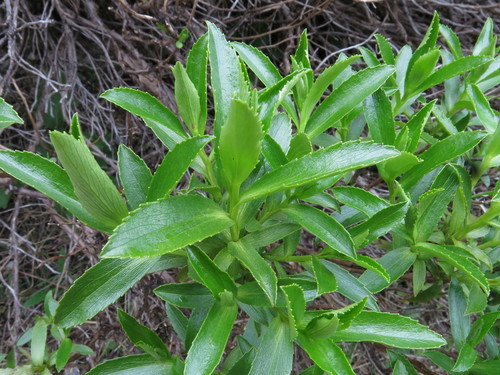
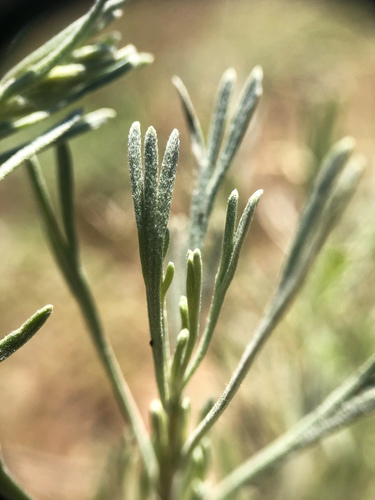
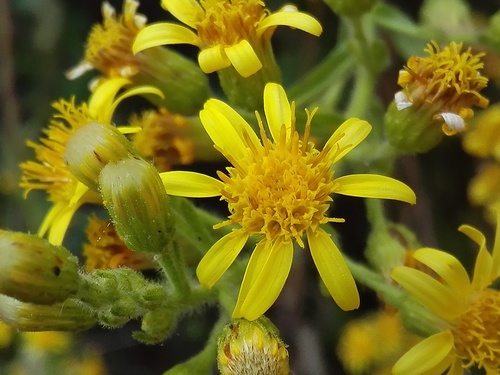
Dittrichia viscosa, also commonly called false yellowhead, woody fleabane, sticky fleabane, and yellow fleabane, is a flowering plant belonging to the daisy family. This highly branching perennial plant is widespread across the Mediterranean Basin. Its leaves are long and narrow, pointed at both ends, with toothed edges and glandular hairs covering their surfaces. A single plant can produce many yellow flower heads; each may hold up to 16 ray florets and 44 disc florets. Originally, the species grew primarily in dry riverbeds and abandoned fields, at elevations up to 1500 meters (5000 feet). Today it is very common along roadsides and in other ruderal habitats, even within urban areas. It is classified as an invasive species in Australia. False yellowhead is a hardy plant, with high resistance to unfavorable conditions and degraded environments. It serves as an important food source for caterpillars of certain butterfly and moth species, including Iolana iolas. Galls that form on this plant provide habitat for Myopites stylatus and Myopites inulaedyssentericae; the larvae of these flies are hosted by parasitic hymenoptera such as Eupelmus urozonus, which is also a major parasite of the olive fly and helps control olive fly populations. This ecological role may explain the plant’s Catalan name, Olivarda. Despite its fresh-looking green leaves and attractive inflorescence, the plant is sticky and produces a scent that most people find unpleasant. It contains an essential oil, and has been used in traditional medicine since ancient times—particularly in the Levant—as an astringent. On Elba Island and Corsica, local residents and tourists currently use fresh pressed leaves of this plant to treat stings from jellyfish, bees, and wasps, with quick results. In the local dialect the plant is called pescida. A yellow dye has been produced from the plant’s roots since ancient times. It holds cultural importance in Catalan tradition, and is frequently referenced in local adages and proverbs. One traditional adage translates to: "My dear one, don't fall in love with any woman who only has good looks, she is like a false yellowhead flower: beautiful, but full of stench." Four accepted subspecies are recognized: Dittrichia viscosa subsp. angustifolia (Bég.) Greuter, Dittrichia viscosa subsp. maritima (Brullo & De Marco) Greuter, Dittrichia viscosa subsp. revoluta (Hoffmanns. & Link) P.Silva & Tutin, and Dittrichia viscosa subsp. viscosa.