About Distichia muscoides Nees & Meyen
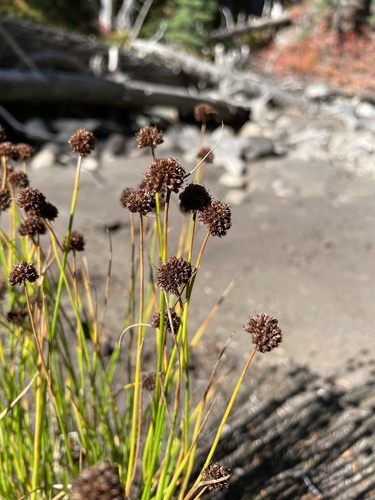
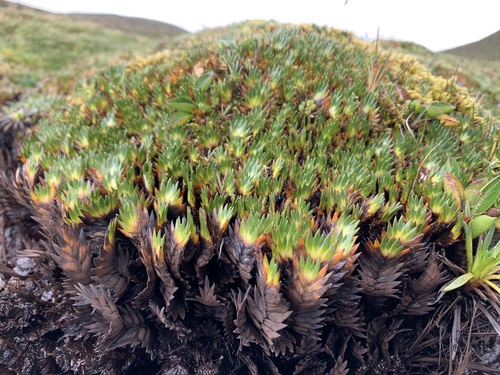
Distichia muscoides is a cushion plant that forms sheets or clumps of short, densely packed evergreen stems and leaves, creating a firm, relatively flat surface. Individual shoots and leaves are only a few millimetres long, and grow throughout the year. In favourable locations, this species can grow as much as 5 cm (2 in) per year. This species is found at high altitudes in Colombia, Ecuador, Peru, Bolivia and northwestern Argentina. It forms large cushions in the tropical Andes, and dominates the flora of high elevation, peat-accumulating uplands that are locally known as "bofedales". These areas have high water tables and thick peat layers that reach up to about 5 m (16 ft) thick. In the mountain ranges of Colombia, D. muscoides is an important component of cushion bog, growing in association with Plantago rigida and Oreobolus cleefii. In the tropical Cordillera of Peru, upland wetland areas are called bofedales; the peatlands here hold cushions of Distichia muscoides growing alongside mosses including Sphagnum, plus Vaccinium floribundum, Puya, and Loricaria ferruginea. Other plant communities found in these bofedales include peaty meadows with grasses, mosses (excluding Sphagnum), sedges, rushes and woodrushes, and streamside grassland that consists mainly of Plantago tubulosa and Werneria pygmaea. The bofedales provide grazing for guanacos, vicuñas, white-tailed deer, taruca and viscacha. They are visited by ducks, the Andean goose and other birds, and provide habitat for various rodents, the Andean fox and the pampas cat. Because D. muscoides is evergreen, it provides important year-round grazing for domestic llamas and alpacas, as well as introduced sheep and cattle. Currently, the climate of the High Andes is becoming drier and warmer. Glaciers that supply meltwater to the bofedales are shrinking, the water table remains lower for long periods, precipitation is decreasing, and grazing pressure is high. These conditions are likely unfavourable for D. muscoides: in some areas, bofedales are dwindling and converting into puna grasslands dominated by coarse bunch grasses, which are far less nutritious for livestock.