About Dissocarpus paradoxus (R.Br.) Ulbr.
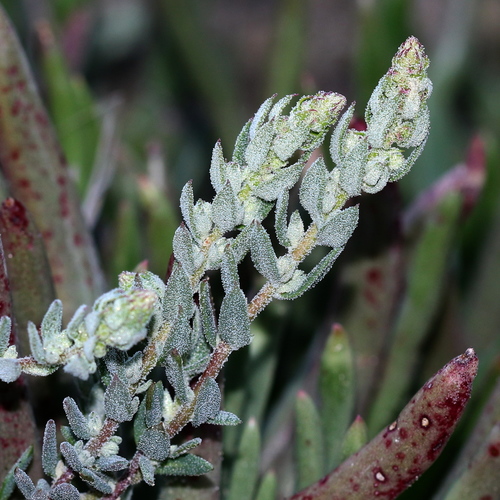
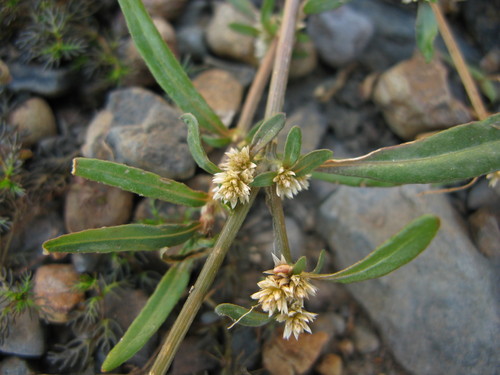
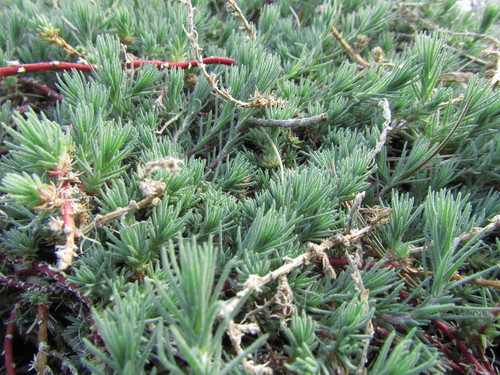
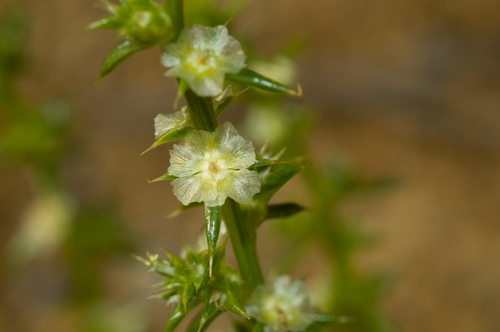
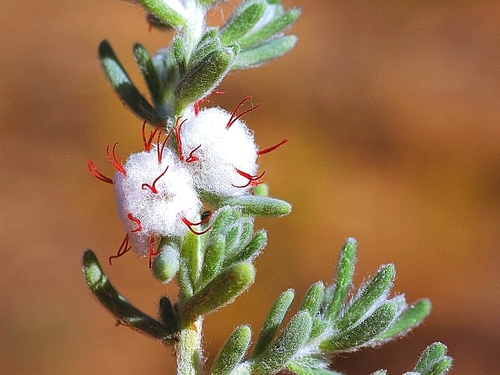
Dissocarpus paradoxus (R.Br.) Ulbr. has several common names: Cannon Ball Burr, Ball Bindyi, Curious Saltbush, and Hard-head Bassia. It was originally described and named by Robert Brown and Baron Ferdinand von Mueller, under the synonymous name Bassia paradoxa. Dissocarpus paradoxus is a short-lived perennial shrub that grows up to 50 cm high, with hairy leaves reaching 15 mm in length. It has also been documented as an annual, or short-lived perennial forb or shrub, and sometimes grows with a prostrate habit. Its flowers are arranged in white woolly heads, with 8 to 16 flowers clustered together at the base of leaves. Flowering typically occurs from early spring through summer, though it may sometimes flower at other times of year. Its fruit is globular, a dense hardened mass with a white woolly texture, around 10 mm in diameter, with many ridged spines extending out from the woolly mass. Seeds are released as this hardened woody fruit head decomposes. The variety Dissocarpus paradoxus var. latifolia differs slightly from the nominal variety, with oblong to wedge-shaped leaves that are 5 to 8 mm wide. This species grows in a wide range of woodland communities, including mallee, mulga, bimble box, belah-rosewood, and gidgee communities, as well as in bladder saltbush and black bluebush communities. It prefers red earth and solonized, high-salinity brown soils. As members of the family Chenopodiaceae, Dissocarpus paradoxus is adapted to and tolerant of highly alkaline soils with high levels of carbonates and salts, and can produce many seeds when growing in these conditions. It is a short-lived plant; while individual plants may be locally common, seasonal conditions determine the relative abundance of the species. Livestock do forage on Dissocarpus paradoxus, but it is less palatable than other forage plants.