About Dischidia major (Vahl) Merr.
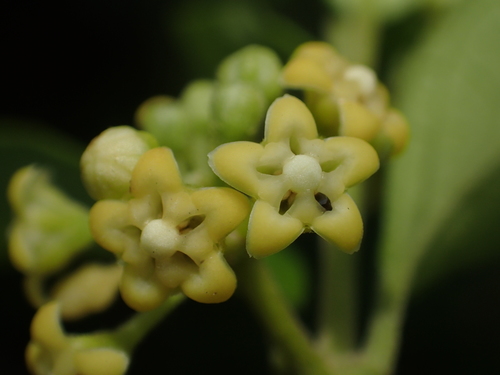
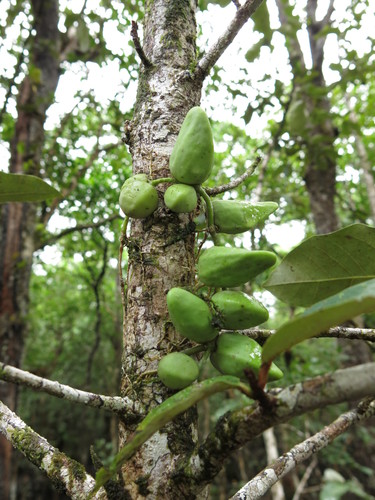
Dischidia major (Vahl) Merr., also known by the synonym Dischidia rafflesiana and common name the Malayan urn vine, is a plant species in the genus Dischidia. This species has modified leaves that provide shelter for ants, most commonly Iridomyrmex myrmecodiae from the ant family Dolichoderinae. In exchange, the plant gains nutrition from increased carbon dioxide and nitrogen levels, as well as protection from harmful animals and other plants. This mutually beneficial relationship is a form of myrmecophily, a widespread trait across the plant kingdom that offers significant benefits to both ants and the host plant. Dischidia major is a climbing vine that twines around the branches and trunks of trees, and prefers growing on decaying trees. It produces two types of leaves: round, succulent leaves that reach about 2 cm in diameter, and hollow, pouch-like modified leaves that are 12 cm long. These modified leaves, called ascidia or pitchers, resemble the fruits of the related species Araujia sericifera. The inner surface of these hollow leaves is purplish and densely covered with stomata, and has an opening at the top end near the leaf stalk. Over time, organic debris, rainwater, and possibly additional secreted fluids collect in the hollow cavity. Dischidia major grows roots into this cavity to absorb the accumulated nutrition from this material. Unlike Dischidia major, the related species Dischidia astephana and D. parvifolia do not provide hollow leaf housing for ants. Instead, their roots penetrate decaying wood and humus to reach ant nests, where they likely obtain nutrients from ant waste. The flowers of Dischidia major are yellow with green stripes, and are arranged in umbels that hold few to many individual flowers. The fruit of Dischidia major is a pair of the genus's characteristic horn-shaped follicles. Its seeds have a tuft of silky hairs at one end, and also have an edible portion called an elaiosome. This elaiosome encourages ants to carry the seed (a process known as myrmecochory) into tree ant nests, where the seed has an improved chance of germinating and growing.