About Diplotaxis tenuifolia (L.) DC.
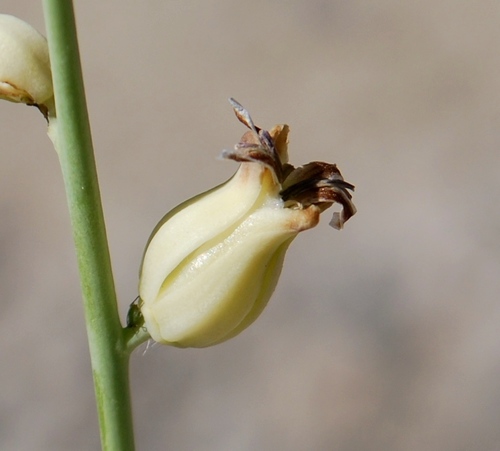
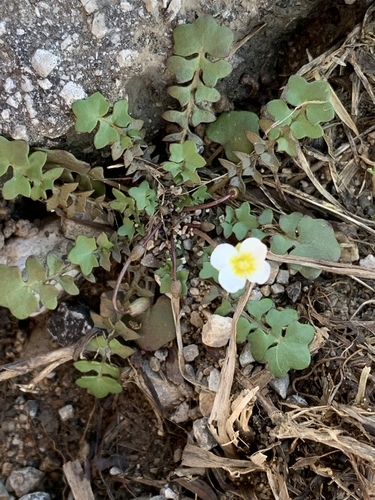
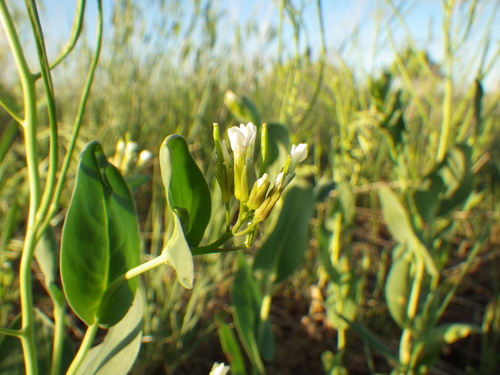
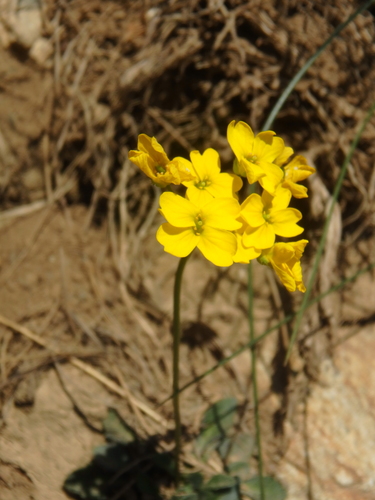
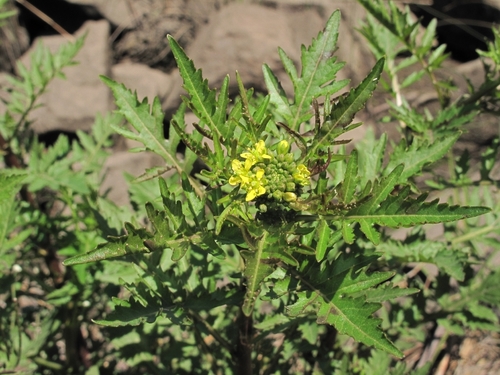
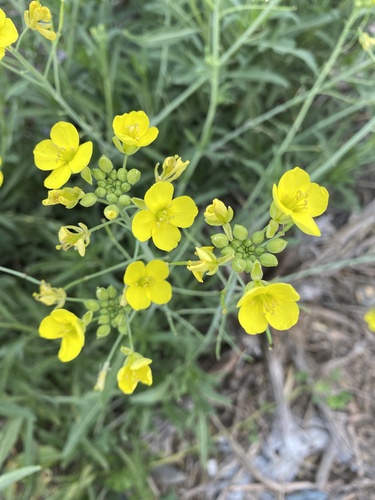
Diplotaxis tenuifolia (L.) DC., commonly known as perennial wall-rocket, is a glabrous herb with an erect or sprawling growth habit. It grows up to 1.3 m tall, with a solid, almost woody terete stem and spreading branches. Its deeply pinnate leaves are up to 12 cm long, often rather fleshy, with a peppery taste and a musty smell. In the British Isles, it flowers from May to September, or through October in a warm year. In Spain, it can flower between April and December. The inflorescence is a branched raceme up to 30 cm long with up to 30 flowers. Each flower has 4 free bright yellow petals up to 15 mm long, 4 free yellow/brown sepals up to 7.5 mm long, 6 stamens, and a single style. The fruit is a straight, flat silique (pod) up to five centimeters long. The pedicels are shorter than the fruits and ascend at an acute angle to the stem. Above the receptacle, there is a short 2 mm stalk (or stipe) below the pod, a useful feature to separate this species from annual wall-rocket. The seeds are arranged in 2 rows, or staggered in a zigzag pattern, towards the centre of the pod, which has 2 valves, so a cross-section of the fruit shows 4 seeds in total. This is a distinguishing feature of the genus Diplotaxis, although it is not always easy to see. Since plants are not self-pollinating, ripe seeds do not always develop. In Britain, this species is most likely to be confused with annual wall-rocket, but it does not have a basal rosette, its leaves are divided more than halfway to the midrib, and its fruit has a short stalk (stipe) above the sepal scars. Diplotaxis species can be separated from most other crucifers by the double row of seeds in each valve of the fruit (although this is a difficult feature to see in unfertilised plants) and a seedless beak to the silique. It is native to parts of Europe, reaching east to Turkey and Syria. It is extinct from Morocco and Algeria, but has been introduced to Cyprus, the Caucasus, the Levant, Yemen, Japan, Australia, New Zealand, New Caledonia, Canada (Ontario, Quebec and Nova Scotia), the United States, Costa Rica, Argentina and Uruguay. Within Europe, its native range covers much of France, the Low Countries, Italy, the Pannonian Basin and the western Balkans up to Macedonia, with generally more thinly scattered populations in northern Greece, Bulgaria, Romania, Crimea, Sicily, Malta, Sardinia, Corsica and parts of Spain. It has been extensively introduced further north from its native range. In the British Isles the plant is an archaeophyte, with industrial regions and ports still at the centre of its distribution. It is established especially in parts of England and Wales, and some believe the plant could even be native to the south-east. Its range has been expanding to the west since the 19th century, but it is still very rare in Scotland and Ireland. It has also been introduced into much of Central Europe: throughout Switzerland, Austria, Germany and Poland, with more scattered instances on the southern shores of Norway and Sweden (where it is found in fewer areas than in the recent past), the Baltic States, Belarus and a few locations further east in Ukraine and European Russia. It has also been introduced on Menorca and near Lisbon in Portugal. It is a ruderal plant of roadsides and waste ground. It generally grows in places with full sunlight and requires moderately damp soils with a slightly alkaline reaction and moderately fertile conditions. It is tolerant of occasional salinity, which allows it to grow on the upper part of beaches and along salt-treated road verges. The Ellenberg values in Britain are L = 8, F = 5, R = 7, N = 6, and S = 1. In Spain, it can be found at elevations of up to 800 m. There are eleven species of insect known to feed on perennial wall-rocket in Britain. Five of these are weevils (Curculionidae): Ceutorhynchus contractus (Marsham), the cabbage leaf weevil, whose adults feed on leaves and stems; C. picitarsis Gyllenhal, whose adults feed on leaves and stems; C. timidus Weise (= C. chalibaeus Germar, 1824), whose larvae make galls in the petioles; Otiorhynchus ligneus, whose adults feed on the roots; and O. ovatus, whose adults feed on the roots. All five are polyphagous and widespread. Four of the phytophagous insects are Diptera (flies). The midge Contarinia nasturtii (Kieffer) has larvae that infest the stems, leaves and flowerheads, causing distortion and sterility. Dasineura brassicae (Winnertz) (previously D. napi (Loew)), the brassica pod midge, an invasive non-native pest in Britain which causes damage to the developing seedpods. It is particularly important on rapeseed crops, but it can also infest wild perennial wall-rocket plants. Gephyraulus raphanistri (Kieffer) is a gall midge that destroys the flowerheads. None of these species is restricted to wall-rocket and most are quite common, although the NBN Atlas has no records of brassica pod midge on wild plants in Britain as of 2022. Finally, three species of Lepidoptera (butterflies and moths) are listed. Pieris brassicae is the common cabbage white butterfly, whose larvae eat the leaves and stems of this and many other species of Brassicaceae; Evergestis extimalis is a micromoth whose larvae feed in the flowerheads; and Sitochroa verticalis (the lesser pearl) is also a micromoth, whose larvae are found on a wide variety of plants. Baby leaf rocket is cultivated worldwide as a salad leaf. In addition to D. tenuifolia, the annual Eruca sativa is grown and marketed under the same common names. These leaves are usually mixed with other baby leaf crops to form a mesclun-style salad. These crops have become popular due to their distinctive taste and texture in salads. Wild rocket is high in ascorbic acid, carotenoids, polyphenols and glucosinolates, such as glucosativin and glucoerucin, which contribute to the pungent flavour. When the leaves are chewed, glucosinolates are metabolized into isothiocyanates and indoles via the enzyme myrosinase. Leaves preserved at 5 °C show a loss of ascorbic acid and glucosinolates, and an increase in polyphenols. One of Trotula's works, Treatments for Women, mentions "wild rocket cooked in wine" in a remedy for sanious flux in women.