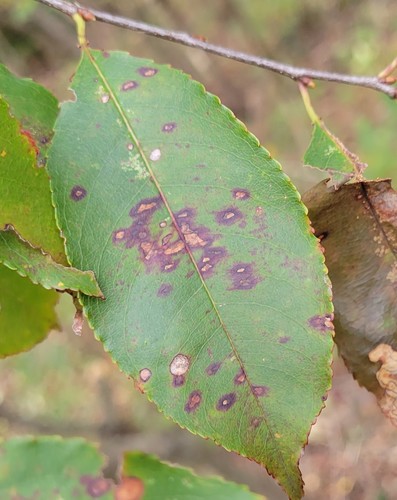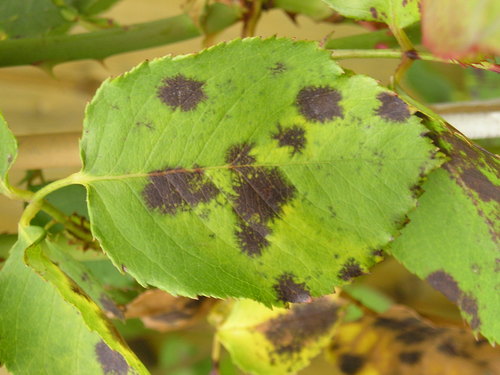
About Diplocarpon rosae (Lib.) F.A.Wolf
Diplocarpon rosae (Lib.) F.A.Wolf is the fungus that causes rose black spot disease. Because it was independently documented by researchers in multiple countries around 1830, it was originally given around 25 different scientific names. Its asexual life stage is now classified as Marssonina rosae, while its sexual, most commonly observed stage retains the name Diplocarpon rosae. Diplocarpon rosae survives across seasons as mycelia, ascospores, and conidia within infected rose leaves and canes. When spring brings moist, humid conditions, ascospores and conidia are carried by wind and splashed by rain to newly emerging rose leaf tissue. This fungus typically favors warm, wet climates. The conidia that cause new infection are only dispersed by water, so rose black spot disease is most active in late spring and early fall, or other periods that share this warm, wet climate. Black spot disease development reaches its ideal rate at temperatures between 20 and 27 °C (68–80 °F). No infection will develop if leaf surfaces dry out within 7 hours after conidia first germinate. Temperatures above 29 °C (85 °F) also stop the spread of the disease.