All Species Plantae

Diplacus layneae (Greene) G.L.Nesom is a plant in the Phrymaceae family, order Lamiales, kingdom Plantae. Not known to be toxic.

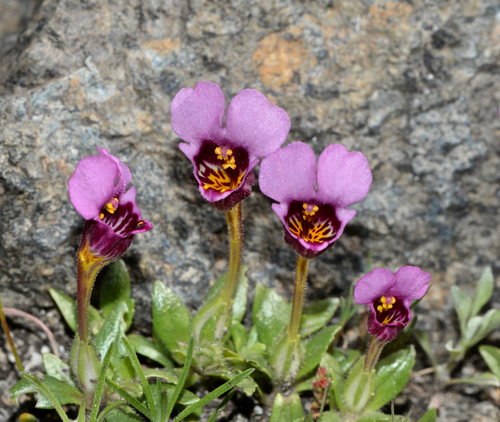
Photo of Diplacus layneae (Greene) G.L.Nesom (Diplacus layneae (Greene) G.L.Nesom)
Plantae

Diplacus layneae (Greene) G.L.Nesom

Diplacus layneae (Greene) G.L.Nesom

Diplacus layneae is a hairy pink-flowered annual herb endemic to California, growing in rocky and disturbed habitats.

Identify with AI — Offline
Family
Genus
Diplacus
Order
Lamiales
Class
Magnoliopsida
⚠️ Toxicity Note

Insufficient toxicity evidence; avoid direct contact and ingestion.

About Diplacus layneae (Greene) G.L.Nesom

Growth Form

Diplacus layneae is a hairy annual herb. It produces a thin, erect stem that reaches a maximum height close to 28 centimeters.

Leaf Characteristics

Its oppositely arranged leaves are oval-shaped and grow up to 2.5 centimeters long.

Flower Calyx Structure

The tubular base of each flower is wrapped in a ribbed calyx of sepals with pointed lobes.

Flower Size and Color

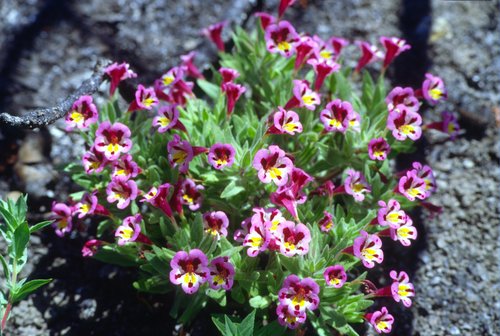
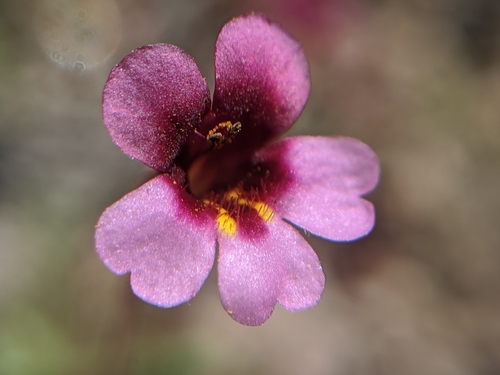
The flower is roughly 1 to 2 centimeters long, and can be any shade of pink ranging from nearly white to deep magenta. The flower throat usually has white, yellow, and dark pink or purple mottling.

Endemic Range

This species is endemic to California. Within California, it can be found from the mountains and slopes of the Klamath Range to the southern reaches of the Sierra Nevada.

Habitat Preferences

It grows in rocky barren and disturbed habitats, and sometimes grows on serpentine soils.
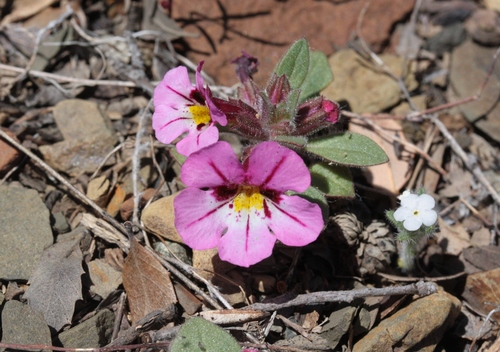
Photo: (c) David Greenberger, some rights reserved (CC BY-NC-ND), uploaded by David Greenberger · cc-by-nc-nd

Taxonomy

Plantae Tracheophyta Magnoliopsida Lamiales Phrymaceae Diplacus

More from Phrymaceae

Sources: GBIF, iNaturalist, Wikipedia, NCBI Taxonomy · Disclaimer

Start Exploring Nature Today

Download iNature for free. 10 identifications on us. No account needed. No credit card required.

App Store
Scan to download from App Store

Scan with iPhone camera

Google Play
Scan to download from Google Play

Scan with Android camera