About Diospyros whyteana (Hiern) F.White
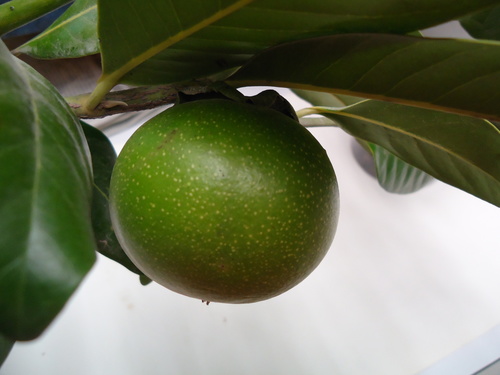
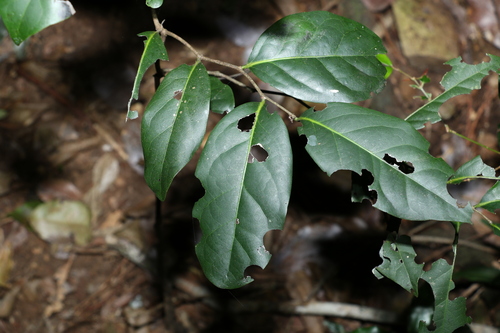
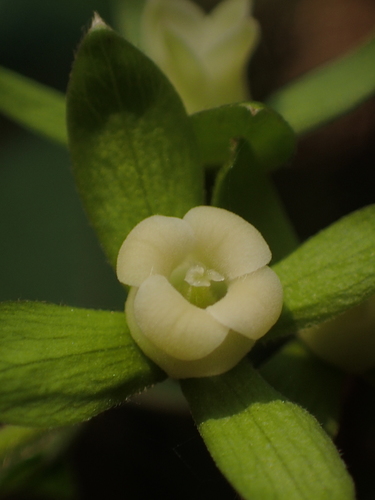
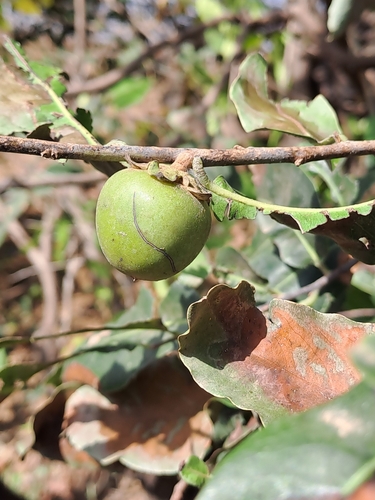
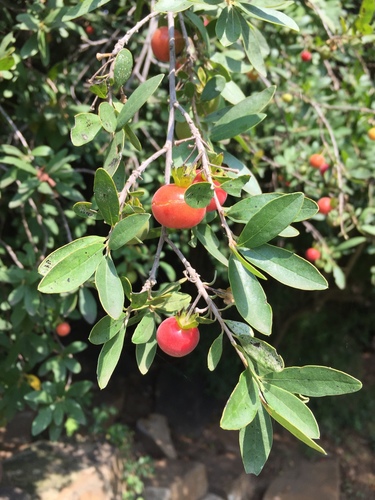
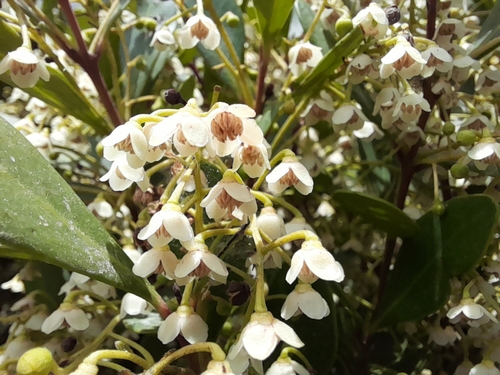
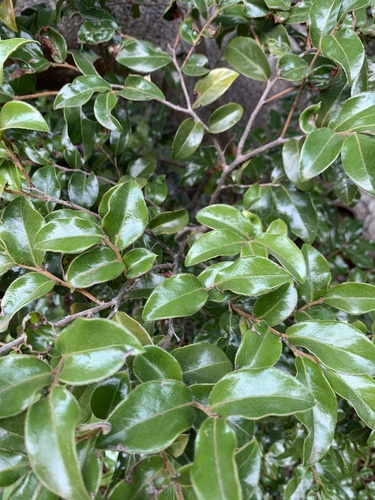
Diospyros whyteana, also commonly called bladdernut, swartbas, wild coffee, or umTenatane, is a small African tree belonging to the ebony family. It has dark green, noticeably glossy leaves and creamy fragrant flowers, and grows to a maximum height of 6 meters. It is increasingly cultivated in Southern African gardens as an attractive, hardy ornamental tree. This species has a wide distribution, ranging from Cape Town in the south to the Eastern Arc Mountains of Tanzania in the north, and occurs throughout South Africa, Eswatini, Mozambique, Zimbabwe, Zambia, Malawi, and Tanzania. It naturally grows in Afro-montane forest and on rocky mountain slopes. It is also found on the edges of montane evergreen forest, where it often grows alongside Hagenia abyssinica, Newtonia species, and Cephalosphaera usambarensis, as well as in fringing forest along streams and rivers, and in scrub forest. In tropical regions, it grows at elevations between (1350–)1500 and 2300 meters, while at its southern range in the more temperate climate of South Africa, it grows almost down to sea level. This small decorative tree is well-suited for gardens thanks to its tidy form, dark glossy leaves, and small red fruits that develop from around August to November. Planted alone, it works well as an accent plant, especially in small gardens. It also makes an excellent hedge, because it has lush dense foliage and tolerates clipping particularly well. Additionally, it can be grown as a container plant, and is even used as a bonsai specimen. Diospyros whyteana grows well in both full sun and partial shade, though it grows taller and more slender in shaded conditions. Once it is well-established, it is relatively resistant to drought. Its sweetly scented flowers attract birds to gardens. This species is dioecious, meaning individual trees are either male or female. It can be easily propagated from seed, which should be scarified (scratched) before planting. Seeds typically germinate within several weeks, and young juvenile trees grow relatively slowly.